
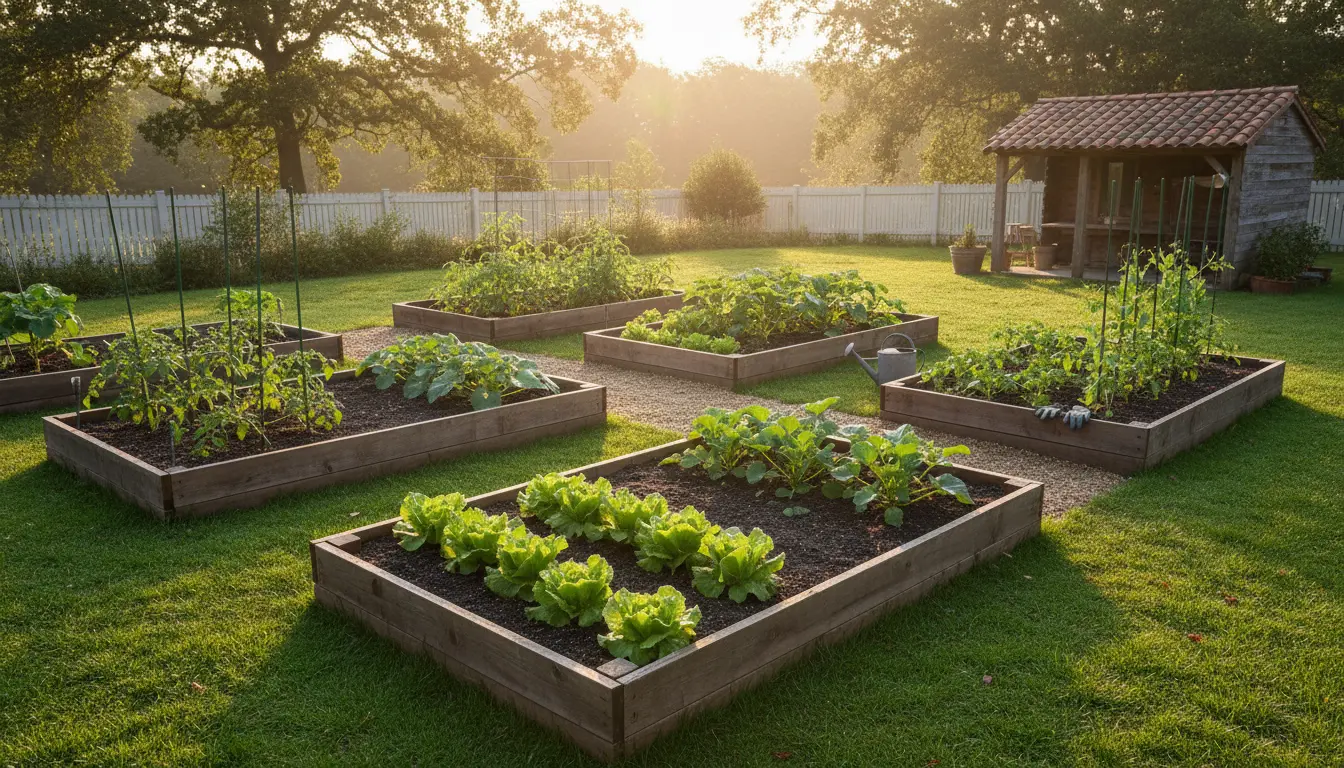
Starting a vegetable garden is a practical way to grow fresh food, save money, and enjoy a healthier hobby. This guide walks you through planning, soil preparation, plant selection, and basic care so you can get reliable results in your first season.
Planning Your Vegetable Garden
Good planning reduces mistakes and makes maintenance easier. Start by assessing space, sunlight, and water access for your vegetable garden.
Choose the Right Location for a Vegetable Garden
Pick a spot that gets at least 6 hours of direct sunlight daily. Close proximity to a water source saves time when irrigating.
- Sunny, level ground works best.
- Avoid low spots that collect water and shade from trees or buildings.
- Consider raised beds if soil drainage or soil quality is poor.
Preparing Soil for a Healthy Vegetable Garden
Soil quality determines plant health. Spend time improving your soil before planting to increase yields and reduce pest problems.
Soil Testing and Amendments for Vegetable Gardens
Test soil pH and nutrient levels using a home kit or local extension service. Most vegetables prefer a pH between 6.0 and 7.0.
- Add compost to boost organic matter and drainage.
- Use lime to raise pH or sulfur to lower pH if needed.
- Incorporate well-rotted manure or balanced organic fertilizer according to test results.
Selecting Vegetables for Beginners
Choose easy-to-grow vegetables for your first season to build confidence and get reliable harvests. Pick varieties suited to your climate and season.
- Leafy greens: lettuce, spinach, Swiss chard — quick and forgiving.
- Root crops: radishes, carrots, beets — need loose soil but little maintenance.
- Warm-season staples: tomatoes, peppers, bush beans — productive with proper care.
- Herbs: basil, parsley, chives — low-maintenance additions.
Planting and Care for a Productive Vegetable Garden
Follow planting dates for your region and provide consistent care. Proper spacing and timing reduce disease and improve air circulation.
Watering, Mulching, and Feeding Your Vegetable Garden
Water deeply and less often to promote strong root systems. Mulch helps retain moisture and suppress weeds.
- Water at the base, avoiding wetting leaves when possible.
- Apply 2–3 inches of organic mulch after soil warms up.
- Side-dress with compost or a balanced organic fertilizer midseason for heavy feeders like tomatoes.
Pest and Disease Management in Vegetable Gardens
Use simple cultural controls first: crop rotation, clean tools, and removing diseased plants. Monitor regularly and act early.
- Handpick pests like slugs and caterpillars.
- Use row covers to protect seedlings from insects and birds.
- Apply organic solutions (neem oil, insecticidal soap) if infestations persist.
Seasonal Scheduling and Crop Rotation for Vegetable Gardens
Plan planting by season: cool-season crops in spring and fall, warm-season crops in summer. Rotate families to reduce soil-borne disease and nutrient depletion.
- Rotate root, leaf, and legume crops across beds each year.
- Use succession planting to maximize production—plant a second round of quick crops after early harvests.
- Record dates and results to refine your schedule next season.
Beans and peas fix nitrogen in the soil. Planting them before heavy feeders can naturally enrich the bed and reduce fertilizer needs.
Small Real-World Case Study
Anna, a novice gardener in zone 6, started three 4×4 raised beds in spring. She tested soil, added compost, and planted lettuce, radishes, tomatoes, and bush beans.
By July she harvested regular salad greens and tomatoes. Using mulch and drip irrigation cut her watering time by half, and rotating beans into a bed improved tomato vigor the following year.
Quick Planting Checklist for a New Vegetable Garden
- Pick a sunny site and measure available space.
- Test soil and add compost or amendments as recommended.
- Start with easy crops: lettuce, radishes, beans, tomatoes.
- Mulch after planting and set a consistent watering schedule.
- Monitor pests weekly and use organic controls if needed.
- Keep simple records of plant dates, varieties, and yields.
Starting a vegetable garden takes planning and consistent care, but the steps are straightforward. Follow these practical actions and adjust based on your local conditions to build a productive garden season after season.