
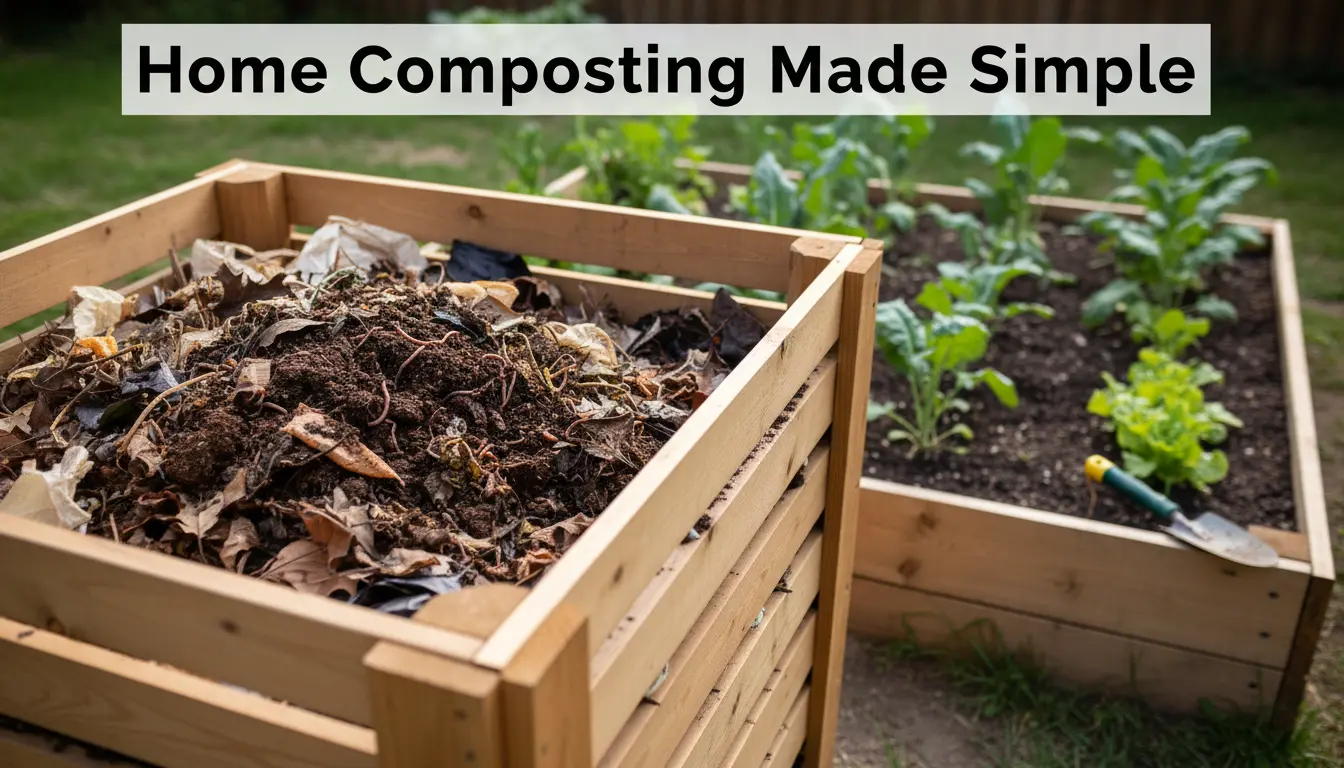
Home composting is a low-cost way to turn kitchen scraps and yard waste into rich soil for plants. This guide explains clear steps and practical tips to start and maintain a compost system at home.
Why home composting matters
Composting reduces landfill waste and returns nutrients to soil. It lowers household waste volumes and supports healthier gardens without chemical fertilizers.
Benefits of home composting
- Reduces food waste and trash pickup frequency.
- Creates free, nutrient-rich soil amendment for gardens and potted plants.
- Improves soil structure, water retention, and plant health.
How to start home composting
Starting is straightforward and requires a few basic decisions. Choose a method that fits your space, schedule, and the amount of organic waste you generate.
Choose a composting method
- Backyard bin: Simple tumbler or stationary bin for yards. Good for families and larger volumes.
- Bokashi: Fermentation method for small spaces and indoors. Handles meats and dairy when sealed correctly.
- Vermicomposting: Uses worms in a bin to process kitchen scraps quickly. Ideal for apartments or small households.
Set up your compost bin
Place a bin on soil or a well-drained area to allow microbes and insects to access material. Aim for a size you can turn or manage—300 to 600 liters works well for most households.
Keep the bin in partial shade to maintain moisture and avoid overheating in summer. A lid reduces pests and retains heat and moisture.
What to compost and what to avoid
Good compost needs a balance of “greens” (nitrogen-rich) and “browns” (carbon-rich). Combining both keeps decomposition steady and avoids odors.
Common greens and browns
- Greens: Fruit and vegetable scraps, coffee grounds, tea bags, fresh grass clippings.
- Browns: Dry leaves, straw, shredded paper, cardboard, wood chips.
What to avoid in home composting
- Meat, fish, bones and fatty foods unless using Bokashi or a well-managed hot compost system.
- Diseased plants, persistent weeds with seeds, and pet waste from carnivores.
- Large logs or thick branches that take years to break down—chop or chip them first.
Troubleshooting common home composting problems
Even simple systems can encounter issues. The fixes are usually quick and inexpensive.
- Bad smell: Add more browns, turn the pile, and ensure adequate air flow.
- Too dry: Moisten materials to the feel of a wrung-out sponge and cover if very dry.
- Slow decomposition: Chop scraps smaller, add water if dry, and turn to introduce oxygen.
- Pests: Bury food scraps under browns, use a lidded bin, and avoid attracting animals with meat or oily food.
Proper home composting can reduce household waste by up to 30 percent. Even small apartments using vermicomposting divert significant waste from landfills.
Maintaining your home composting system
Routine checks and simple actions keep your compost healthy. A weekly glance and occasional turning are usually sufficient.
Simple maintenance checklist
- Turn or mix the pile every 1–2 weeks to aerate and speed decomposition.
- Monitor moisture—add water or cover to maintain sponge-like dampness.
- Add a balanced ratio of greens to browns (roughly 1:2 by volume) over time.
- Harvest finished compost when it looks dark, crumbly, and earthy—typically in 2–6 months for active systems.
Real-world example: Small urban household case study
A two-person apartment in a mid-sized city started vermicomposting in a 30-liter bin. They collected kitchen scraps for six months and fed the worms daily.
Results after six months: roughly 50 kg of organic waste diverted from landfill and about 8 liters of worm castings produced. Plants in their balcony containers showed improved growth and water retention.
Key actions: they chopped scraps, kept the bin shaded, and rotated bedding every three months. No odors or pest problems occurred.
Quick tips for success with home composting
- Start small and scale as you gain confidence.
- Keep material sizes small—chop or shred when possible.
- Balance greens and browns to avoid smells and encourage steady breakdown.
- Use finished compost in pots, raised beds, or as a top-dressing for lawns.
Home composting is accessible and flexible. With the right method and a little routine care, anyone can convert household organic waste into useful compost to improve soil and reduce waste.