
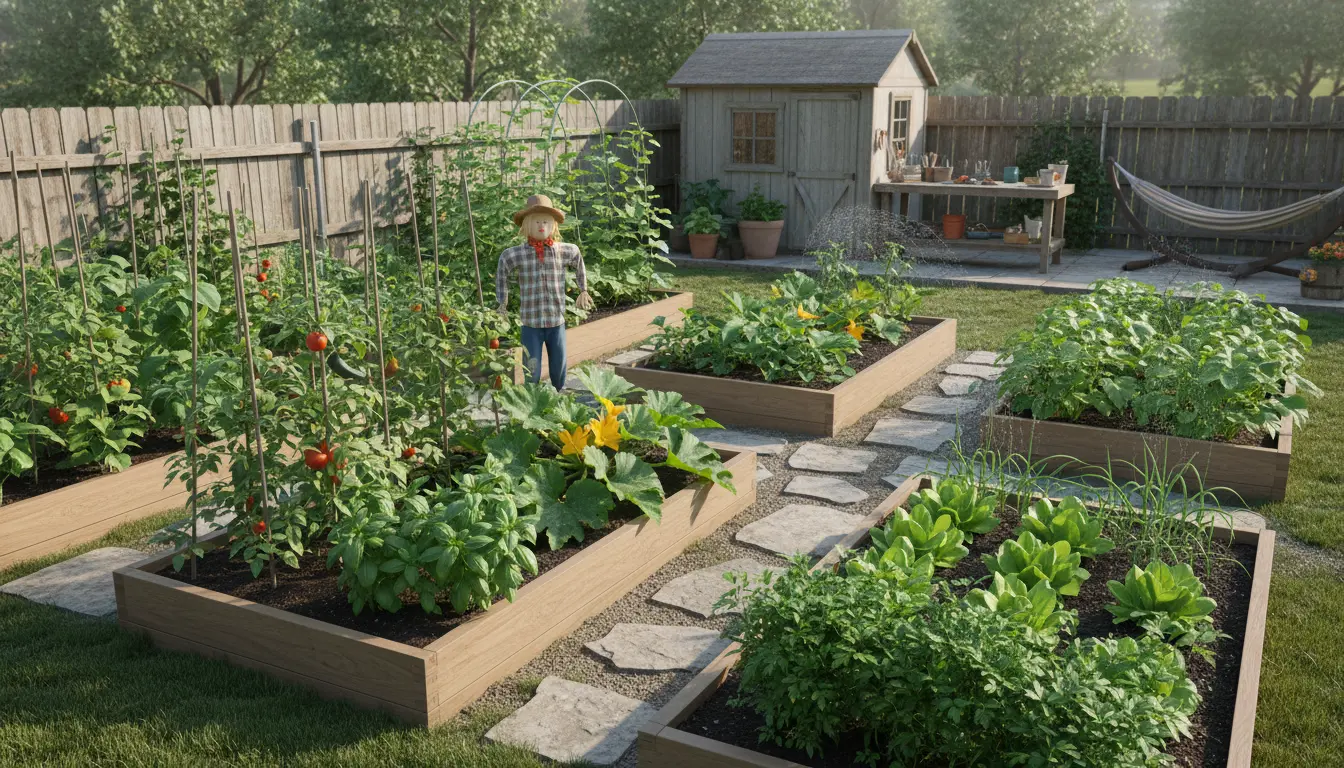
Starting a vegetable garden can be simple and rewarding. This guide shows practical, step-by-step actions you can take to plan, plant, and maintain a productive small vegetable garden.
Plan Before You Start a Vegetable Garden
Choosing what to grow and where to place your garden sets you up for success. Spend time planning seed choices, layout, and a basic calendar for planting and harvest.
Good planning reduces wasted time and money and helps you avoid common beginner mistakes.
Pick a Site to Start a Vegetable Garden
Select a location with at least 6 hours of direct sunlight for most vegetables. Consider access to water, drainage, and proximity to your home for easy maintenance.
If ground space is limited, plan for containers or raised beds on a balcony, patio, or rooftop.
Prepare Soil and Containers
Healthy soil is the foundation of a productive garden. Test soil pH and texture where possible, and amend poor soil with compost and organic matter.
For raised beds or containers use a quality mix of compost, topsoil, and a light soil conditioner for drainage.
Soil Steps to Start a Vegetable Garden
- Remove weeds and debris from the site.
- Work in 2–4 inches of compost to improve fertility and structure.
- Check pH; most vegetables prefer pH 6.0–7.0 and can be adjusted with lime or sulfur.
Choose Vegetables for Your Garden
Select vegetables suited to your climate, season, and available sunlight. Start with easy crops that produce quickly to build confidence.
Good beginner vegetables include lettuce, radishes, cherry tomatoes, bush beans, zucchini, and herbs like basil.
Crop Selection Tips
- Choose compact or bush varieties for small spaces.
- Stagger planting times to spread harvest across weeks.
- Mix fast-growing crops (radish) with longer-season crops (tomato).
Planting: Seeds vs. Seedlings
Decide whether to start from seed or buy seedlings from a nursery. Seeds are cheaper and offer more variety; seedlings get you a faster start.
Follow package directions for seed depth and spacing, and harden off nursery seedlings before planting them outdoors.
Watering and Feeding the Garden
Consistent moisture is crucial, especially for seedlings and fruiting vegetables. Water deeply once or twice a week rather than shallow daily watering.
Mulch around plants to retain moisture and reduce weeds, and feed with a balanced organic fertilizer as plants grow.
Watering Best Practices
- Water at the base of plants to keep leaves dry and reduce disease.
- Use soaker hoses or drip irrigation for efficiency.
- Morning watering reduces evaporation and fungal problems.
Pest and Disease Management
Preventive practices are the most effective method to avoid pest and disease problems. Keep plants healthy, rotate crops, and use physical barriers where needed.
Identify pests early and use targeted controls: hand-picking, insecticidal soaps, or row covers for small infestations.
Harvesting and Storage
Harvest vegetables when they reach recommended size and flavor. Regular harvesting encourages more production in plants like beans and zucchini.
Store produce properly: cool leafy greens, dry root crops before refrigerating, and use or preserve surplus by freezing, drying, or canning.
Small Case Study: A Balcony Garden That Worked
Sara, a city renter, converted a 5-foot balcony into a container vegetable garden. She used three large planters and a vertical trellis for tomatoes and beans.
By choosing compact varieties, using a quality potting mix, and installing a drip line on a timer, she harvested enough salad greens and tomatoes most weeks that summer.
- Containers: three 20-inch planters
- Crops: leaf lettuce, cherry tomatoes, bush beans, basil
- Result: continuous harvest for 4 months, minimal pest issues
Leafy greens like lettuce and spinach can be harvested multiple times with the cut-and-come-again method, giving you frequent small harvests rather than one large harvest.
Common Beginner Mistakes to Avoid
- Overplanting too close together — reduces airflow and increases disease risk.
- Inconsistent watering — leads to poor yields and issues like blossom end rot in tomatoes.
- Ignoring soil health — healthy soil reduces need for fertilizers and pesticides.
Simple Seasonal Checklist to Start a Vegetable Garden
- Spring: Test soil, amend with compost, start cool-season crops.
- Early Summer: Plant warm-season crops and set up irrigation.
- Mid to Late Summer: Harvest regularly, manage pests, mulch to retain moisture.
- Fall: Sow cover crops or add compost to beds for winter rest.
Starting a vegetable garden is a step-by-step process that rewards planning and consistent care. Begin small, learn each season, and expand as you gain confidence.
If you follow these practical steps—site selection, soil preparation, correct planting, proper watering, and simple pest control—you can build a productive garden even with limited space.