
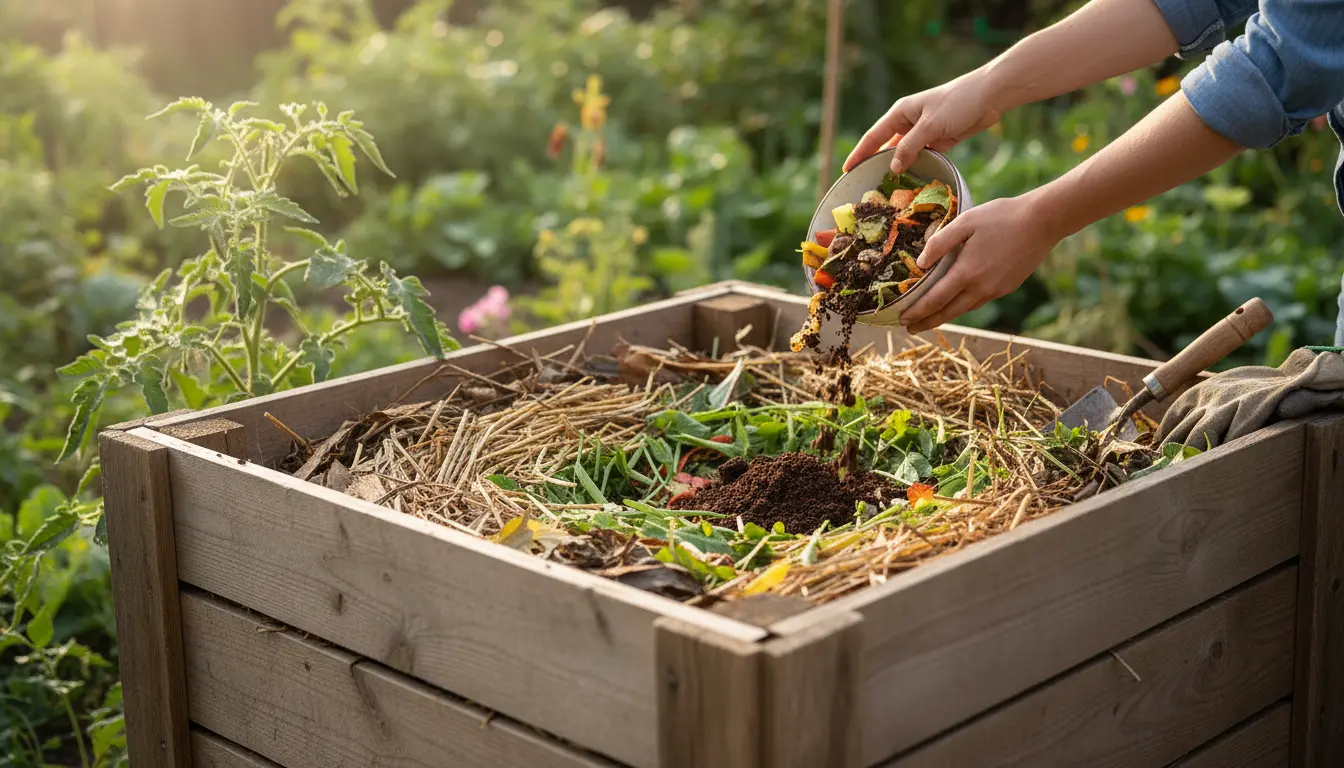
Composting turns kitchen scraps and yard trimmings into rich soil. It reduces waste and improves garden health without complex equipment.
Why Home Composting Matters
Home composting reduces landfill waste and lowers household greenhouse emissions. It returns nutrients to soil and supports healthier plants.
For small spaces, a simple bin or tumbler is enough to start producing usable compost within months. The process is forgiving and scalable.
Basic Principles of Home Composting
Balance carbon and nitrogen
Compost needs a mix of carbon rich brown materials and nitrogen rich green materials. A common rule is roughly 3 parts brown to 1 part green by volume.
Examples of browns include dried leaves, shredded paper, and straw. Greens include vegetable scraps, coffee grounds, and fresh grass clippings.
Air and moisture
Compost organisms need oxygen and a damp but not soggy environment. Turn or aerate the pile every 1 to 2 weeks for faster breakdown.
If the pile smells like ammonia, it likely needs more browns or more turning. If it is dry, add water or more green materials.
How to Start Home Composting Step by Step
Starting is simple and inexpensive. Follow these practical steps to set up a reliable compost system at home.
- Choose a container. Options include a backyard bin, tumblers, or a simple pile. For balconies, use a sealed bokashi or worm bin.
- Select a location. Place the bin on soil or a well-drained area with some shade. Avoid sealed patios unless using indoor systems.
- Layer materials. Start with coarse browns for drainage, then add alternating layers of greens and browns.
- Maintain moisture and aeration. Water when dry and turn the pile periodically to introduce air.
- Harvest compost. When dark and crumbly with an earthy smell, the compost is ready to use as mulch or soil amendment.
What to Compost and What to Avoid
Knowing what goes in the bin keeps the process healthy and pest free. Use the lists below as a quick reference.
Good items for home composting
- Vegetable and fruit scraps
- Coffee grounds and tea bags (remove staples)
- Yard waste like leaves, grass clippings, and small twigs
- Shredded paper, cardboard, and egg cartons
- Cooked grains and bread in small amounts
Items to avoid
- Meat, fish, dairy, and oily foods that attract pests
- Diseased plants or plants treated with persistent pesticides
- Pet waste from carnivores
- Large branches or thick woody material that will not break down quickly
Troubleshooting Common Compost Problems
Small issues are common and usually fixable with simple adjustments. Here are frequent problems and fast remedies.
- Foul odor: Add more browns and turn the pile to increase aeration.
- Pile too dry: Add water or more green materials and mix well.
- Pests: Avoid meat and keep the bin covered or use enclosed systems.
- Slow decomposition: Chop materials smaller and maintain a warmer, moister pile.
Did You Know?
Did You Know? A balanced home compost pile can reach temperatures above 130°F for a short period, which helps kill weed seeds and many pathogens when managed properly.
Small Case Study: A Balcony Compost Starter
Sara lives in a third floor apartment and started composting with a small worm bin. She collected kitchen scraps and used shredded cardboard as bedding.
After four months of regular feeding and occasional moisture checks, Sara harvested dark, crumbly vermicompost. She mixed it into potted plants and saw improved growth and water retention.
Key takeaways from her example include consistency, small volume management, and choosing a method suited to limited space.
Tips for Faster, Better Home Composting
- Chop or shred materials to increase surface area and speed decomposition.
- Maintain a consistent feed schedule to keep microbes active.
- Use a compost thermometer if you want to monitor temperature and optimize turning.
- Save finished compost in a covered container to keep it ready for use.
Using Finished Compost
Apply finished compost as mulch, mix it into potting mixes, or work it into garden beds. A thin top layer of compost improves soil structure and nutrient content.
Finished compost also reduces watering needs and supports beneficial soil organisms when applied regularly.
Home composting is a practical way to reduce waste and enrich your garden. Start small, observe results, and adjust your method to fit your space and needs.