
Why Home Composting Helps
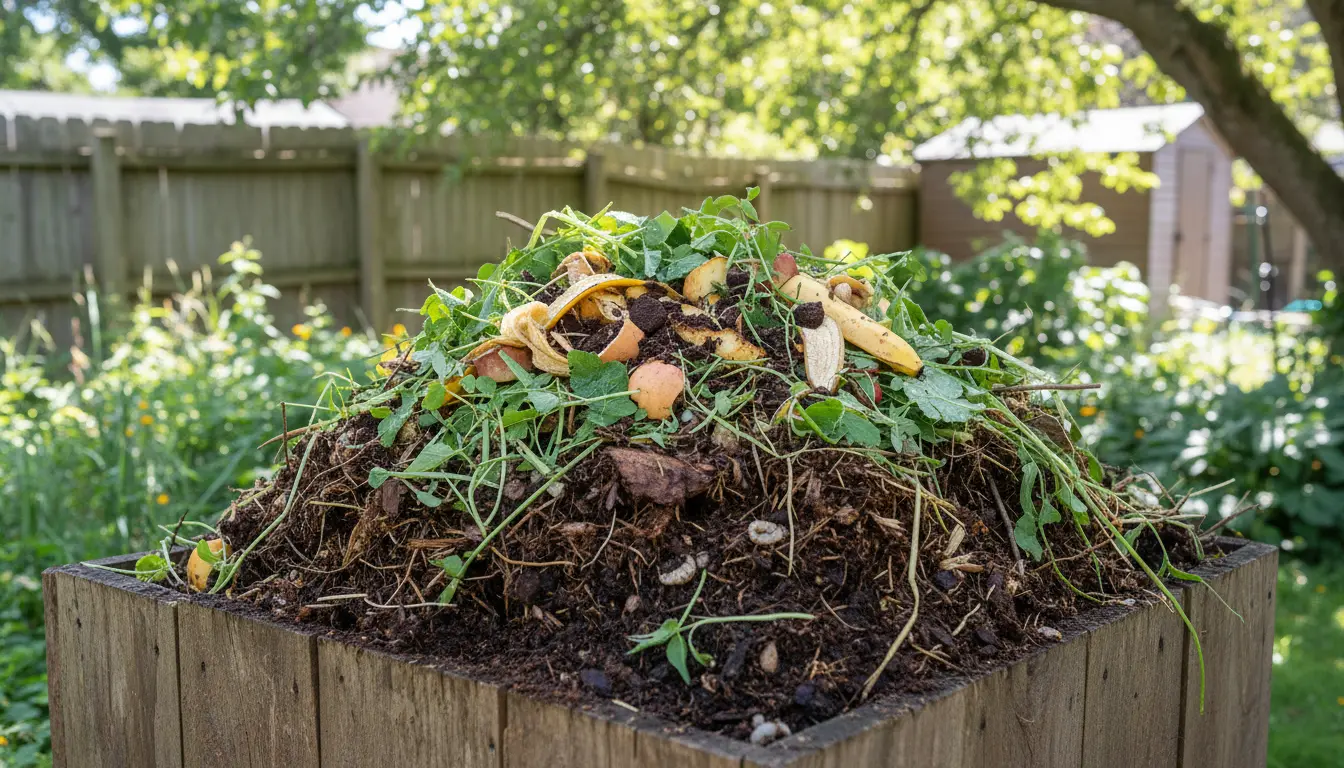
Home composting turns kitchen and garden waste into useful soil. It reduces trash, lowers methane from landfills, and feeds plants naturally.
This guide shows practical steps for home composting for beginners. Follow these simple methods to start composting with minimal tools and effort.
Basic Concepts of Home Composting
Compost is broken down organic material. Microbes and small animals do the work when conditions are right.
Key factors are carbon, nitrogen, air, moisture, and particle size. Balance these for faster, less smelly compost.
Carbon and Nitrogen
Carbon-rich materials are called browns and include dried leaves, cardboard, and straw. Nitrogen-rich materials are called greens and include food scraps and grass clippings.
A general rule is 25–30 parts carbon to 1 part nitrogen by weight, but practical mixing works: layer browns and greens rather than literally measuring ingredients.
Air and Moisture
Compost needs oxygen and should be damp like a wrung-out sponge. Too wet or too compact slows decomposition and causes odor.
Turn the pile occasionally to add air and check moisture. Add dry browns if it is too wet, or water lightly if too dry.
What to Compost: Home Composting for Beginners
Start with easy, safe items. Avoid things that attract pests or cause problems.
- Acceptable greens: fruit and vegetable scraps, coffee grounds, tea bags.
- Acceptable browns: dry leaves, shredded paper, small wood chips.
- Avoid: meat, dairy, oily foods, diseased plants, and pet waste.
How to Build a Simple Compost Bin
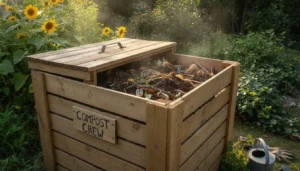
You can compost without a bin, but a container keeps things tidy and speeds warming. Use simple materials you may already have.
Options include a plastic bin with holes, a wooden pallet enclosure, or a commercial tumbler. Choose what fits your space and budget.
Quick Steps to Build a Bin
- Select a location with partial sun and easy access.
- Place a base layer of coarse material for drainage.
- Add alternating layers of greens and browns about 4–6 inches each.
- Keep the pile moist and turn every 1–2 weeks if possible.
Speeding Up Decomposition
For faster compost, increase surface area and microbial activity. Chop or shred materials and keep the pile warm.
You can add a handful of finished compost or garden soil to introduce microbes. Maintaining the moisture and turning the pile helps heat build-up.
Troubleshooting Common Problems
Beginners often face odor, pests, or slow breakdown. Each problem has a simple fix.
- Smelly compost: add more browns and turn the pile to add air.
- Pests: bury food scraps deeper, use a closed bin, or add a wire mesh barrier.
- Slow decomposition: chop materials finer, increase nitrogen, and keep it moist.
Harvesting and Using Finished Compost
Compost is ready when it is dark, crumbly, and has an earth-like smell. That can take 2 months to a year depending on methods.
Use finished compost as a soil amendment, top dressing, or to make compost tea. Mix into potting soil or spread thinly around plants.
Case Study: A Small Family’s First Year of Home Composting
In 2023 a family of four began backyard composting with a simple wooden bin. They saved food scraps and lawn clippings and layered browns each week.
After six months they produced enough compost to top-dress their vegetable beds and cut weekly trash by roughly 40 percent. They reported fewer grocery bills for fertilizers and healthier tomato yields the following season.
Practical Tips for Home Composting for Beginners
- Keep a small countertop pail with a tight lid for kitchen scraps to limit odors.
- Shred cardboard and paper before adding to accelerate breakdown.
- Use a pitchfork or compost aerator to turn the pile easily.
- If space is tight, try worm composting (vermicompost) in a small bin indoors.
Summary: Start Composting Today
Home composting is simple, low-cost, and impactful. Begin with a basic bin, balance greens and browns, and maintain moisture and airflow.
With small regular efforts you can turn waste into a valuable soil amendment and reduce your environmental footprint.