
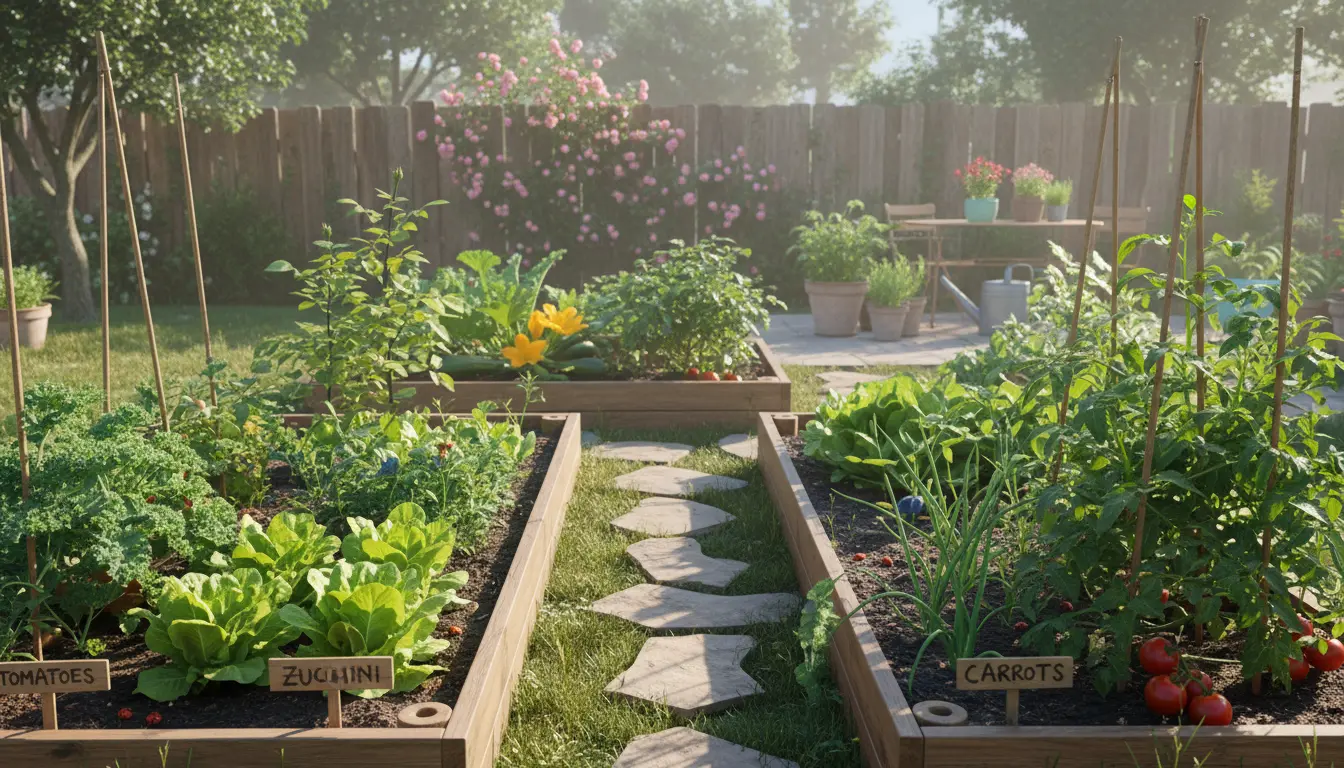
Starting a small vegetable garden can be a rewarding, low-cost way to grow fresh food. This guide explains clear, practical steps to help you plan, plant, and maintain a productive small vegetable garden.
Plan Your Small Vegetable Garden
Begin by deciding the garden type: raised beds, containers, or an in-ground patch. Each option fits different spaces and budgets.
Assess sunlight, water access, and space. Most vegetables need 6–8 hours of sun daily, so choose a sunny spot whenever possible.
Set Goals and Scale
List what you want to grow and estimate needed space. For example, a few tomato plants, a row of lettuce, and some herbs can fit in a 4×4-foot bed.
- Short-term goals: Quick crops like lettuce and radishes.
- Long-term goals: Perennials or larger crops like tomatoes and peppers.
- Budget: Seeds, soil, containers, and basic tools.
Choose Location and Soil
Location affects yields significantly. Pick a spot with good sun, easy access to water, and protection from strong wind.
Good soil is loose, drains well, and contains organic matter. If soil is poor, use raised beds or containers with quality potting mix.
Test and Improve Soil
Do a simple soil test: check texture and drainage by digging a small hole and filling with water. It should drain within a few hours.
To improve soil, add compost, aged manure, or a balanced organic fertilizer. Work amendments into the top 6–8 inches for most vegetable crops.
Select Plants for a Small Vegetable Garden
Choose crops that fit your climate, season, and space. Start with easy, high-yield plants if you’re new to gardening.
Good beginner choices include lettuce, radishes, bush beans, cherry tomatoes, herbs, and spinach.
Consider Varieties and Timing
Pick compact or bush varieties for small spaces. Look for terms like ‘dwarf’, ‘bush’, or ‘compact’ on seed packets.
Plan planting times using your local frost dates. Warm-season crops need frosts to pass; cool-season crops can be planted earlier.
Prepare and Plant
Prepare beds or containers by removing weeds and loosening the soil. Add a 2–3 inch layer of compost before planting.
Follow spacing guidelines on seed packets or plant tags. Overcrowding reduces airflow and increases disease risk.
Planting Steps
- Mark rows or pot positions to maintain spacing.
- Plant seeds or seedlings at the recommended depth.
- Water gently to settle soil and reduce transplant shock.
Watering and Maintenance for a Small Vegetable Garden
Consistent watering is key. Most vegetables need about 1 inch of water per week, adjusted for rain and heat.
Water at the base of plants early in the day to reduce evaporation and leaf wetness. Mulch helps retain moisture and suppress weeds.
Routine Tasks
- Weed weekly to reduce competition for nutrients.
- Check for pests and diseases regularly.
- Side-dress heavy feeders like tomatoes with compost or fertilizer mid-season.
Pest Control and Fertilization
Use integrated pest management: monitor, use physical barriers, and apply targeted treatments only when needed.
Natural controls include row covers for insects, hand-picking pests, and encouraging beneficial insects like ladybugs.
Fertilizer Tips
Most small gardens do well with a slow-release balanced fertilizer or regular additions of compost. Avoid over-fertilizing, which favors leaves over fruits.
Follow package instructions and observe plant response to adjust feeding schedules.
Case Study: City Balcony Small Vegetable Garden
Maria, a city renter, used a 6-foot balcony to grow vegetables in containers. She planted two determinate tomato plants, three herb pots, and a shallow container for lettuce and radishes.
After 12 weeks she harvested weekly lettuce, herbs, and small tomato crops. Her success factors: afternoon sun, regular watering with a drip bottle, and weekly compost tea feedings.
Lessons: Choose compact varieties, monitor water closely, and use vertical supports to save space.
Planting marigolds near vegetables can help repel some insect pests and attract pollinators. Companion planting can improve yields without chemicals.
Seasonal Checklist for a Small Vegetable Garden
- Spring: Prepare beds, plant cool-season crops, start warm-season seedlings indoors.
- Summer: Water deeply, stake plants, harvest regularly to encourage production.
- Fall: Plant cover crops or remove old plants, collect seeds, and add compost.
Starting a small vegetable garden is manageable with basic planning, the right plant choices, and regular care. Use this guide as a checklist and adapt steps to your space and climate for steady success.