
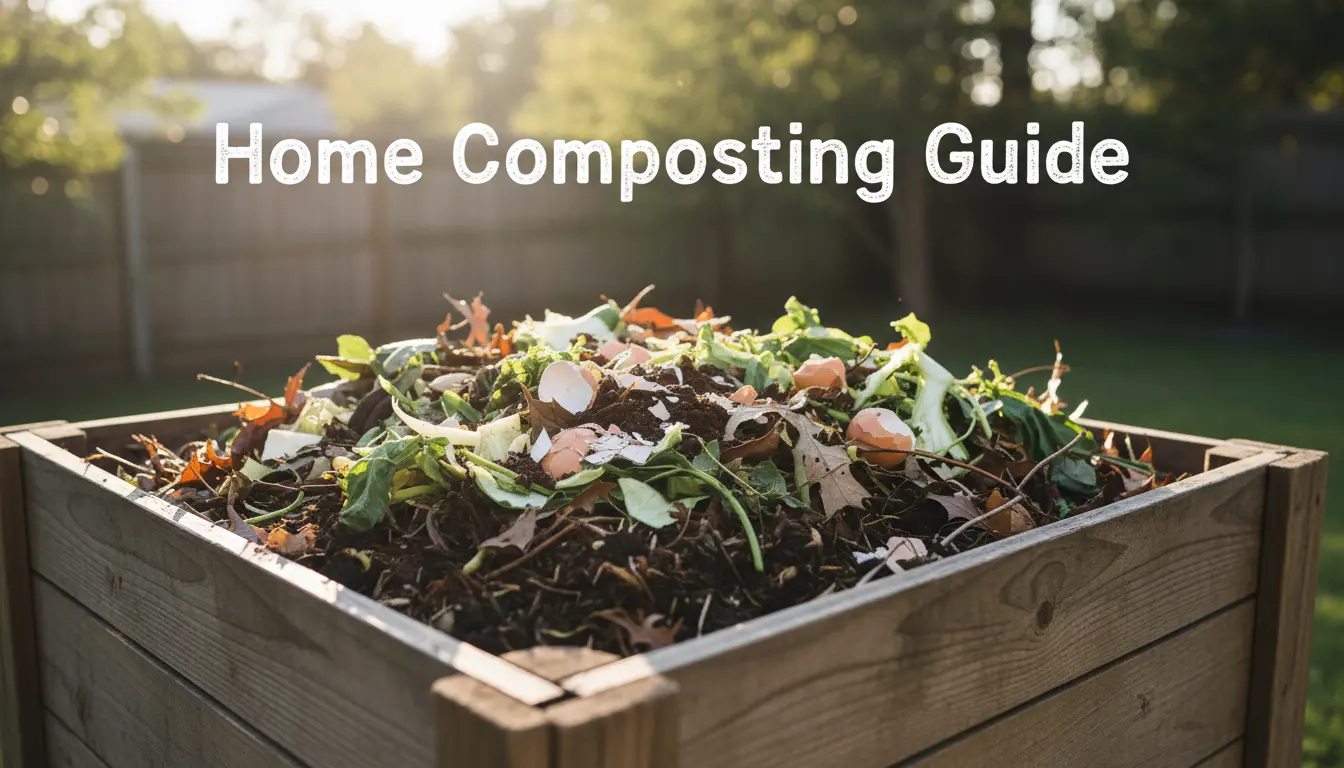
What Is Home Composting?
Home composting turns kitchen scraps and yard waste into nutrient-rich soil. It is a low-cost way to reduce household waste and improve garden soil without synthetic fertilizers.
This guide explains practical steps you can take to start and maintain a home compost system, whether you have a backyard, balcony, or small indoor space.
How to Start Home Composting
Starting is simple: choose a method, gather materials, and learn basic maintenance. Pick an approach that fits your space and lifestyle so you’re more likely to keep it up.
Choose a Composting Method
There are several methods suited to different living situations. Each method affects maintenance time and the speed of decomposition.
- Open bin: Good for gardeners with a yard. Low cost, simple construction.
- Tumbling composter: Easier turning, faster results, good for small yards.
- Bokashi (fermentation): Works indoors, handles meat and dairy, needs a follow-up soil burial or composting step.
- Vermicomposting (worms): Ideal for apartments and balconies; uses red wigglers to process food scraps.
Materials to Add
Compost needs a balance of carbon-rich and nitrogen-rich materials. Aim for variety to speed decomposition and reduce odors.
- Greens (nitrogen): Vegetable scraps, coffee grounds, fresh grass clippings.
- Browns (carbon): Dry leaves, shredded paper, cardboard, straw.
- Avoid: Oily foods, large bones, diseased plants, and pet waste unless using a specialized system.
Balance and Maintenance
Keep the right moisture, air, and particle size to prevent odors and pests. A balanced pile breaks down more quickly and produces better compost.
- Layer materials: Alternate greens and browns in 2–4 inch layers.
- Turn regularly: Aerate the pile weekly for faster decomposition, or use a tumbler for easier turning.
- Moisture: Aim for a damp sponge feel. Add water if dry, add browns if too wet.
- Chop or shred large pieces to speed breakdown.
Troubleshooting Common Issues
Problems are usually easy to fix once you identify the cause. Common issues include smell, pests, and slow decomposition.
Smells
Bad odors typically mean too much nitrogen or poor aeration. Fix by adding dry brown material and turning the pile to introduce air.
Pests
Raccoons, rats, and flies are attracted to exposed food. Use a closed bin, bury food under browns, or switch to a secure tumbler or bokashi system.
Slow Breakdown
Slow composting results from large pieces, low moisture, or low temperatures. Chop materials, water when needed, and add nitrogen-rich greens to speed things up.
Composting diverts organic waste from landfills where it would produce methane. Proper home composting can significantly reduce household greenhouse gas emissions.
Using Finished Compost
Finished compost looks dark, crumbly, and earthy-smelling. It usually takes 3–12 months depending on the method and care.
- Topdress gardens or flower beds with a 1–2 inch layer.
- Mix into potting soil up to 20% for houseplants and containers.
- Use as mulch around trees and shrubs to retain moisture and suppress weeds.
Small Real-World Example
Case study: A two-person apartment household started vermicomposting with a small worm bin. They added kitchen scraps and coconut coir bedding and harvested worm castings every three months.
Results after six months: they reduced their weekly kitchen waste by 60% and produced enough castings to feed several balcony planters, improving tomato yields by 25% compared to the previous season.
Quick Start Checklist for Home Composting
- Choose a compost method that fits your space.
- Collect greens and browns separately in two small containers.
- Layer materials and keep the pile damp but not soggy.
- Turn or aerate regularly, or use a tumbler.
- Monitor for smells and pests and adjust balance as needed.
Final Tips for Success with Home Composting
Start small and stay consistent. Frequent small additions and occasional maintenance produce reliable results without much time commitment.
Record what you add and how often you turn the pile. Over time you will dial in the right mix for your climate and waste stream.
With modest effort, home composting becomes a routine that cuts waste, saves money, and benefits your garden.