
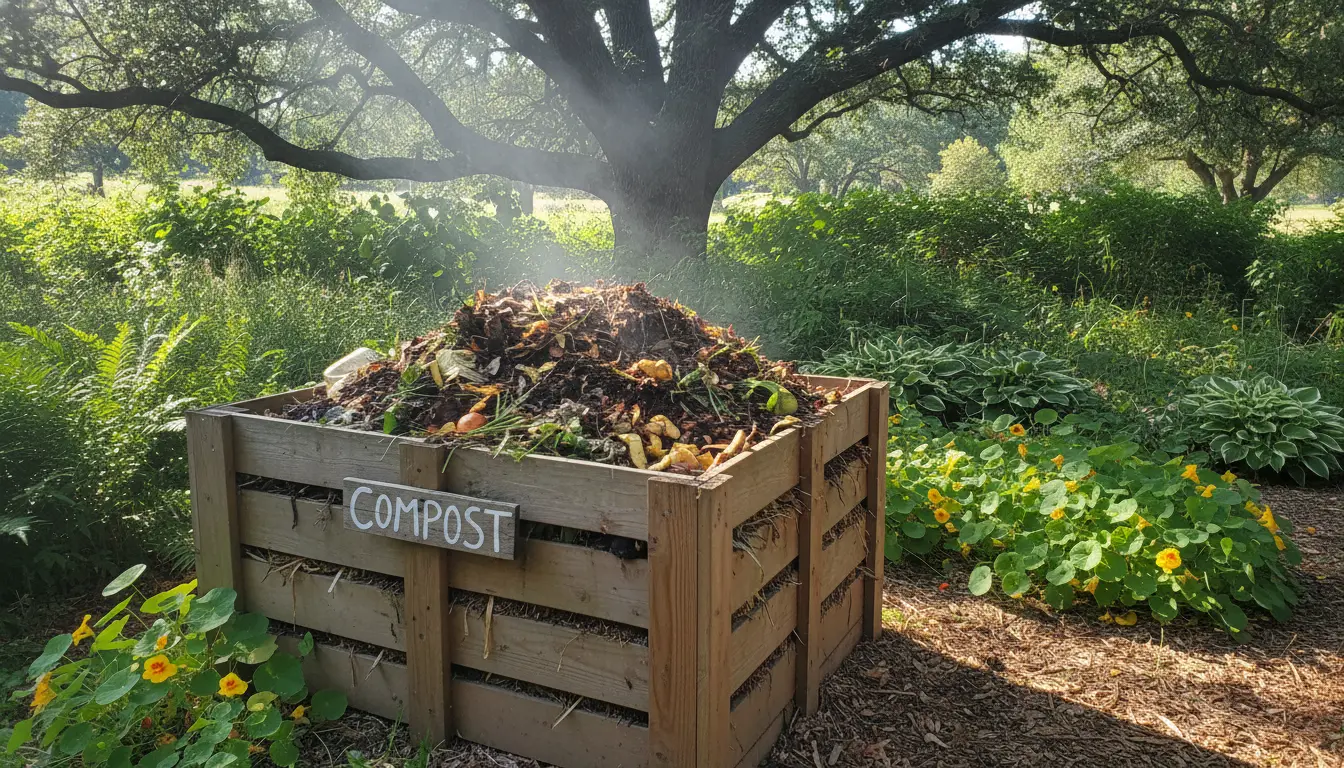
Start Home Composting for Beginners with Simple Steps
Composting at home turns kitchen scraps and yard waste into rich soil. This guide explains clear, practical steps for beginners so you can start composting today.
Why Choose Home Composting for Beginners
Home composting reduces landfill waste and creates nutrient-rich material for gardens. It also saves money on fertilizers and improves soil health.
Beginners can start with a few simple practices and scale up as they learn what works for their space and climate.
Benefits of home composting for beginners
- Reduces household waste volume by up to 30 percent.
- Improves soil structure and water retention in gardens.
- Reduces need for chemical fertilizers.
- Provides a hands-on way to learn about decomposition and ecosystems.
How to Start Home Composting for Beginners: Tools and Options
You do not need fancy equipment to begin. Choose a method that fits your space and time.
Choose a bin or method
- Open pile: Good for large yards and simple turning.
- Bin or tumbler: Better for small yards or tidy spaces and speeds decomposition.
- Worm farm (vermicompost): Excellent for apartments and producing fine, nutrient-rich castings.
What to compost
Balance ‘greens’ (nitrogen-rich) and ‘browns’ (carbon-rich) for stable decomposition.
- Greens: fruit and vegetable scraps, coffee grounds, fresh grass clippings.
- Browns: dry leaves, shredded paper, cardboard, small wood chips.
- Avoid: meat, dairy, oily foods, diseased plants, and pet waste.
Step-by-Step Home Composting for Beginners
The following routine keeps compost active and minimizes odors and pests.
- Pick a dry, shaded spot near a water source or place a bin on a balcony if space is limited.
- Start with a layer of browns to help airflow and absorb moisture.
- Add kitchen greens and cover them with browns each time to deter pests and flies.
- Keep the pile moist like a wrung-out sponge. Water occasionally during dry periods.
- Turn or mix the pile every 1–2 weeks to add oxygen and speed breakdown.
Troubleshooting common problems
- Smelly pile: Add more browns and turn to add air.
- Slow breakdown: Chop materials into smaller pieces and maintain moisture.
- Pests: Keep meat and dairy out, cover food scraps, and use a closed bin if necessary.
Tips to Keep Home Composting for Beginners Efficient
Small adjustments deliver big results. Use these tips to keep compost healthy and active.
- Shred or chop larger items to speed decomposition.
- Mix different materials to maintain a balanced carbon-to-nitrogen ratio.
- Layer materials rather than dumping single types together.
- Use a thermometer if you want to manage temperature for faster composting.
A well-maintained compost pile can reach temperatures of 140 to 160 degrees Fahrenheit, which helps kill weed seeds and pathogens.
Small Real-World Example: A Neighborhood Kitchen to Garden Loop
Maria, a city apartment dweller, started a vermicompost bin under her kitchen counter. She saved vegetable scraps in a sealed container and fed them to red wiggler worms twice weekly.
After four months, Maria had rich worm castings she mixed with potting soil for her balcony tomatoes. Her plant yield improved and she reduced weekly trash by about 25 percent.
Case Study: Family Garden Compost System
A family of four set up a three-bin system in their suburban backyard. They used one bin for active fresh additions, one for curing, and one for finished compost.
Over a year they produced enough compost to top-dress their vegetable beds and cut store-bought fertilizer costs by 60 percent. Proper turning and material balance kept odors low and neighborhood complaints at zero.
How to Use Finished Compost from Home Composting for Beginners
Finished compost is dark, crumbly, and earthy-smelling. Use it to boost garden beds and containers.
- Top-dress lawns with a thin layer of compost to improve soil gradually.
- Mix compost into garden beds at a ratio of about 1 part compost to 3 parts soil.
- Use compost as a potting mix ingredient for containers and seedlings.
Final Checklist for Home Composting for Beginners
- Choose the right bin or method for your space.
- Keep a balance of greens and browns.
- Maintain moisture and aeration by turning the pile.
- Monitor and troubleshoot odors, pests, and moisture.
- Use finished compost to enrich soil and reduce fertilizer needs.
Starting to compost at home is simple and scalable. Follow these practical steps and you will turn organic waste into a valuable resource for your garden.