
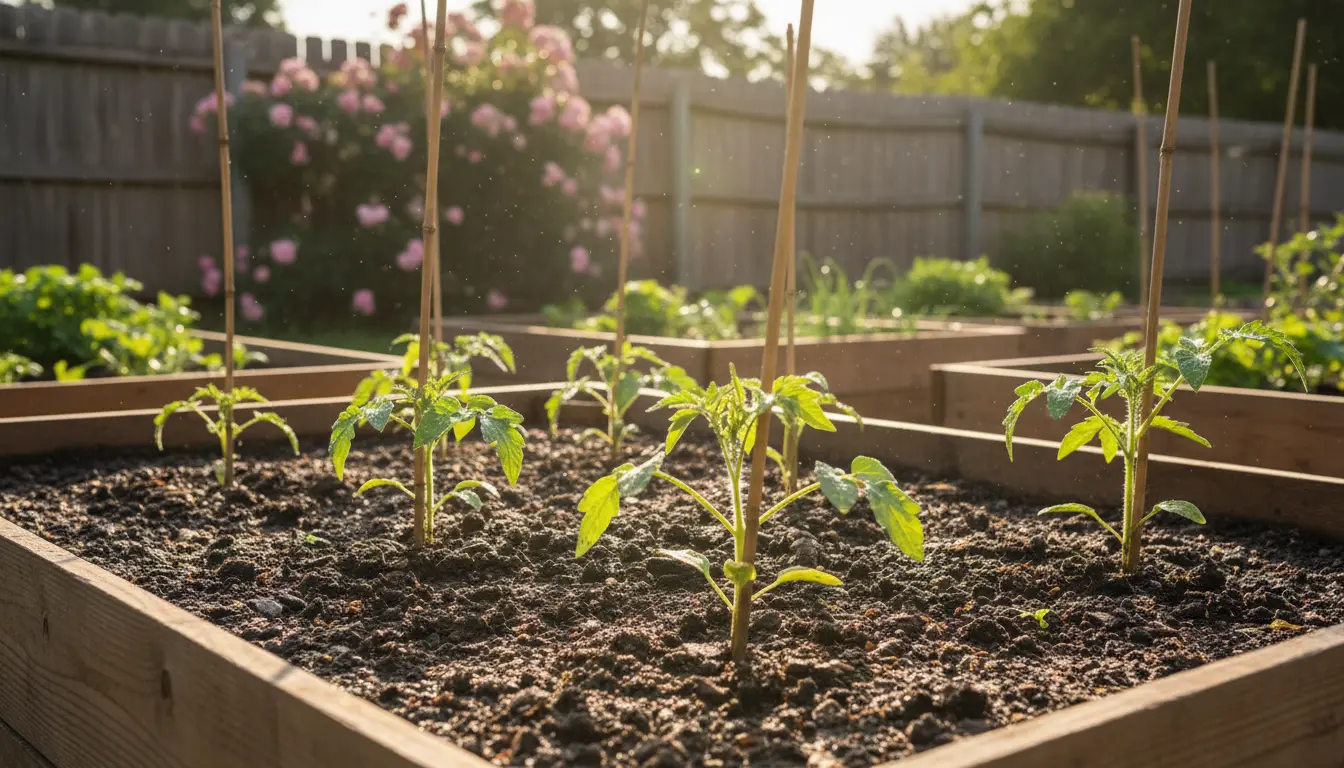
How to Start a Vegetable Garden: Quick Overview
Starting a vegetable garden is accessible and rewarding. This guide focuses on clear steps you can follow with minimal tools and realistic expectations.
How to Start a Vegetable Garden: Choose the Right Location
Pick a spot that gets at least six hours of direct sunlight daily. Vegetables like tomatoes, peppers, and cucumbers need full sun to produce well.
Consider accessibility to water and ease of daily care. If backyard space is limited, use containers or raised beds on a patio or balcony.
Assess soil and drainage
Check how water flows after a rain. Avoid areas that remain soggy for days. Good drainage prevents root rot and disease in most vegetables.
If your soil is heavy clay or too sandy, raised beds with a mixed garden soil are an efficient solution.
How to Start a Vegetable Garden: Plan What to Grow
Start with easy, high-reward vegetables: lettuce, radishes, green beans, zucchini, and tomatoes. Choose varieties marked as suitable for your climate zone.
- Prioritize crops you and your household will eat.
- Mix quick-growing plants (radishes, lettuce) with longer-season crops (tomatoes, squash).
- Consider companion planting to maximize space and pest control.
Use a simple planting calendar
Check your last frost date and plan sowing times accordingly. Start seeds indoors for warm-season crops if your season is short.
How to Start a Vegetable Garden: Prepare the Soil
Healthy soil is the foundation of a productive garden. Aim for loose, crumbly soil rich in organic matter.
Basic steps include removing weeds, loosening the top 8 to 12 inches, and adding compost or well-rotted manure.
- Test soil pH with a simple kit; most vegetables prefer pH 6.0 to 7.0.
- Add compost at 1 to 2 inches over the bed and work it in.
- Avoid over-tilling which can damage soil structure and microbes.
How to Start a Vegetable Garden: Planting and Spacing
Follow seed packet or plant tag spacing to avoid overcrowding. Good airflow reduces disease risk and improves yields.
Plant in rows or blocks depending on your bed layout. Blocks are often more space-efficient and easier to water.
Succession planting
Stagger sowing times for continuous harvests. For example, sow lettuce every two weeks to keep fresh leaves all season long.
How to Start a Vegetable Garden: Watering and Mulching
Water deeply and less often to encourage strong root systems. Most vegetable beds need about 1 inch of water per week, adjusted for rainfall and heat.
Mulch with straw, shredded leaves, or wood chips to retain moisture and suppress weeds. Keep mulch a few inches from plant stems to prevent rot.
How to Start a Vegetable Garden: Basic Care and Pest Management
Inspect plants regularly for pests and disease. Early detection makes control simpler and reduces crop loss.
- Use hand-picking for larger pests like slugs and caterpillars.
- Encourage beneficial insects with a diversity of flowering plants nearby.
- Use row covers to protect young plants from insect pressure and frost.
When to fertilize
Apply a balanced fertilizer according to label directions or use compost tea every few weeks. Too much nitrogen can lead to leafy plants with fewer fruits.
Planting marigolds with tomatoes can reduce certain soil nematodes and attract beneficial insects that control pests.
How to Start a Vegetable Garden: Harvesting and Storage
Harvest vegetables at peak ripeness for best flavor and nutrition. Many crops like peas and beans taste best when picked young.
Store root vegetables in a cool, dark place and use leafy greens within a few days for best texture.
Small Case Study: A City Balcony Garden
Case study: Mia, a teacher in a small apartment, used two large containers and three hanging planters to grow tomatoes, basil, and salad greens.
She placed them on a south-facing balcony, used potting mix with compost, watered every other day, and harvested weekly. By midsummer she had fresh salads and pesto, and saved money on produce.
How to Start a Vegetable Garden: Common Mistakes and Tips
Avoid these common mistakes: planting too closely, overwatering, and ignoring soil quality. Small, regular actions pay off more than one large effort.
Practical tips:
- Start small and expand next season. Managing a 4×8 bed is easier than a large plot for first-timers.
- Keep a garden notebook to track planting dates, varieties, and results.
- Learn by doing: experiment with one new variety each season.
Conclusion: How to Start a Vegetable Garden and Keep It Simple
Starting a vegetable garden is a step-by-step process: pick a sunny site, prepare soil, choose easy crops, and maintain consistent care.
With planning and small, regular tasks you can grow fresh produce even in limited spaces. Start small, learn, and enjoy the rewards.