
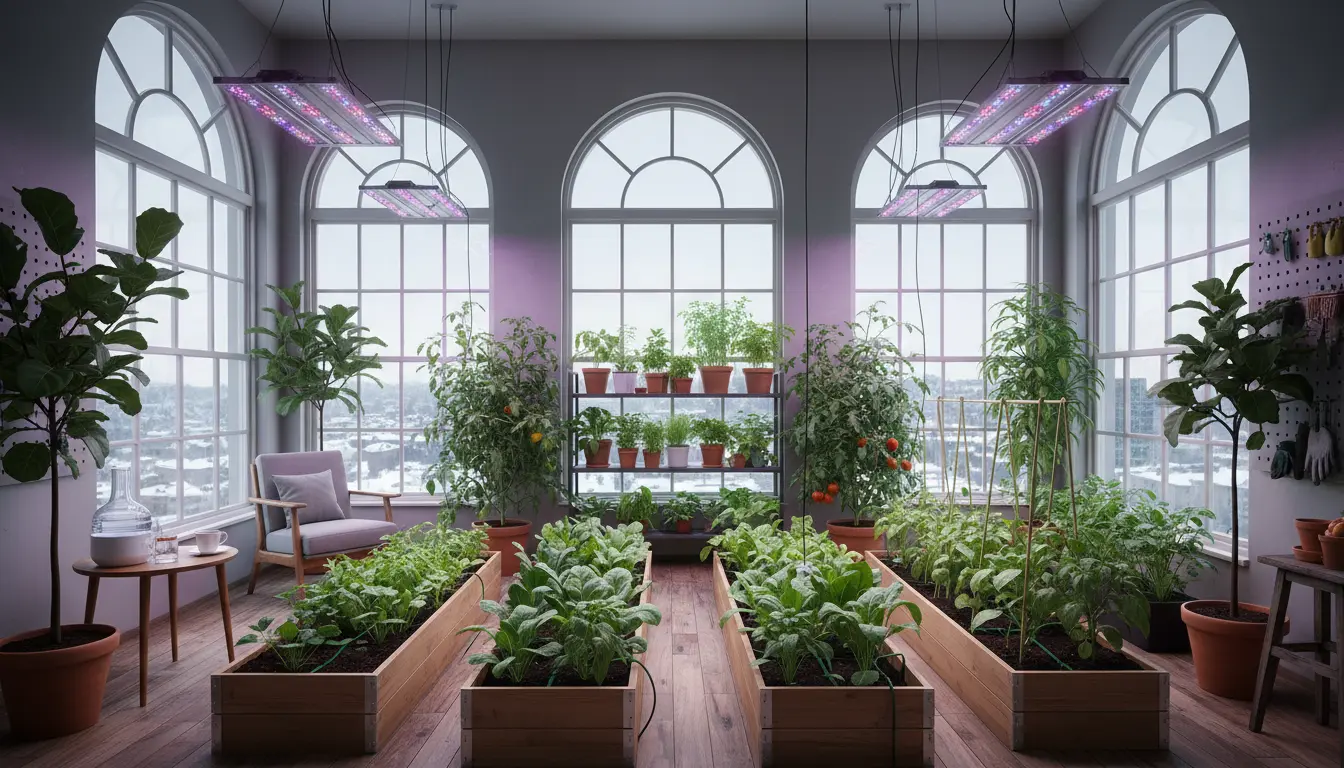
Indoor vegetable gardening lets you grow fresh produce year-round in small spaces. This guide gives practical steps and clear choices so you can start a productive indoor garden with minimal cost and fuss.
Indoor Vegetable Gardening Basics
Indoor vegetable gardening focuses on containers, light management, and regular care. You don’t need a yard — just a bright spot, basic supplies, and consistent routines.
Success indoors depends on matching plant needs to your conditions. Start small with easy crops and expand as you learn.
Benefits of indoor vegetable gardening
- Year-round harvests regardless of climate.
- Fewer pests and less space required than outdoor beds.
- Fresh herbs and salads within arm’s reach of your kitchen.
Choosing Plants for Indoor Vegetable Gardening
Pick compact, fast-growing, and shade-tolerant varieties for the best results. Leafy greens and herbs are ideal first crops.
Recommended plants
- Lettuce and mixed salad greens — quick and forgiving.
- Herbs: basil, parsley, chives, and cilantro.
- Microgreens — harvest in 1–3 weeks from seed.
- Compact tomatoes and peppers (choose patio or dwarf varieties).
Light, Soil, and Water for Indoor Vegetable Gardening
Light is the single most important factor for indoor vegetable gardening. Most vegetables need 10–16 hours of bright light daily.
Light options
- South- or west-facing windows provide the best natural light.
- LED grow lights are energy-efficient and reliable.
- Position lights 6–12 inches above plants and use timers for consistency.
Soil and watering
Use a quality potting mix with good drainage and organic matter. Avoid garden soil — it compacts in containers.
Water when the top 1–2 inches of mix feel dry. Containers with drainage holes reduce root rot risk.
Containers, Layout, and Support
Choose containers that match plant size. Small herbs do fine in 6–8 inch pots while tomatoes need 5 gallons or more.
Container tips for indoor vegetable gardening
- Use lightweight pots with drainage trays to protect surfaces.
- Group plants by light needs to simplify placement under lights or near windows.
- Vertical racks or shelving can increase growing area in a small room.
Feeding, Pruning, and Pest Control
Fertilize regularly with a balanced liquid feed or slow-release granules. Indoor crops have limited soil, so nutrients deplete faster.
Practical care steps
- Fertilize every 2–4 weeks during active growth with a balanced fertilizer.
- Pinch back herbs to encourage bushy growth and prevent flowering.
- Inspect weekly for common pests like aphids and fungus gnats and act early.
Step-by-Step Setup for Indoor Vegetable Gardening
Follow this quick setup to get growing this weekend.
- Choose a location with the most light or set up an LED grow light.
- Select 2–4 containers and fill with potting mix and slow-release fertilizer.
- Sow seeds or transplant seedlings suited for containers.
- Set a watering schedule and install a timer for lights if used.
- Monitor growth weekly and adjust light height, water, and nutrients as needed.
Case Study: Balcony Apartment Lettuce Tray
A two-person apartment used a 3-foot balcony shelf and a 24-inch LED bar to grow salad greens. They planted four 10×10 inch trays with mixed lettuce and arugula.
Within six weeks they harvested continuous baby greens, reducing grocery salad purchases by 60% and saving about $25 per month. The setup cost was under $120 and paid back in produce value within five months.
Microgreens contain higher concentrations of vitamins and antioxidants than their mature counterparts. They can be grown indoors in as little as 7–21 days.
Troubleshooting Common Problems in Indoor Vegetable Gardening
Yellow leaves usually mean overwatering or nutrient deficiency. Stretching plants indicate insufficient light. Small sticky insects often point to aphids or whiteflies.
Quick fixes
- Reduce watering frequency and improve drainage for yellowing leaves.
- Raise grow lights or increase hours of light for leggy plants.
- Use insecticidal soap or a focused spray to control small pest outbreaks.
Final Tips for Indoor Vegetable Gardening
Start with a manageable number of plants and track what works in your space. Keep a simple log of watering, fertilizing, and harvest dates to refine your routine.
With consistent light and a little care, indoor vegetable gardening can supply fresh produce, reduce waste, and make small-space living healthier and more sustainable.