
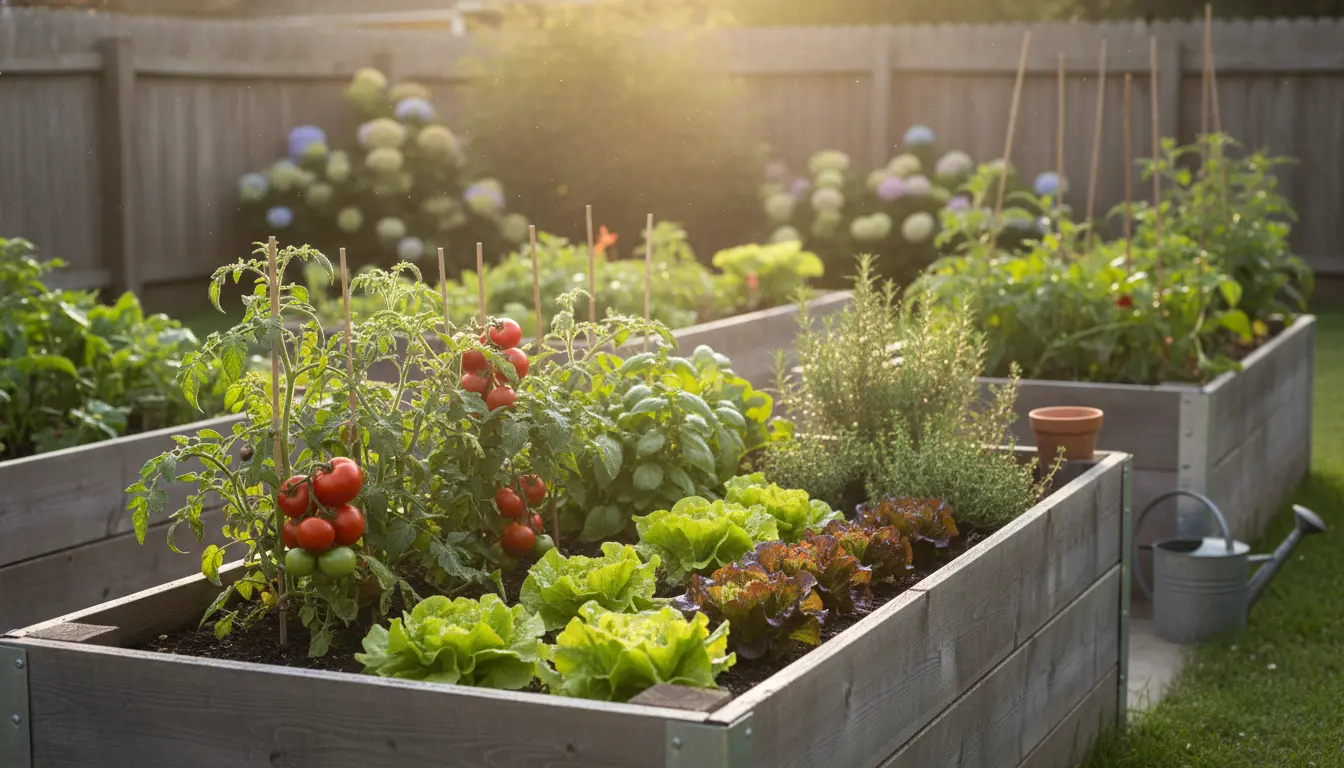
Starting a vegetable garden is a practical way to grow fresh food, save money, and enjoy time outdoors. This guide shows how to start a vegetable garden with clear steps you can follow in a weekend and maintain through the season.
How to Start a Vegetable Garden: Plan Your Garden
Begin with a simple plan before you dig. Good planning reduces wasted effort and improves yields.
Choose a location
Select a spot that gets at least six hours of sun a day for most vegetables. Look for level ground with easy access to water.
If full sun is limited, choose crops that tolerate partial shade like leafy greens and herbs. Consider proximity to your kitchen to make harvesting convenient.
Decide on bed type and size
Raised beds, in-ground rows, and containers each have pros and cons. Raised beds warm faster and drain well, while containers are best for small patios.
- Raised beds: good for heavy soils and better drainage.
- In-ground: cost-effective for large areas with decent soil.
- Containers: ideal for small spaces and mobility.
How to Start a Vegetable Garden: Prepare the Soil
Healthy soil is the foundation of a productive garden. Spend time improving soil structure and fertility before planting.
Test and amend soil
Use a simple soil test kit to check pH and nutrients. Vegetables usually prefer a pH between 6.0 and 7.0.
Amend soil with compost, aged manure, or peat-free alternatives to increase organic matter. Mix amendments into the top 6–8 inches of soil.
Improve drainage and structure
If your soil is clay-heavy, add coarse sand and compost to loosen it. For very sandy soil, add compost and organic mulches to retain moisture.
How to Start a Vegetable Garden: Choose Plants
Select vegetables that match your climate, season, and skill level. Start with a few reliable crops to build confidence.
Easy starter vegetables
- Tomatoes (staked or caged)
- Leafy greens (lettuce, spinach)
- Radishes and carrots
- Beans and peas
- Zucchini and summer squash
Check your hardiness zone and planting dates so you plant at the correct time. Use seed packets or plant tags for spacing and days to maturity.
How to Start a Vegetable Garden: Planting and Care
Follow best practices for planting, watering, and feeding to ensure steady growth and better yields.
Planting tips
- Space plants according to recommendations to avoid overcrowding and disease.
- Plant seeds at the depth listed on the packet; transplant seedlings at the same soil depth they grew in pots.
- Mulch around plants to suppress weeds and retain moisture.
Watering and feeding
Water deeply and less often to encourage strong root systems. Aim for consistent moisture rather than frequent shallow watering.
Use a balanced organic fertilizer or compost tea every 3–4 weeks for heavy feeders like tomatoes and squash. Monitor plants and adjust feeding as needed.
Common Problems and Simple Solutions
New gardeners often face pests, diseases, and nutrient issues. Many problems are preventable with the right practices.
- Pests: Use row covers, hand-pick insects, and encourage beneficial insects like ladybugs.
- Diseases: Rotate crops yearly and avoid overhead watering to reduce fungal issues.
- Nutrient deficiency: Add compost and consider a soil test to guide amendments.
- Weeds: Mulch and shallow cultivation keep weeds from competing with crops.
Small Real-World Case Study
Case: Sarah transformed a 10×6 foot unused patch at her apartment into three raised beds. She chose tomatoes, lettuce, and bush beans for the first season.
Sarah spent one weekend building beds and adding 6 inches of compost-amended topsoil. She planted seedlings and used drip irrigation to conserve water.
By late summer she harvested steady salads weekly and 20 pounds of tomatoes total. Her main lessons were to thin seedlings early and mulch to cut watering time by half.
How to Start a Vegetable Garden: Quick Checklist
- Choose sunny location and bed type.
- Test soil and add compost or amendments.
- Select 4–6 easy crops for your first season.
- Plant at recommended spacing and depth.
- Water deeply, mulch, and feed as needed.
- Monitor for pests and rotate crops next season.
Interplanting quick-growing crops like radishes between slower plants can increase harvests and reduce empty soil time. This technique boosts productivity in small beds.
Final Tips
Start small and expand as you gain experience. Keep a simple garden journal to track planting dates, varieties, and harvests.
Gardening is a seasonal learning process. With basic planning, soil care, and attention, you can reliably grow fresh vegetables even in small spaces.