
Why Home Composting Matters
Home composting reduces household waste and returns nutrients to soil. It lowers landfill use and greenhouse gas emissions while providing free organic material for gardens.
Beginners can start with simple systems and scale up later. Composting fits apartments and large yards alike when you follow basic rules.
How Home Composting Works
Composting is a controlled breakdown of organic matter by microbes and invertebrates. The process needs carbon, nitrogen, moisture, and air to work efficiently.
Balance these elements and microbes produce finished compost within weeks to months, depending on conditions.
Key Components of Home Composting
- Carbon (browns): dry leaves, cardboard, paper.
- Nitrogen (greens): kitchen scraps, fresh grass clippings.
- Moisture: like a wrung-out sponge, not soaking wet.
- Air: regular turning helps aerobic microbes.
Setting Up a Compost Bin at Home
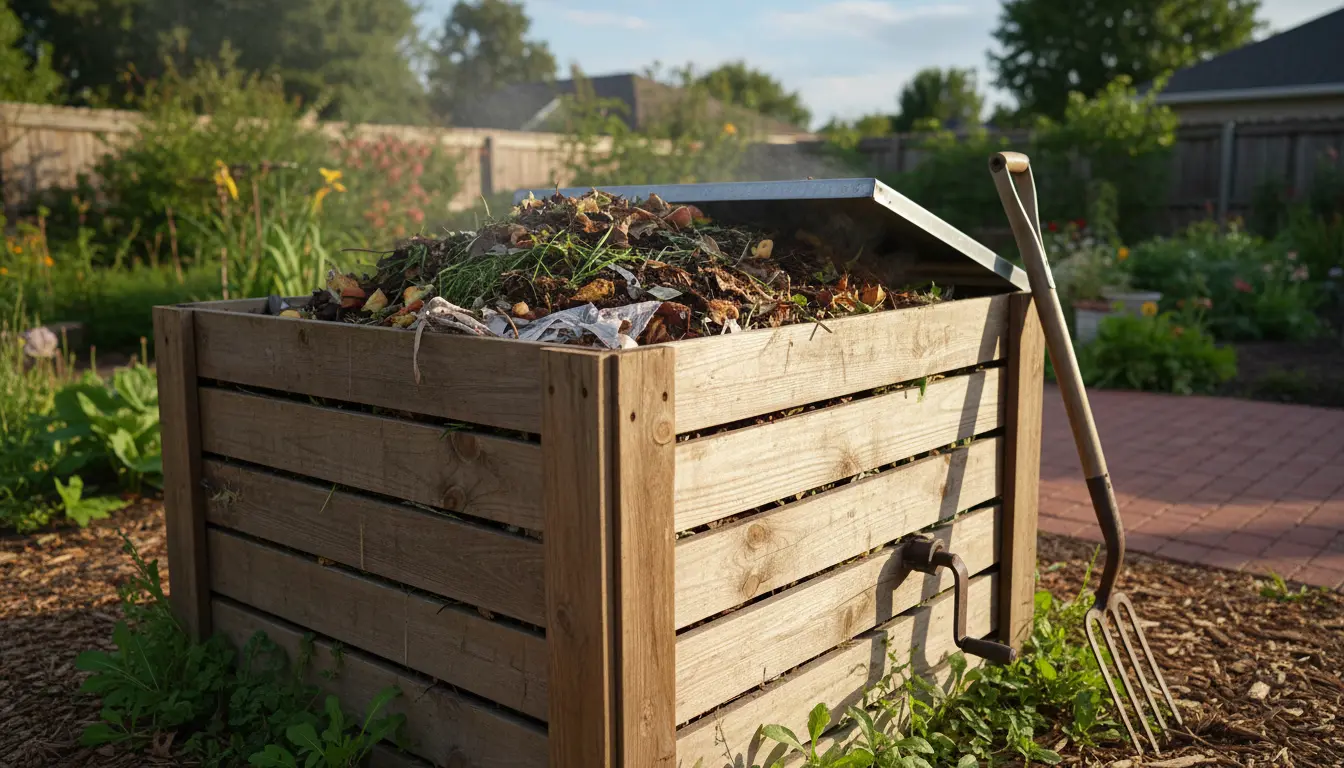
Choose a container that fits your living situation. Options include tumblers, stationary bins, or a simple pile in the yard.
Location matters: pick a level, well-drained spot with partial sun to maintain activity without overheating.
Small Space and Apartment Options
Indoor or balcony composting uses bokashi systems, vermicomposting (worms), or sealed tumblers. These systems control odors and fit tight spaces.
Vermicomposting is ideal for food scraps like fruit peels and coffee grounds. Worm bins can fit under a sink or on a balcony and produce both compost and liquid fertilizer.
Materials to Start Your Bin
- Bin or tumbler
- Bulky brown materials (twigs, shredded cardboard)
- Green materials (vegetable scraps, fresh lawn clippings)
- Garden fork or compost turning tool
- Thermometer (optional) to track heat
Maintaining Your Home Composting System
Routine maintenance keeps the pile active. Turn the pile every 1–2 weeks to add oxygen and speed decomposition.
Keep a rough carbon-to-nitrogen (C:N) ratio near 25–30:1 for hot composting. For small home systems, aim for visible layers of brown and green materials.
Practical Tips for Balance
- Add shredded paper or leaves if the pile smells or is too wet.
- Add water when it feels dry, but avoid saturation.
- Chop or shred large items to increase surface area and speed breakdown.
Troubleshooting Common Issues in Home Composting
Even simple systems can run into problems. Troubleshoot by changing one condition at a time to find what helps.
Bad Smell
Smells usually mean anaerobic conditions. Turn the pile, add dry browns, and increase airflow.
Slow Decomposition
Slow break down often stems from lack of nitrogen, moisture, or small particle size. Add green materials, water as needed, and chop large pieces.
Pests
Keep food scraps buried under brown material or use closed systems. Avoid adding meat, dairy, or oily foods that attract animals.
Composting a single household can divert hundreds of pounds of organic waste from the landfill each year and create enough compost to enrich several square meters of garden soil.
Case Study: Small Balcony Vermicompost System
Maria lives in a two-bedroom apartment and started vermicomposting in a stacked plastic bin. She added red wiggler worms and began with shredded cardboard and weekly kitchen scraps.
Within three months she harvested dark, crumbly worm castings and used them to revive potted herbs. Her system produced minimal odor and cut her organic waste by roughly 60%.
How to Use Finished Home Compost
Finished compost looks dark and crumbly with an earthy smell. Use it as a top dressing, potting mix additive, or soil amendment before planting.
Blend 10–30% compost into garden soil to improve structure and nutrient retention. For container plants, mix one part compost with two parts potting mix.
Final Tips for Successful Home Composting
- Start small and keep a kitchen scrap container to collect greens.
- Record what you add and the pile’s condition to learn what works over time.
- Be patient—composting is a biological process that improves with practice.
- Join local composting groups or workshops to learn region-specific tips.
Home composting is an achievable daily habit that benefits gardens and the environment. With basic materials and a bit of attention, anyone can turn waste into valuable soil-building material.