
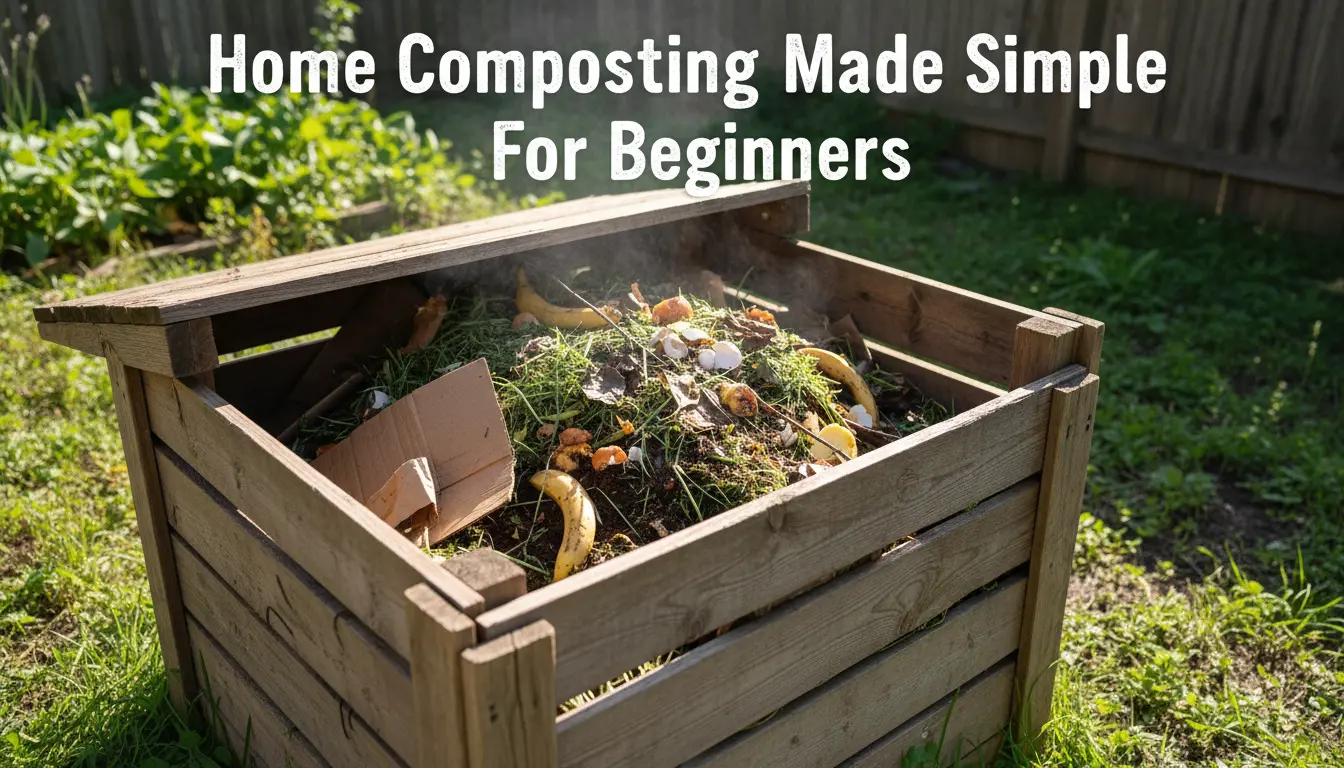
Composting at home turns kitchen scraps and yard waste into valuable soil conditioner. This guide gives clear, practical steps to begin home composting, avoid common mistakes, and maintain a healthy bin.
Why Start Home Composting?
Home composting reduces household waste, lowers methane emissions from landfills, and supplies nutrient-rich compost for gardens. It is an affordable way to improve soil structure and water retention.
Compost also feeds beneficial microbes and reduces the need for chemical fertilizers. Small-scale composting fits apartments with bokashi or vermicomposters and large yards with tumblers or open piles.
What You Need to Start Composting at Home
You do not need specialist equipment to begin home composting. Basic items include a bin or designated pile, a mix of materials, a way to turn the pile, and a thermometer if you want to monitor temperatures.
Select a method that matches your living situation and how much waste you generate. Options range from simple backyard piles to indoor worm bins.
Choose a Bin or Method for Home Composting
Common choices for home composting:
- Backyard compost bin or tumbler: Good for medium to large volumes and faster composting.
- Open compost pile: Cheap and simple for larger gardens but takes more space and attention.
- Vermicomposting (worm bin): Ideal for small spaces and kitchen scraps; produces rich worm castings.
- Bokashi system: Ferments food waste indoors for later burial in soil; useful for apartments.
Materials to Add and Avoid in Home Composting
Balance carbon-rich “browns” and nitrogen-rich “greens” for effective home composting. Browns provide structure and carbon; greens supply nitrogen and moisture.
- Greens: Vegetable scraps, fruit peels, coffee grounds, fresh grass clippings.
- Browns: Dry leaves, shredded paper, cardboard, straw.
- Avoid: Meat, dairy, oils, diseased plants, pet waste from carnivores.
Step-by-Step: How to Start Composting at Home
-
Choose a location.
Pick a well-drained, partly shaded spot near a water source. For indoor methods, select a ventilated area with stable temperature.
-
Assemble a balanced pile.
Start with a layer of coarse browns (twigs or straw) to promote airflow. Add alternating layers of greens and browns in roughly 2:1 brown-to-green volume.
-
Maintain moisture and aeration.
Compost should feel like a wrung-out sponge — damp but not soggy. Turn or mix the pile every 1–2 weeks for aerobic decomposition.
-
Monitor progress.
Hot composting (131–160°F) breaks down material faster. Use a compost thermometer or simply observe heat and smell. Cool, slow piles still produce compost over months.
-
Harvest finished compost.
When material is dark, crumbly, and earthy-smelling, it is ready. Sift out large pieces and return them to the pile for further breakdown.
Troubleshooting Home Composting Problems
Common issues are easy to fix when you know what to look for. Below are typical problems and quick solutions when home composting.
- Bad odor: Add more browns, increase aeration, and reduce wet kitchen waste layers.
- Slow decomposition: Chop materials smaller, add nitrogen-rich greens, and check moisture and airflow.
- Pests: Avoid meat and greasy foods, use a closed bin or bury food scraps deeper, and secure lids.
- Excessive dryness: Water the pile lightly and add more greens to restore microbial activity.
Composting can divert up to 30% of household waste from landfills when food scraps and yard trimmings are collected separately.
Case Study: Small Town Kitchen to Garden Loop
Maria, a 3-bed house gardener, started home composting with a 50-gallon tumbler. She added kitchen scraps and yard leaves in alternating layers and turned the tumbler twice a week.
Within four months she produced 60 liters of dark compost. Her vegetable beds required less watering, and tomato yields improved the following season. She avoided buying soil conditioner and reduced weekly trash by one bag.
Practical Tips and a Quick Checklist for Home Composting
Keep these simple habits to maintain an efficient home composting system. Small regular actions prevent major problems later.
- Chop or shred large items before adding them.
- Keep a countertop caddy for scraps to reduce trips to the bin.
- Mix browns and greens regularly for balance and airflow.
- Use finished compost as mulch, potting mix amendment, or soil top dressing.
One-Page Checklist for Starting Home Composting
- Choose method: tumbler, pile, worm bin, or bokashi.
- Gather browns and greens before beginning.
- Locate bin: level ground, partial shade.
- Monitor moisture and turn weekly or biweekly.
- Harvest when crumbly and dark; screen large pieces.
Starting home composting is practical and scalable. With a few simple tools and a routine, you can convert waste into a valuable resource for your garden. Begin small, observe the process, and adjust the balance of materials to suit your pace and space.