
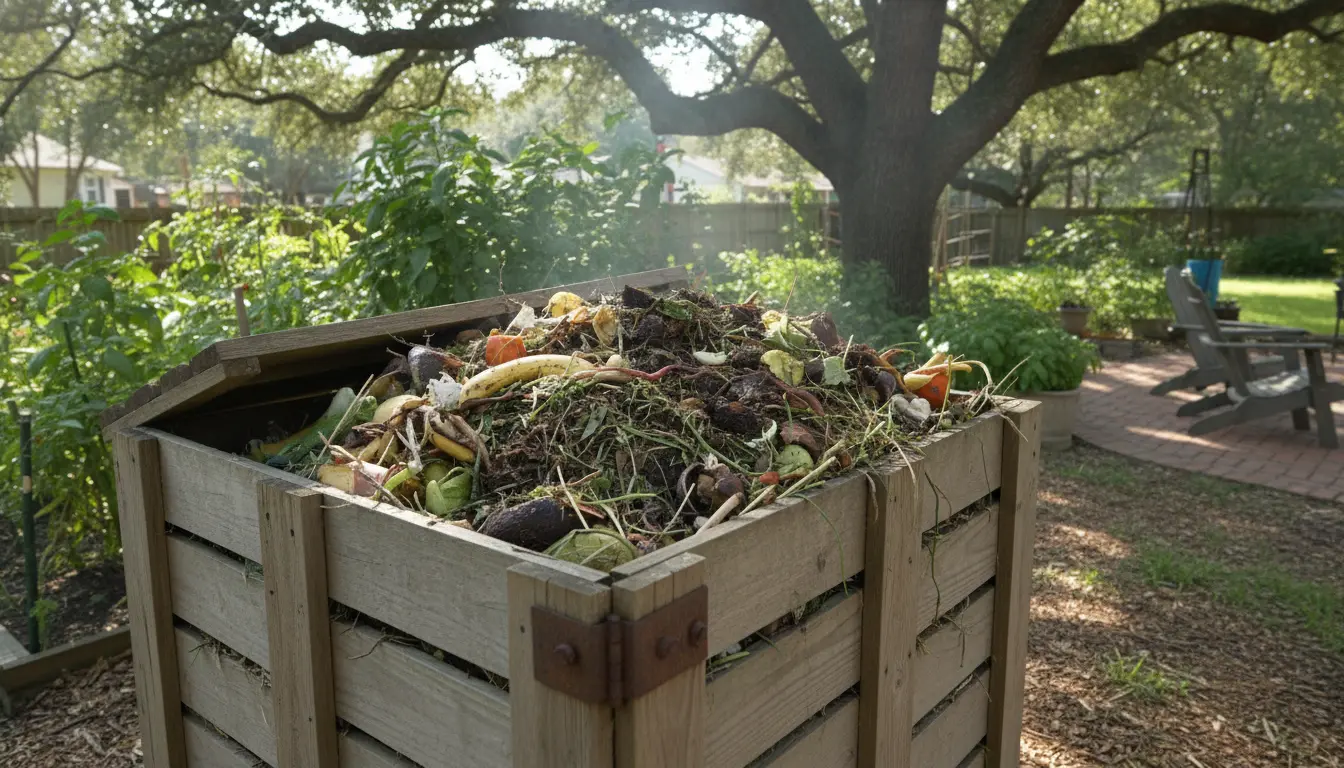
What Is Home Composting and Why Start
Home composting is the process of turning organic kitchen and yard waste into nutrient-rich soil amendment. It reduces landfill waste, lowers household odors from trash, and improves garden soil.
This guide explains simple steps for home composting for beginners, including what to compost, how to balance materials, and common problems to avoid.
Choosing a Compost System for Home Composting
Select a compost system that fits your space and needs. Small gardens, balconies, and apartments have different options than large yards.
- Compost bin: Enclosed plastic or wooden bin for backyard use.
- Tumbler: Enclosed rotating drum that speeds up mixing.
- Vermicompost: Worm bin for indoor use, ideal for apartments.
- Cold pile: Simple heap for large yards with minimal turning.
Placement and Preparation
Place the bin on soil or a well-draining surface to allow organisms to enter. Keep it in partial shade to avoid drying out in summer.
Start with a layer of coarse material like small twigs or straw to improve airflow at the base.
Materials to Use in Home Composting
Compost materials fall into two groups: greens and browns. Balancing these helps microbes break down material efficiently.
Greens (Nitrogen Rich)
- Vegetable and fruit scraps
- Coffee grounds and tea bags (no staples)
- Fresh grass clippings
Browns (Carbon Rich)
- Dry leaves and straw
- Shredded paper and cardboard (non-glossy)
- Small wood chips and sawdust (untreated)
A good starting ratio is roughly 2 parts browns to 1 part greens by volume. Adjust as needed based on moisture and odor.
Step-by-Step How to Compost at Home
Follow these steps to start a reliable compost system at home.
- Layer materials: Start with coarse browns then add greens. Alternate layers about 2–4 inches thick.
- Maintain moisture: Compost should be as damp as a wrung-out sponge. Add water or dry material to adjust.
- Aerate regularly: Turn or mix the pile every 1–2 weeks to supply oxygen for microbes.
- Monitor temperature: A properly active pile will warm to 100–140°F (38–60°C). Cooling slows decomposition but still works.
- Harvest finished compost: After 2–6 months (or longer for cold piles) the compost will be dark, crumbly, and smell earthy.
Troubleshooting Common Issues in Home Composting
Beginners often face a few predictable problems. Quick fixes keep the process on track.
Problem: Bad Odor
Cause: Too many greens or lack of air. Solution: Add more browns, turn the pile, and increase airflow.
Problem: Pests
Cause: Exposed food scraps or meat/dairy in the bin. Solution: Avoid meat and dairy, bury food in the center, use a closed bin or fine mesh cover.
Problem: Slow Decomposition
Cause: Too dry, too cold, or not enough nitrogen. Solution: Add water to moisten, add greens, and cover to retain heat.
Composting can reduce household waste by up to 30 percent. Finished compost improves soil structure and water retention, benefiting both gardens and potted plants.
Using Finished Compost
Apply finished compost to garden beds, mix with potting soil, or use as a top dressing around trees. It slowly releases nutrients and supports beneficial soil life.
Spike planting holes with compost when transplanting and blend compost into native soil at about 10–20 percent by volume for best results.
Small Real-World Example: Urban Balcony Vermicompost
Case study: A two-person apartment used a worm bin on a balcony for 12 months. They added kitchen scraps daily and shredded cardboard as bedding.
Outcome: The worm bin produced about 20 liters of vermicompost in a year, which they mixed into potted herbs. Food waste going to the trash dropped by 40 percent.
Quick Tips for Successful Home Composting
- Chop large scraps to speed decomposition.
- Keep a balance of greens and browns to prevent odors.
- Use kitchen caddies with lids to collect scraps between trips to the bin.
- Start small and scale up as you learn what works.
Final Checklist for Composting for Beginners
- Choose the right bin or method for your space.
- Gather a steady supply of browns and greens.
- Monitor moisture and aeration regularly.
- Avoid meat, dairy, and diseased plant material.
- Be patient—good compost takes time but rewards your garden and the planet.
Home composting is practical and accessible for most households. With a little routine and attention to balance, beginners can create high-quality compost that improves soil and reduces waste.