
Start a Vegetable Garden: Plan Before You Plant
Starting a vegetable garden works best when you plan first. Choose what you want to grow, how much space you have, and how much time you can commit.
Choose a Site for Your Vegetable Garden
Pick a level spot with at least 6 hours of direct sunlight each day for most vegetables. Good light increases yields and reduces disease pressure.
Consider access to water, drainage, and protection from strong winds. If your yard lacks space or sun, use containers or a sunny balcony.
Site Checklist for a Vegetable Garden
- Sunlight: 6–8 hours daily for tomatoes, peppers, and cucurbits.
- Water access: Within hose reach or plan for drip irrigation.
- Soil drainage: Avoid low spots that stay wet.
- Protection: Fencing or barriers if wildlife is an issue.
Prepare Soil for a Vegetable Garden
Healthy soil is the foundation of a productive vegetable garden. Test your soil pH and basic nutrients with an inexpensive kit or local extension service.
Most vegetables prefer a slightly acidic to neutral pH (6.0–7.0). Add organic matter like compost to improve texture and fertility.
Soil Improvement Steps
- Clear weeds and debris from the bed.
- Loosen soil to 8–12 inches for root development.
- Mix in 2–4 inches of compost or well-rotted manure.
- If soil is heavy clay, add coarse sand and organic matter to improve drainage.
Decide Between Seeds and Transplants
Some plants are easier from seed (beans, peas, carrots) while others benefit from transplants (tomatoes, peppers, broccoli). Check planting dates for your zone.
Starting seeds indoors gives an early jump but requires light and consistent temperature. For simplicity, buy quality transplants from a garden center.
Layout and Planting Tips for a Vegetable Garden
Organize beds by height and water needs. Put taller plants like corn or trellised tomatoes on the north side so they don’t shade shorter crops.
Use companion planting and crop rotation to reduce pests and disease. Avoid planting the same family in the same spot year after year.
Basic Planting Layout Ideas
- Rows: Easy for cultivation and irrigation.
- Blocks: Maximizes sun capture for crops like lettuce.
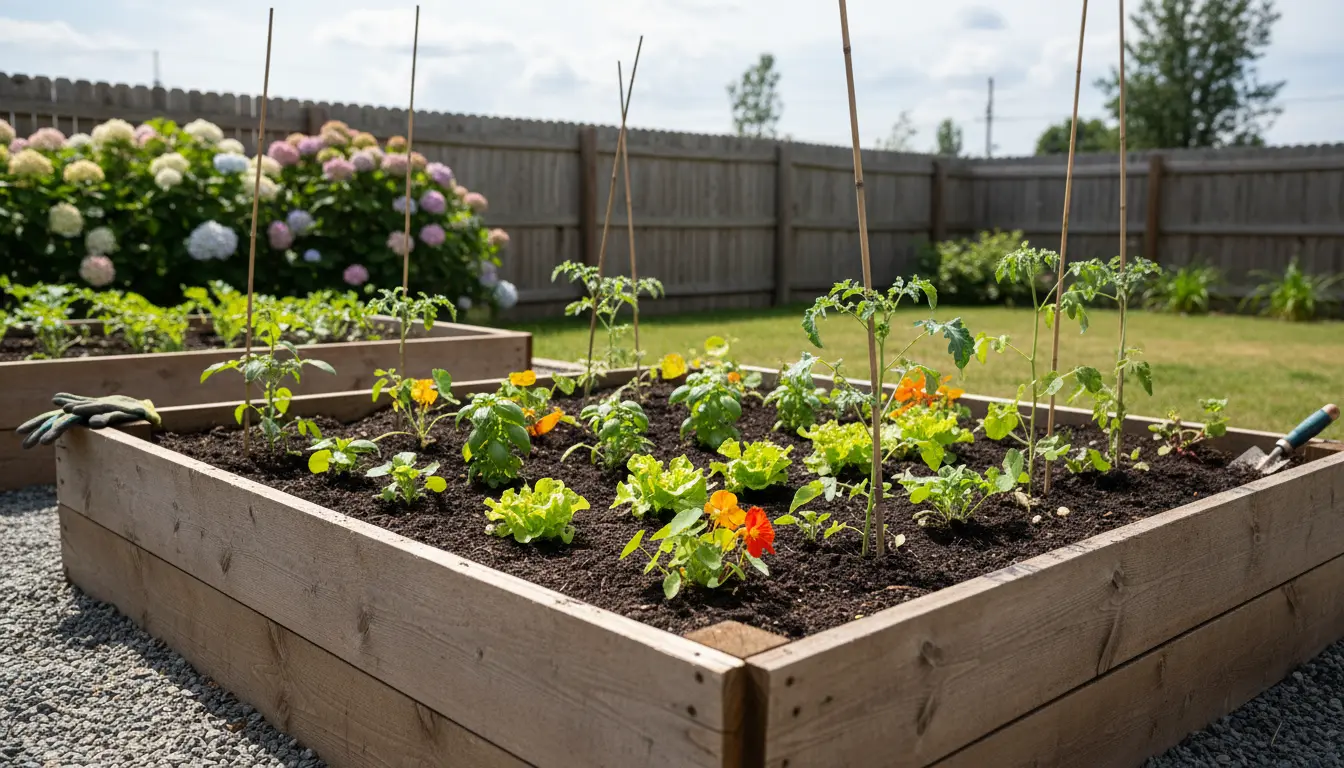
- Raised beds: Warm faster in spring and offer better drainage.
Watering, Mulching, and Maintenance
Consistent watering is more important than frequent shallow watering. Aim for deep, infrequent watering to encourage strong roots.
Mulch with straw, leaves, or wood chips to retain moisture, suppress weeds, and keep soil temperatures stable.
Routine Garden Tasks
- Check soil moisture twice weekly; water early morning when possible.
- Pull weeds when small to prevent competition.
- Watch for pests and treat early with physical controls or approved organic options.
Harvesting and Ongoing Care
Harvest vegetables at their peak for best flavor and to encourage more production. Regular picking of beans, zucchini, and herbs keeps plants productive.
End-of-season care includes removing diseased plants, adding compost, and planning crop rotation for next year.
Simple Case Study: Small Raised Bed Success
Linda converted a 4×8 foot unused lawn area into a raised bed with 12 inches of quality topsoil and compost. She planted tomatoes, bush beans, and leaf lettuce in spring.
Using a soaker hose on a timer and 2 inches of straw mulch, she harvested fresh salad greens within 6 weeks and over 20 pounds of tomatoes by late summer. Regular light feeding with compost tea helped fruit set during hot spells.
Budget-Friendly Tips to Start a Vegetable Garden
You don’t need expensive tools to begin. Basic items include a spade, garden fork, hose, and hand trowel.
Use recycled containers, build a simple compost pile, and swap seeds with local gardeners to keep costs low.
Common Beginner Mistakes and How to Avoid Them
- Overwatering: Check soil before each watering and avoid daily shallow sprinkling.
- Poor soil: Amend with compost rather than relying solely on commercial fertilizers.
- Planting too much: Start small and add beds in following seasons as you gain experience.
Final Steps to Start Your Vegetable Garden
Plan your bed, improve soil, choose appropriate plants, and set a regular maintenance schedule. Small, consistent efforts produce reliable harvests.
Keep notes on what works and adapt each season. Gardening is a practical skill that improves with experience.