
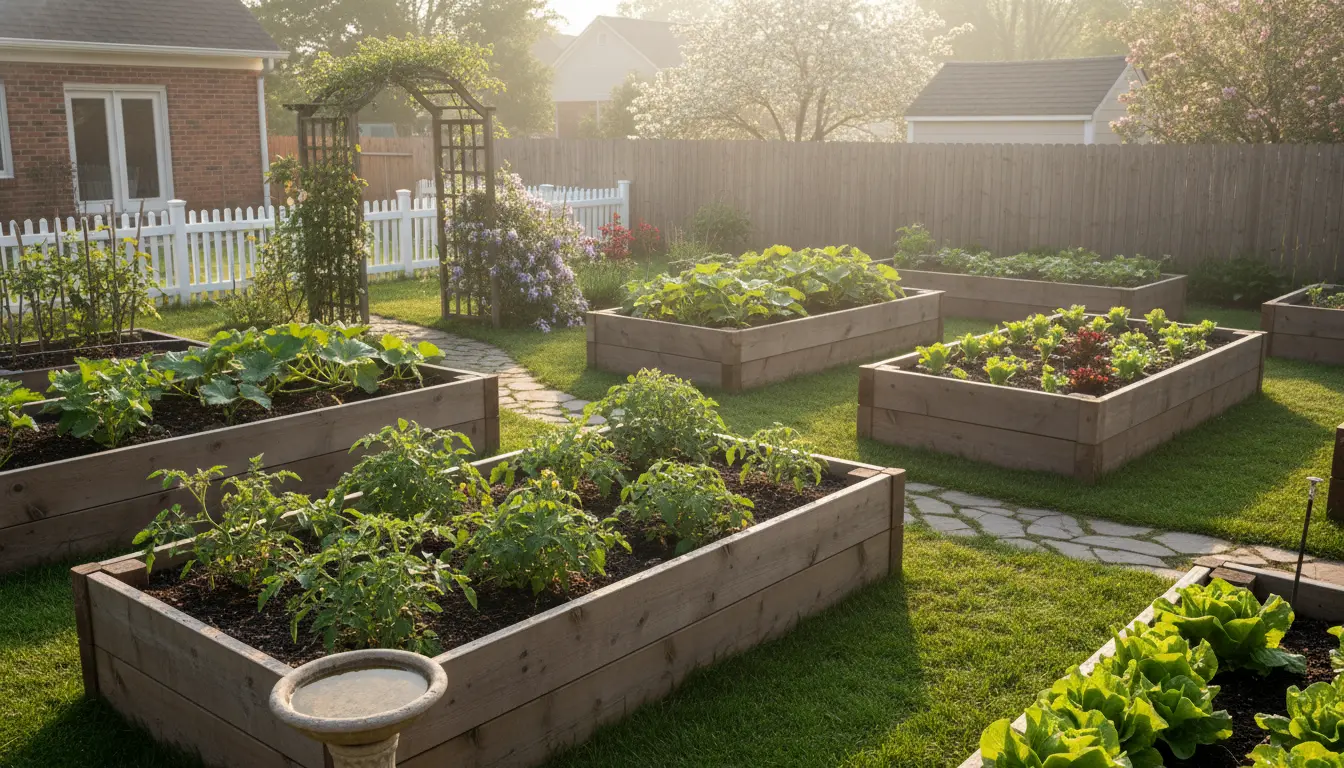
Raised bed vegetable gardens give you better soil control, easier access, and often higher yields. This guide walks you through practical steps to plan, build, and maintain a productive raised bed vegetable garden.
Plan Your Raised Bed Vegetable Garden
Choose a sunny location that receives at least 6 hours of direct sunlight. Position beds so paths are accessible and sunlight is not blocked by buildings or tall trees.
Decide on bed size and layout. Common sizes are 4 feet wide (so you can reach the middle from either side) and 8–12 feet long. Height typically ranges from 8 to 16 inches for easy access and good root depth.
Key planning considerations for raised bed vegetable garden
- Bed orientation: north–south for even sun exposure.
- Material: rot-resistant wood, composite, stone, or galvanized metal.
- Access: allow at least 2–3 feet between beds for a comfortable path.
- Water source: plan irrigation or hose reach before building.
Build Beds and Prepare the Site
Build frames using durable materials. Cedar and redwood last longer outdoors. If using treated lumber, choose products labeled safe for vegetable use.
Place beds on level ground. Remove sod or cover the area with cardboard to suppress weeds. For heavy clay, consider a shallow trench to improve drainage under the bed.
Step-by-step bed assembly
- Measure and cut boards; assemble using exterior screws.
- Position frames, check level, and secure corners.
- Line the bottom with cardboard or landscape fabric if weeds are a concern.
- Fill with soil mix (see below).
Mix the Right Soil for a Raised Bed Vegetable Garden
Good soil is the most important factor for a successful raised bed vegetable garden. A common mix is one-third topsoil, one-third compost, and one-third coarse organic material like aged bark or coconut coir.
Alternatively, use a blend of high-quality topsoil and compost with added perlite or pumice for drainage. Aim for a loose, crumbly texture that holds moisture but drains well.
Soil amendment tips
- Add 2–4 inches of compost each season to replenish nutrients.
- Test soil pH; most vegetables prefer pH 6.0–7.0.
- Include a balanced organic fertilizer at planting if compost is older than a year.
Planting Schedule and Crop Placement
Plan crops by season. Cool-season crops like lettuce, spinach, and peas go in early spring or fall. Warm-season crops like tomatoes, peppers, and cucumbers follow after the last frost.
Use companion planting and crop rotation to reduce pests and soil depletion. Plant taller crops on the north side so they don’t shade shorter plants.
Sample planting layout for a 4×8 bed
- Row 1 (north): trellised tomatoes or pole beans.
- Row 2: peppers and eggplants.
- Row 3: squash or bush beans.
- Row 4 (south): leafy greens and herbs.
Watering and Irrigation for Raised Bed Vegetable Garden
Raised beds dry faster than in-ground gardens. Water deeply and regularly to encourage deep root growth. Early morning watering reduces evaporation and leaf disease risk.
Drip irrigation or soaker hoses save water and deliver moisture directly to the root zone. Use mulch (2–3 inches) to reduce evaporation and suppress weeds.
Pest, Disease, and Weed Management
Start with clean seed and healthy seedlings. Monitor plants weekly for signs of pests or disease. Early detection is key to effective control.
Use integrated pest management: encourage beneficial insects, hand-remove pests, use row covers, and apply organic treatments when needed.
Common problems and quick solutions
- Aphids: blast with water or use insecticidal soap.
- Fungal leaf spots: improve air circulation and remove affected leaves.
- Slugs: set beer traps or use iron phosphate pellets.
- Weeds: pull by hand or hoe early; maintain mulch layer.
Maintenance and Seasonal Care
Keep a calendar for planting, fertilizing, and harvest. Add compost each fall and refresh soil in spring with a light till or mix.
Winterize beds by planting cover crops like clover or rye to protect soil and add organic matter when turned under in spring.
Raised beds can warm earlier in spring, allowing for earlier planting and often extending the growing season by several weeks.
Case Study: Small Backyard Raised Bed Success
Jane, a homeowner with a 20×30 ft yard, built two 4×8 raised beds using cedar. She filled them with a compost-heavy mix and set up a drip line.
In year one she planted tomatoes, basil, lettuce, and carrots. With weekly watering and monthly compost top-dressing, her beds produced nearly double the yield of her previous in-ground attempts.
Key takeaways: proper soil mix, reliable watering, and succession planting kept beds productive and reduced time spent weeding.
Quick Checklist to Start a Raised Bed Vegetable Garden
- Pick sunny location and measure bed footprint.
- Choose materials and build frames to an accessible height.
- Mix or buy high-quality soil and compost.
- Plan crop layout and plant according to season.
- Install drip irrigation or plan manual watering routine.
- Mulch, monitor pests, and add compost annually.
Starting a raised bed vegetable garden is manageable with basic planning and a focus on soil quality. Follow these steps, adapt to your site, and you’ll be harvesting fresh vegetables within the first season.