
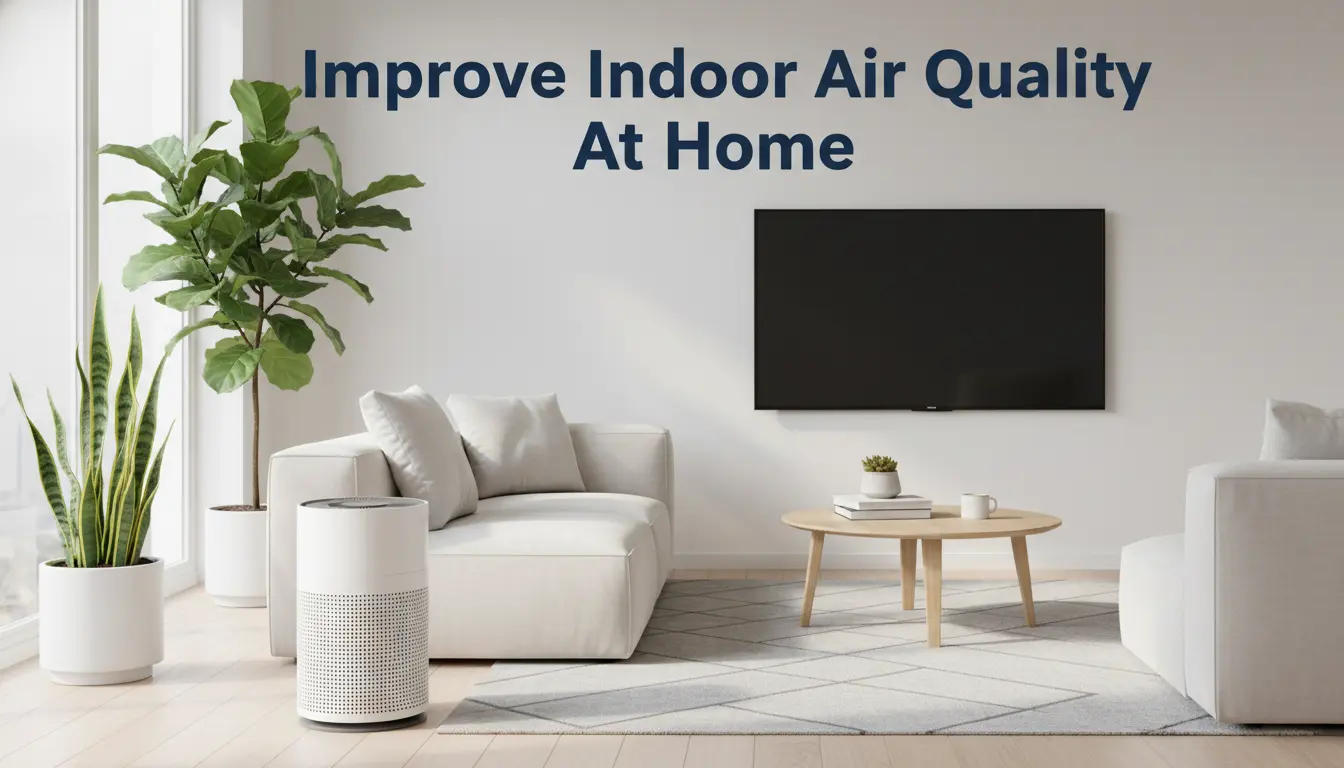
Poor indoor air quality affects comfort, productivity, and health. This guide gives practical, step-by-step actions homeowners can take to improve indoor air quality with tools you likely already use.
Start With an Indoor Air Quality Assessment
Before making changes, identify the main problems. Common issues include dust, mold, odors, and excess humidity.
Assessment steps:
- Walk through each room and note odors, visible mold, and moisture stains.
- Check HVAC filters, vents, and dryer vents for dirt and blockages.
- Use a basic indoor air quality monitor to measure particulate matter (PM2.5), humidity, and CO2 levels.
What to look for in readings
Target ranges help prioritize fixes. Keep humidity between 30–50% and CO2 below 1,000 ppm for good ventilation. PM2.5 should be as low as possible; aim under 12 µg/m3 for long-term exposure.
Control Pollutant Sources
Stopping pollution at the source is the most effective strategy. Many sources are easy to manage with small behavior changes.
- Smoking: Make your home a smoke-free space. Smoking indoors drastically raises fine particulates.
- Cooking: Use range hoods that vent outdoors or run an air purifier near the stove during cooking.
- Cleaning products: Choose low-VOC or fragrance-free cleaners. Avoid spraying cleaners into the air.
- Combustion appliances: Ensure gas stoves, furnaces, and water heaters are well maintained and vented outside.
Improve Ventilation
Ventilation replaces stale indoor air with fresh outdoor air and reduces pollutant buildup. Both natural and mechanical ventilation have places in a healthy home.
Practical ventilation tips
- Open windows when outdoor air quality is good to flush the house for 10–15 minutes.
- Use bathroom and kitchen exhaust fans during and after activities that generate moisture or particles.
- Consider an energy recovery ventilator (ERV) or heat recovery ventilator (HRV) for balanced, energy-efficient ventilation in airtight homes.
Filter the Air
Air filtration removes particles and some airborne contaminants. Choose the right level of filtration for your needs and HVAC system.
Choosing filters and purifiers
- HVAC filters: Use a MERV 8–13 filter if your system supports it. Higher MERV ratings capture finer particles but may restrict airflow in older systems.
- Portable air purifiers: Look for HEPA-certified units for removing PM2.5 and allergens. Place purifiers in bedrooms and living areas for best results.
- Maintenance: Replace filters on schedule. A clogged filter reduces HVAC efficiency and indoor air quality.
Manage Humidity and Mold
High humidity promotes mold growth and dust mites. Low humidity can irritate airways and dry skin. Balanced humidity is key to healthy indoor air quality.
- Use dehumidifiers in basements and humid climates to keep relative humidity at 30–50%.
- Fix leaks immediately and dry wet materials within 24–48 hours to prevent mold.
- Clean visible mold with appropriate cleaners and address the underlying moisture source.
Monitor and Maintain
Continuous monitoring and regular maintenance keep indoor air quality from slipping back. Create a simple schedule to stay on top of tasks.
- Replace HVAC filters every 3 months, or sooner if busy pets or high dust levels exist.
- Check exhaust fans and dryer vents every 6–12 months for blockages.
- Use an indoor air quality monitor to track trends and respond quickly to spikes in particles, humidity, or CO2.
Small Real-World Case Study
Case: A family of four in a 3-bedroom suburban home noticed frequent headaches and poor sleep. The homeowner followed a simple plan: replaced an old HVAC filter with MERV 11, ran a HEPA portable purifier in the master bedroom, installed a kitchen range hood that vents outdoors, and fixed a leaking bathroom fan.
Results after two months: PM2.5 readings dropped by 60%, average humidity stabilized near 45%, and the family reported improved sleep and fewer day-time headaches.
Costs and Priorities
Not every solution requires a large budget. Prioritize steps that match your symptoms and home layout.
- Low cost: Change filters, open windows, choose low-VOC products.
- Medium cost: Portable HEPA purifiers, dehumidifiers, professional HVAC tune-up.
- Higher cost: ERV/HRV installation, duct cleaning, replacing old combustion appliances.
Indoor air can be 2–5 times more polluted than outdoor air, especially in tightly sealed homes. Simple actions like improving ventilation and adding a HEPA filter can dramatically lower particle levels.
Quick Action Checklist to Improve Indoor Air Quality
- Inspect and replace HVAC filters every 3 months.
- Run exhaust fans while cooking and showering.
- Use HEPA purifiers in high-use rooms.
- Keep humidity between 30–50% using dehumidifiers or humidifiers as needed.
- Avoid indoor smoking and limit strong chemical cleaners.
- Monitor air quality to guide further steps.
Improve indoor air quality through assessment, source control, ventilation, filtration, and regular maintenance. These practical steps reduce health risks and make homes more comfortable year-round.