
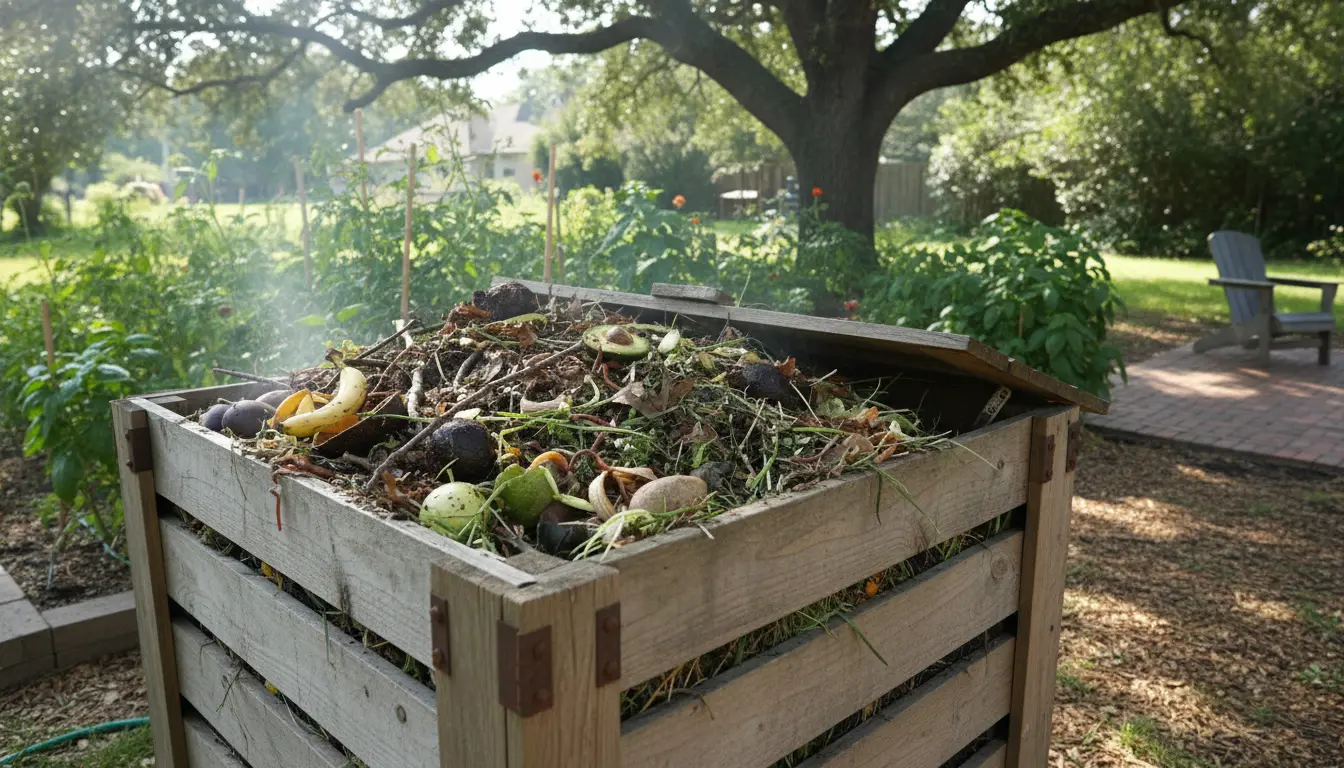
Why Home Composting for Beginners Matters
Composting reduces household waste and creates nutrient-rich soil for gardens. For beginners, it is a low-cost way to improve soil health and lower trash volume.
This guide gives step-by-step instructions you can use the same day. No prior experience required.
Basic Principles of Home Composting for Beginners
Composting relies on microbes to break down organic matter. The balance of carbon and nitrogen and the right moisture level speed decomposition.
Key factors to monitor are airflow, temperature, and particle size. Control these and composting becomes predictable.
Carbon and Nitrogen: The Brown and Green Rule
Carbon-rich materials (browns) include dry leaves, cardboard, and straw. Nitrogen-rich materials (greens) include kitchen scraps, grass clippings, and coffee grounds.
A practical mix is roughly 3 parts brown to 1 part green by volume. Adjust based on odor or composting speed.
Moisture, Aeration, and Size
Compost should feel like a damp sponge—not soggy or bone dry. Add water or dry material to correct moisture issues.
Turn the pile every 1–2 weeks to add oxygen and speed decomposition. Chopping materials smaller increases the surface area for microbes.
How to Start Home Composting for Beginners
Follow these practical steps to set up a simple backyard compost system. You can also compost in a bin on a balcony with minor adjustments.
Step 1: Choose a Container or Pile
Select one of these options based on space and budget:
- Open pile in a garden bed – simplest and free
- Plastic or wooden bin with drainage – tidy and contained
- Tumbler compost bin – faster turning with less effort
Place the bin in a partly shaded, well-drained spot for best results.
Step 2: Layer Materials
Start with a 4–6 inch layer of coarse browns (twigs or straw) to improve drainage. Add alternating layers of greens and browns about 2–4 inches thick.
Maintain the roughly 3:1 brown-to-green ratio. Avoid large amounts of any single material.
Step 3: Maintain the Pile
Turn or mix the pile regularly. For a hot compost, turn weekly; for a slower cold compost, turn monthly. Monitor moisture and add water if dry.
Expect finished compost in 2–12 months depending on conditions and method.
What You Can and Cannot Compost
Knowing allowable items prevents pests and odors. Keep your compost safe and effective by following these lists.
Good Items (Do Compost)
- Fruit and vegetable scraps
- Coffee grounds and tea bags (no staples)
- Eggshells (crushed)
- Yard waste: grass clippings, leaves, small branches
- Shredded paper, cardboard, sawdust (untreated)
Bad Items (Do Not Compost)
- Meat, dairy, bones, and oily foods
- Pet waste from meat-eating animals
- Diseased plants and invasive weeds with seeds
- Treated wood, glossy paper, or plastics
Troubleshooting Common Issues for Home Composting for Beginners
Problems are usually easy to fix once you diagnose the cause. Here are common issues and quick remedies.
Smell
A strong ammonia or rotten odor signals too much nitrogen or poor aeration. Add more brown materials and turn the pile to introduce air.
Slow Decomposition
If composting is sluggish, shred materials, increase moisture slightly, and add a nitrogen source like grass clippings.
Pests
Raccoons, rodents, or flies are attracted to food scraps. Bury fresh food under browns or use a secure bin with a tight lid.
Compost can reduce household waste by up to 30 percent and return essential nutrients like nitrogen, phosphorus, and potassium to your soil.
Real-World Example: A Small Urban Home Compost Case Study
Maria lives in a small townhouse with a narrow backyard. She started with a 55-gallon tumbling composter and kitchen pail for food scraps.
She used a mix of shredded cardboard, coffee grounds from a local café, and household vegetable scraps. Within five months she had rich, dark compost that she mixed into container soil.
Her household waste to the city decreased noticeably, and her potted herbs showed stronger growth the following season.
Practical Tips for Long-Term Success
- Keep a small countertop bin with a lid for daily scraps to make composting easy.
- Collect bulky browns like leaves in fall to use through the year.
- Save finished compost in a covered container to use when planting season starts.
- Join a local composting group for material swaps and space sharing if you lack room.
Conclusion
Home composting for beginners is straightforward and adaptable. Start small, monitor basic conditions, and learn by doing.
With simple routines and a few tools, you can turn kitchen and yard waste into valuable soil amendment and reduce your environmental footprint.