
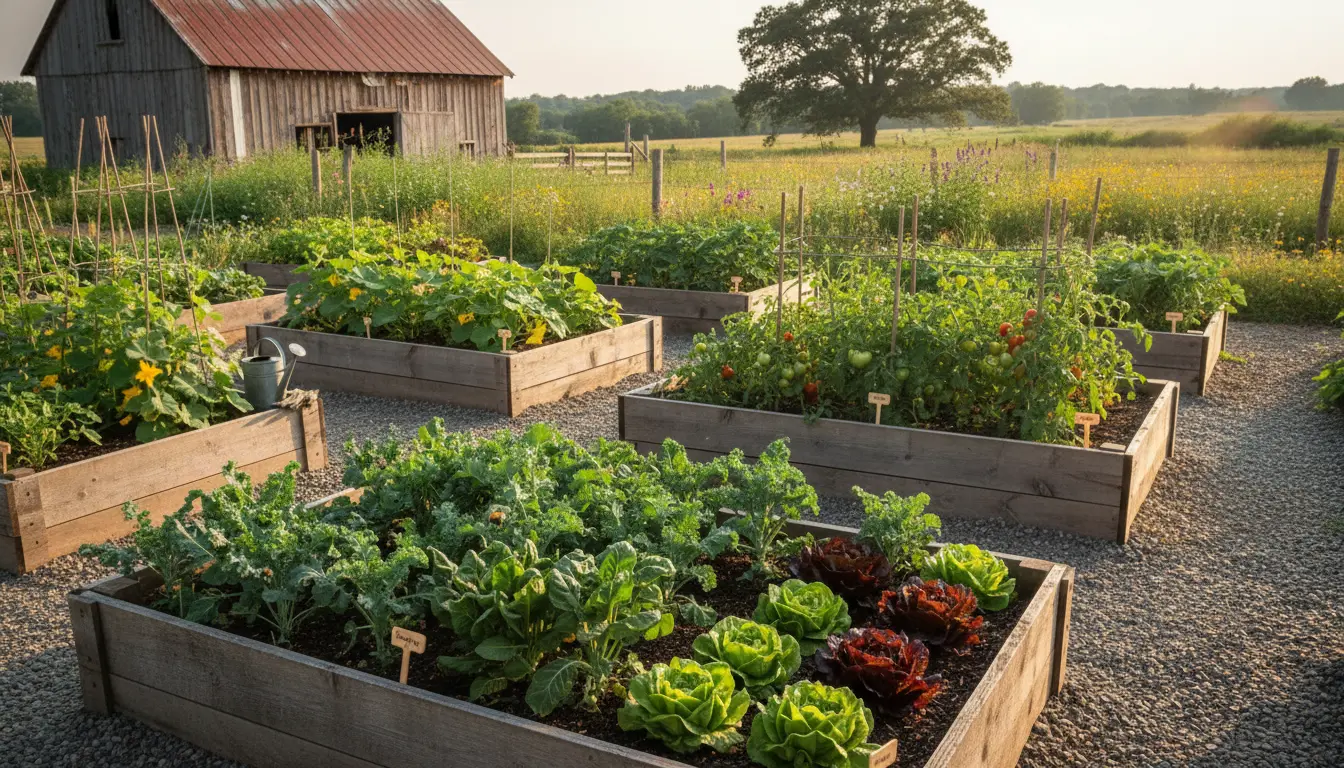
Start a Vegetable Garden: Essential Overview
Starting a vegetable garden is achievable with basic planning and a little work. This guide gives practical steps to set up a productive home garden, whether you have a yard, balcony, or small plot.
How to Start a Vegetable Garden: Step-by-Step Plan
Follow this step-by-step plan to move from idea to harvest. Each step is compact so you can check tasks off as you go.
Choose a Site
Pick a location that gets at least six hours of sunlight per day. Sun exposure matters most for common vegetables like tomatoes, peppers, and beans.
Consider access to water and level ground to avoid erosion and make watering easier. If you lack yard space, use containers or raised beds on a balcony or patio.
Pick Your Plants
Select vegetables that match your climate, season, and cooking habits. Start with easy crops such as lettuce, radishes, tomatoes, and herbs.
Check local planting dates: many extension services and seed packets list last frost dates and recommended sowing times.
Prepare Soil
Good soil is the foundation of a garden. Test soil texture and drainage by digging a small hole and checking for roots and water retention.
Amend heavy clay with compost and sand, and add compost to sandy soil to improve nutrients and water retention. Aim for loose, crumbly soil rich in organic matter.
Tools and Supplies
- Basic tools: spade, hand trowel, rake, hoe
- Soil amendments: compost, aged manure, or peat-free alternatives
- Containers or raised beds if space is limited
- Mulch, stakes, and irrigation supplies (soaker hose or watering can)
Planting and Watering
Sow seeds or plant seedlings according to packet instructions for depth and spacing. Overcrowding reduces airflow and increases disease risk.
Water deeply and less frequently to encourage strong root growth. Early morning is the best time to water to reduce evaporation and leaf wetness overnight.
Mulch and Weed Control
Apply 2–3 inches of organic mulch around plants to retain moisture and suppress weeds. Keep mulch a few inches from plant stems to avoid rot.
Weed regularly; removing weeds when small reduces competition and makes long-term care easier. Consider shallow hoeing to disrupt weed roots.
Pest and Disease Management
Inspect plants weekly for common pests like aphids, slugs, and caterpillars. Hand-pick larger pests and use row covers for seedlings if needed.
Encourage beneficial insects by planting companion flowers such as marigolds and nasturtiums. Rotate crops yearly to reduce soil-borne disease buildup.
Legumes such as peas and beans fix nitrogen in the soil naturally. Planting them in rotation can reduce the need for synthetic fertilizers.
Maintenance: Weekly and Monthly Tasks
Maintain a simple schedule: check soil moisture twice a week during dry spells and inspect plants for pests and disease weekly. Remove spent plants and harvest ripe produce frequently.
Fertilize lightly with compost tea or balanced organic fertilizer every 4–6 weeks for heavy feeders like tomatoes. Observe plant vigor and adjust feeding as needed.
Watering Tips
Use a soaker hose or drip irrigation to deliver water to the root zone and reduce leaf wetness. Water deeply until soil is moist to about 6 inches below the surface.
Adjust frequency with weather and season: less in cooler months, more during heat waves.
Harvesting Tips
Harvest frequently to extend production. Many vegetables like beans and zucchini produce more when picked young and regularly.
Use sharp scissors or pruners to avoid tearing stems. Store produce promptly in cool, dry conditions to maintain freshness.
Small Real-World Example
Case Study: Sarah’s Backyard Raised Beds. Sarah built two 4×8 raised beds in spring and filled them with a mix of compost and topsoil. She planted lettuce, bush beans, tomatoes, and basil.
Within 10 weeks she harvested continuous salad greens and several rounds of beans. By summer, companion planting and regular mulching kept weeds low and reduced water needs by 30% compared with her previous in-ground attempt.
Quick Checklist: First Season
- Choose sunniest site and ensure water access
- Test and amend soil with compost
- Select beginner-friendly crops and plant at recommended times
- Install mulch and a simple irrigation method
- Inspect weekly and harvest regularly
Final Tips for Success
Start small and expand gradually once you learn what grows well in your space. Keep notes on planting dates, varieties, and yields to improve next season’s planning.
Gardening is practical and iterative. With basic care and observation, a home vegetable garden can supply fresh produce and give steady learning rewards.