
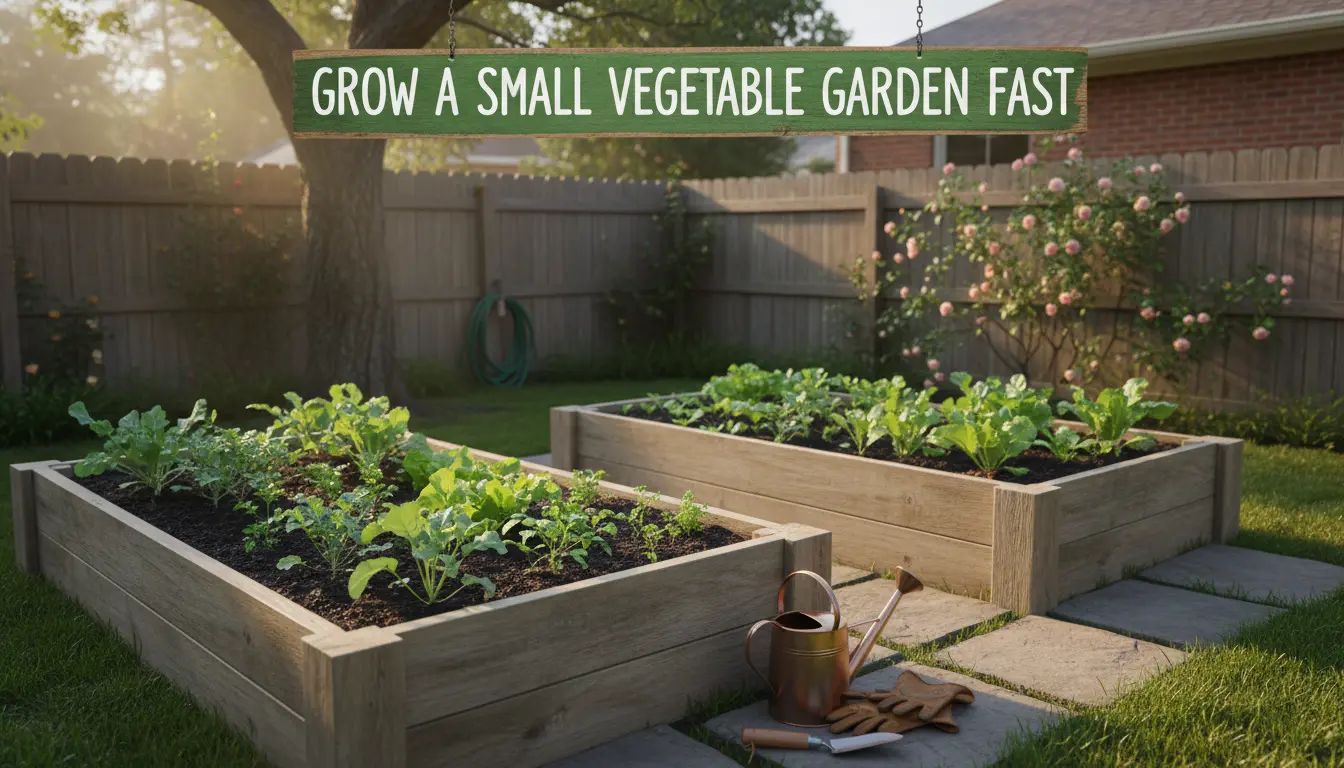
How to Start a Small Vegetable Garden: Planning and Goals
Decide why you want a small vegetable garden. Common goals are saving money, eating fresher produce, or learning to grow food.
Set a realistic size based on time and space. A 4 x 8 foot raised bed is a good starting point for one person or a small family.
Choose the Right Location for a Small Vegetable Garden
Sun is the most important factor. Most vegetables need at least six hours of direct sun daily.
Look for flat ground with good drainage and easy access to water. Avoid low spots that stay wet after rain.
Consider these site details
- Sunlight: Track sun patterns for a week before planting.
- Accessibility: Place beds near a hose or water source.
- Protection: Choose a spot sheltered from strong wind.
Prepare Soil and Choose Containers
Good soil is the foundation of a productive small vegetable garden. If you have native soil, test and amend it.
Raised beds and containers are excellent for small spaces because they warm faster and drain well.
Soil mix for small garden beds
- 40% topsoil or screened garden soil
- 40% compost to add nutrients
- 20% lightweight material like perlite or coarse sand for drainage
Select Vegetables for a Small Vegetable Garden
Choose vegetables that match your climate, taste, and space. Start with easy-to-grow crops.
Good beginner choices include tomatoes, lettuce, radishes, beans, herbs, and zucchini.
Planning tips for plant selection
- Pick compact or bush varieties when space is tight.
- Stagger plantings of fast crops (like lettuce) for continuous harvests.
- Group plants by water needs to make irrigation simpler.
Planting Schedule and Layout for a Small Vegetable Garden
Create a simple layout on paper before planting. Mark tall plants to avoid shading smaller ones.
Use succession planting to get multiple crops from a single bed each season.
Example 4 x 8 foot layout
- Row 1: Tomatoes (stake or cage)
- Row 2: Peppers and basil
- Row 3: Leafy greens (rotate every 3 weeks)
- Row 4: Radishes and carrots between rows
Watering and Feeding a Small Vegetable Garden
Consistent moisture is key. Water deeply once or twice a week rather than frequent shallow sprays.
Mulch the surface with straw or shredded leaves to retain moisture and suppress weeds.
Simple feeding schedule
- At planting: work compost into the soil.
- Mid-season: side-dress with compost or a balanced organic fertilizer.
- Flowering stage: use a low-nitrogen feed for fruiting crops like tomatoes.
Pest and Disease Management in a Small Vegetable Garden
Prevention is the best strategy. Keep beds clean, rotate crops yearly, and choose resistant varieties.
Use physical barriers like row covers to protect young plants from insects and birds.
Low-toxicity control options
- Handpick larger pests such as slugs and caterpillars.
- Use insecticidal soaps or neem oil for soft-bodied insects.
- Encourage beneficial insects by planting flowers and herbs.
Harvesting and Storage from a Small Vegetable Garden
Harvest regularly to encourage more production. Pick leafy greens before they bolt for best flavor.
Store produce properly: cool, dry root vegetables in a cellar or crisper; tomatoes at room temperature.
Small Vegetable Garden Maintenance Tasks
Spend 15 to 30 minutes, three times a week in peak season. Focus on watering, weeding, and checking plants for pests.
Keep a simple notebook to record planting dates, varieties, and yields. This helps improve future seasons.
A well managed 100 square foot vegetable garden can produce 200 to 400 pounds of food in a single growing season, depending on crops and care.
Real-World Example: A Beginner Case Study
Anna had a 4 x 8 foot raised bed on her apartment balcony. She planted determinate tomatoes, bush beans, lettuce, and basil in her first year.
By using compost, watering twice weekly, and mulching, Anna harvested enough salad greens for two people through early fall and eight pounds of tomatoes. She reported spending about 30 minutes three times a week on maintenance.
Quick Checklist to Start Your Small Vegetable Garden
- Choose a sunny location and measure available space.
- Decide on raised bed or containers and prepare soil mix.
- Select compact varieties and plan succession plantings.
- Set up easy watering and add mulch.
- Monitor for pests, harvest regularly, and keep a log.
Starting a small vegetable garden is manageable and rewarding. With basic planning, the right soil, and a simple maintenance routine, even beginners can grow fresh produce successfully.