
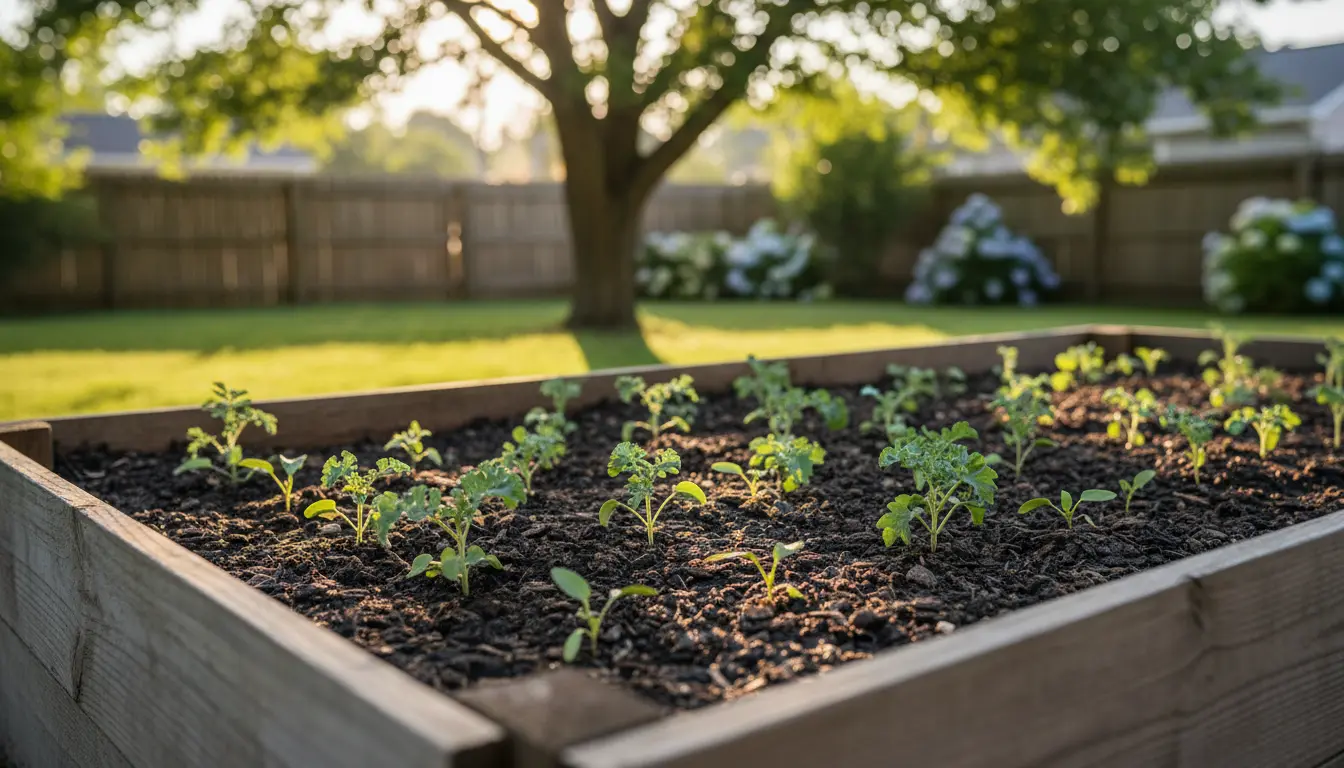
Why start a vegetable garden
Growing vegetables at home saves money, improves food quality, and connects you to the seasons. Even a small plot or a few containers can produce regular harvests.
This guide breaks the setup into clear steps so you can start a vegetable garden with confidence.
Plan before you plant: How to start a vegetable garden
Good planning reduces wasted time and plants. Begin by evaluating space, sunlight, and your goals.
- Decide what you want to grow: quick wins (lettuce, radishes) or long-term crops (tomatoes, peppers).
- Estimate available space: container, raised bed, or in-ground row.
- Check sunlight: most vegetables need 6+ hours of direct sun.
Choose the right location to start a vegetable garden
Location affects water access, soil quality, and pest exposure. Pick a flat spot near a water source if possible.
Avoid low areas that collect water and places under large trees where roots compete for nutrients.
Prepare soil and containers
Soil is the single most important factor for success. Healthy soil holds water, drains well, and feeds plants steadily.
Two simple options work well for beginners: amend existing soil or use raised beds/containers with a good mix.
Soil mix for raised beds and containers
A reliable mix: 40% topsoil, 40% compost, 20% coarse sand or perlite for drainage. Use quality compost to add nutrients.
- Test pH if possible; most vegetables prefer pH 6.0–7.0.
- Add slow-release organic fertilizer at planting time following package rates.
What to plant first
Start with easy, fast-growing crops that tolerate beginner mistakes. These build confidence and provide quick rewards.
- Lettuce and salad greens — fast harvests and space efficient.
- Radishes — mature in 3–4 weeks and indicate soil readiness.
- Bush beans — low maintenance and good yield.
- Tomatoes in containers or cages — more work but high reward.
Planting basics when you start a vegetable garden
Follow seed packet depth and spacing. Water newly planted seeds gently and keep soil consistently moist until seedlings establish.
Stagger plantings (succession sowing) for continuous harvests, especially with lettuce and herbs.
Watering and maintenance
Regular watering is vital, more so in containers. Deep, infrequent watering encourages strong roots.
- Water early morning to reduce evaporation and disease risk.
- Mulch around plants to retain moisture and suppress weeds.
- Remove diseased or damaged foliage promptly to limit spread.
Pest and disease basics
Start with prevention: healthy soil, proper spacing, and clean tools reduce many problems. Inspect plants weekly for early signs.
Use physical controls (row covers, handpicking) and organic solutions (neem oil, insecticidal soap) before chemical options.
Harvesting and extending the season
Harvest vegetables when they reach recommended size and flavor. Frequent harvesting often encourages more production.
To extend the season, use row covers, cold frames, or move containers to protected spots during cool nights.
Planting marigolds near vegetables can reduce some soil nematodes and attract beneficial insects, helping natural pest control.
Simple timeline to start a vegetable garden
- Week 1: Choose location and prepare soil or containers.
- Week 2: Plant cool-season crops or start seedlings indoors for warm-season vegetables.
- Weeks 3–6: Regular watering, weeding, and monitoring for pests.
- Month 2 onward: Stagger plantings, begin harvests, and amend soil with compost.
Small case study: A quick real-world example
Case Study: Anna’s first raised bed. She had a 4×4 ft raised bed and wanted salad greens and tomatoes.
She filled the bed with a 50/50 mix of compost and store-bought loam, spaced two tomato seedlings in cages, and sowed lettuce in succession down the center.
- Outcome: First lettuce in 5 weeks, continuous harvest for 3 months.
- Tip she used: Mulch with straw to keep roots cool and conserve water.
Anna reports less grocery spending and more enjoyment cooking with fresh greens.
Common beginner mistakes and how to avoid them
- Overwatering: Check soil moisture before adding more water to avoid root rot.
- Planting too densely: Follow spacing to prevent disease and ensure airflow.
- Ignoring soil health: Add compost annually and rotate crops when possible.
Next steps after you start a vegetable garden
Track what varieties perform best in your spot and note planting dates for future planning. Keep learning from small experiments and local gardening groups.
With consistent care and small adjustments, most beginners can harvest meaningful yields in their first season.
Ready to get started? Measure your space, choose two easy vegetables, and take one small action this weekend to begin.