
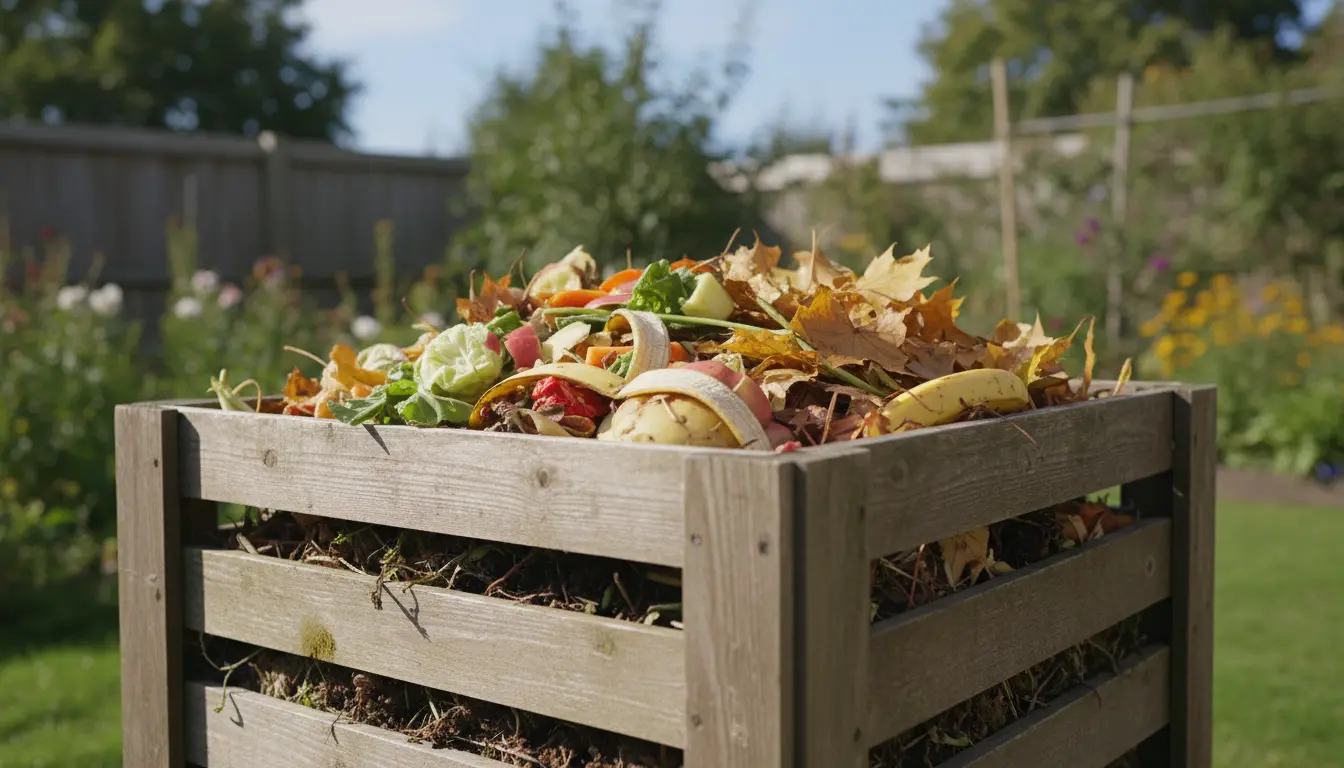
Why Choose Home Composting
Home composting turns kitchen scraps and yard waste into a useful soil amendment. It reduces household waste and cuts the need for chemical fertilizers.
This guide shows practical steps to start home composting, maintain a healthy pile, and fix common issues. Instructions are aimed at beginners and use simple, reusable techniques.
Understanding Home Composting Basics
Compost is the result of organic materials breaking down through microbial activity. Key factors are the right mix of carbon and nitrogen, moisture, aeration, and time.
Home composting works in bins, piles, or tumblers. Choose a method that fits your space and how much waste you produce.
Carbon and Nitrogen Balance
Compost needs both carbon rich items (browns) and nitrogen rich items (greens). A rough target is 25–30 parts carbon to 1 part nitrogen by weight, often approximated as a 3:1 ratio by volume of browns to greens.
Common browns include dried leaves, shredded paper, and straw. Greens include vegetable scraps, coffee grounds, and fresh grass clippings.
What Materials to Compost
- Greens: fruit and vegetable scraps, coffee grounds, tea bags (no plastic), fresh grass clippings.
- Browns: dry leaves, shredded cardboard, paper, straw, small wood chips.
- Do not add: meat, dairy, oils, diseased plants, pet waste from carnivores, or treated wood.
How to Start a Compost Pile
Select a spot with partial shade and good drainage, close to a water source if possible. A 3x3x3 foot pile is a manageable size for efficient decomposition.
You can use a simple bin, a wooden frame, or a commercial tumbler. The main goal is to contain material while allowing airflow.
Step by Step Setup
- Layer a base of coarse materials (small branches or straw) to improve drainage and airflow.
- Add alternating layers of greens and browns. Aim for roughly three parts brown to one part green by volume.
- Maintain moisture like a wrung-out sponge — damp but not soggy.
- Turn the pile every 1–2 weeks to introduce oxygen and speed up breakdown.
- Harvest finished compost in 2–6 months depending on conditions and pile management.
Tools and Supplies for Home Composting
You don’t need expensive equipment. Basic items improve convenience and results.
- Compost bin or tumbler (optional but tidy)
- Pitchfork or garden fork for turning
- Garden thermometer (useful to track activity)
- Watering can or hose to adjust moisture
Compost can cut household waste by up to 30 percent and return nutrients to your soil, reducing the need for synthetic fertilizers.
Troubleshooting Common Compost Problems
Problems are usually simple to fix. Identifying the symptom leads to a quick adjustment.
Bad Odor
A strong rotten smell means too much nitrogen or poor aeration. Add more browns, mix the pile, and increase turning to introduce oxygen.
Pile Too Dry
Dry compost slows decomposition. Add water gradually and mix, or include more greens and damp material like fresh grass clippings.
Slow Decomposition
Slow breakdown can result from small pile size, low nitrogen, or cold conditions. Increase pile size, add greens, and turn more often. Insulating the pile in winter helps maintain microbial activity.
Small Real World Example: The Rivera Household
Mariana Rivera started a 3x3x3 outdoor bin in spring with kitchen scraps and shredded cardboard. She followed a simple schedule: add scraps daily, alternate browns weekly, and turn the pile every 10 days.
Within four months she had about 3 cubic feet of usable compost. Mariana reduced her weekly trash by one bag and used compost to boost her tomato beds, reporting healthier plants and fewer fertilizer purchases.
Tips for Success With Home Composting
- Keep a countertop scrap container to collect greens and empty it daily into the compost.
- Shred or chop large items so they break down faster.
- Mix greens and browns as you add them to avoid clumps that slow decomposition.
- Use finished compost as a soil top-dressing, potting mix ingredient, or lawn amendment.
Conclusion: Practical Next Steps
Start small and learn by doing. Set up a bin, keep a balance of materials, and monitor moisture and odor. Simple management will yield rich compost in months.
Home composting saves waste, improves soil health, and is accessible to most households. Try one of the methods above and adjust based on your space and waste stream.