
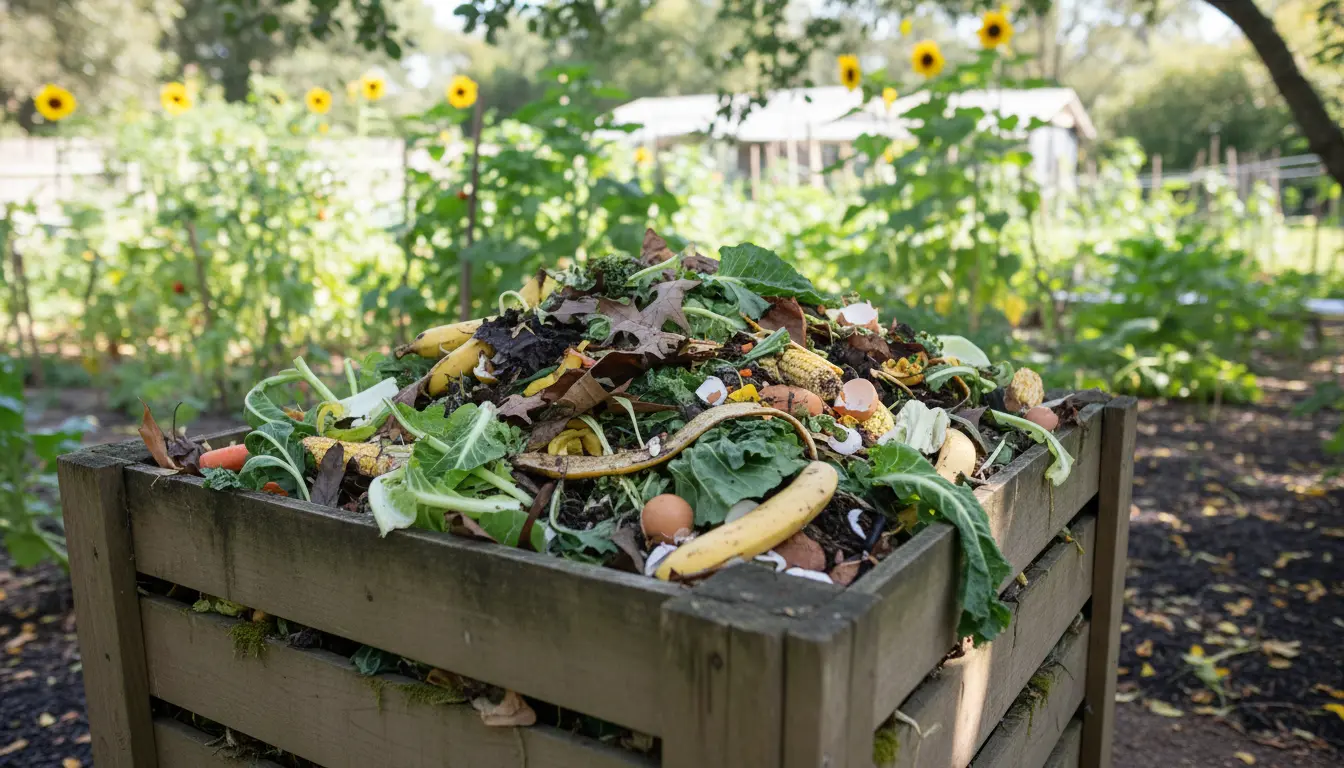
Why Home Composting Matters
Home composting turns kitchen scraps and yard waste into nutrient-rich soil. It reduces landfill waste and lowers greenhouse gas emissions from organic matter decomposition in landfills.
For gardeners, compost improves soil structure, water retention, and plant health. For non-gardeners, it lowers household waste volume and can support indoor plants or community gardens.
Basic Principles of Home Composting
Composting relies on a balance of carbon-rich and nitrogen-rich materials, moisture, oxygen, and time. Microorganisms break down organic matter into humus when conditions are right.
Think of carbon as energy and nitrogen as protein. Too much of one will slow the process or cause odors.
Key Components for Successful Home Composting
- Carbon (browns): dry leaves, shredded paper, cardboard, straw.
- Nitrogen (greens): vegetable scraps, coffee grounds, fresh grass clippings.
- Moisture: compost should be as damp as a wrung-out sponge.
- Oxygen: mix or turn the pile to allow air flow.
How to Start Home Composting
Choose a system that fits your living situation. Options include a simple compost pile, a tumbling composter, or a worm bin for indoor use.
Select a location with partial sun and good drainage. If using a bin, place it on soil if possible so organisms can enter from below.
Step-by-Step Setup for a Backyard Bin
- Prepare the base: place coarse sticks or a layer of browns to aid drainage.
- Add materials in layers: start with browns, then greens, then a light cover of browns.
- Keep it moist: water newly added dry materials lightly.
- Turn regularly: every 1–2 weeks speeds up decomposition and prevents odors.
Worm Composting (Vermicomposting) for Apartments
Worm bins use red worms to process food scraps quickly and produce rich castings. They work well indoors with minimal space.
Keep the bin in a cool, dark place and avoid citrus or oily foods in large amounts. Feed small portions regularly.
Maintaining Your Home Compost
Regular maintenance keeps the compost active and useful. Aim to maintain balance, moisture, and airflow.
Routine Tasks
- Turn the pile every 1–2 weeks to add oxygen.
- Adjust moisture by adding water if dry or more browns if too wet.
- Chop or shred larger items to speed decomposition.
When Is Compost Ready?
Finished compost is dark, crumbly, and has an earthy smell. Most backyard systems take 3–12 months depending on materials and care.
Adding a thin layer of finished compost to your new pile can introduce beneficial microbes and speed up decomposition.
Troubleshooting Home Composting Problems
Common problems are usually easy to fix and tied to balance issues.
Common Issues and Fixes
- Bad smell: add more browns and turn the pile to increase airflow.
- Too dry: add water and greens to reach damp-sponge moisture.
- Fruit flies: cover fresh food scraps with a layer of browns or finished compost.
- Pile not heating: add greens or turn to improve aeration and compactness.
Small Real-World Example
Case Study: A two-person household in Austin started a 100L tumbling composter. They added kitchen scraps and shredded paper in roughly equal volume.
After four months of weekly tumbling and occasional moisture checks, they produced enough compost to top-dress two patio planters and cut their weekly trash by nearly 40%.
Practical Tips for Different Living Situations
No lawn? No problem. Try a worm bin or bokashi system for small spaces. These systems manage food waste indoors with low odor.
Have a yard? Use a simple three-bin system or a large tumbler to handle yard waste and kitchen scraps together.
Material Do’s and Don’ts
- Do compost: fruit and vegetable scraps, coffee grounds, eggshells, leaves, paper.
- Don’t compost: meat, dairy, oily foods, diseased plants, pet waste.
Using Finished Compost
Mix finished compost into garden beds at a rate of 1–3 inches worked into the top 6–8 inches of soil. For container plants, mix one part compost to three parts potting mix.
Compost can also be used as a mulch or tea (steeped in water) to feed plants gently.
Final Notes on Home Composting
Home composting is a practical way to reduce waste and improve soil health. Start small, track results, and adjust your system to match your lifestyle and waste stream.
With regular attention and the right balance, most households can turn much of their organic waste into a valuable resource for plants and gardens.