
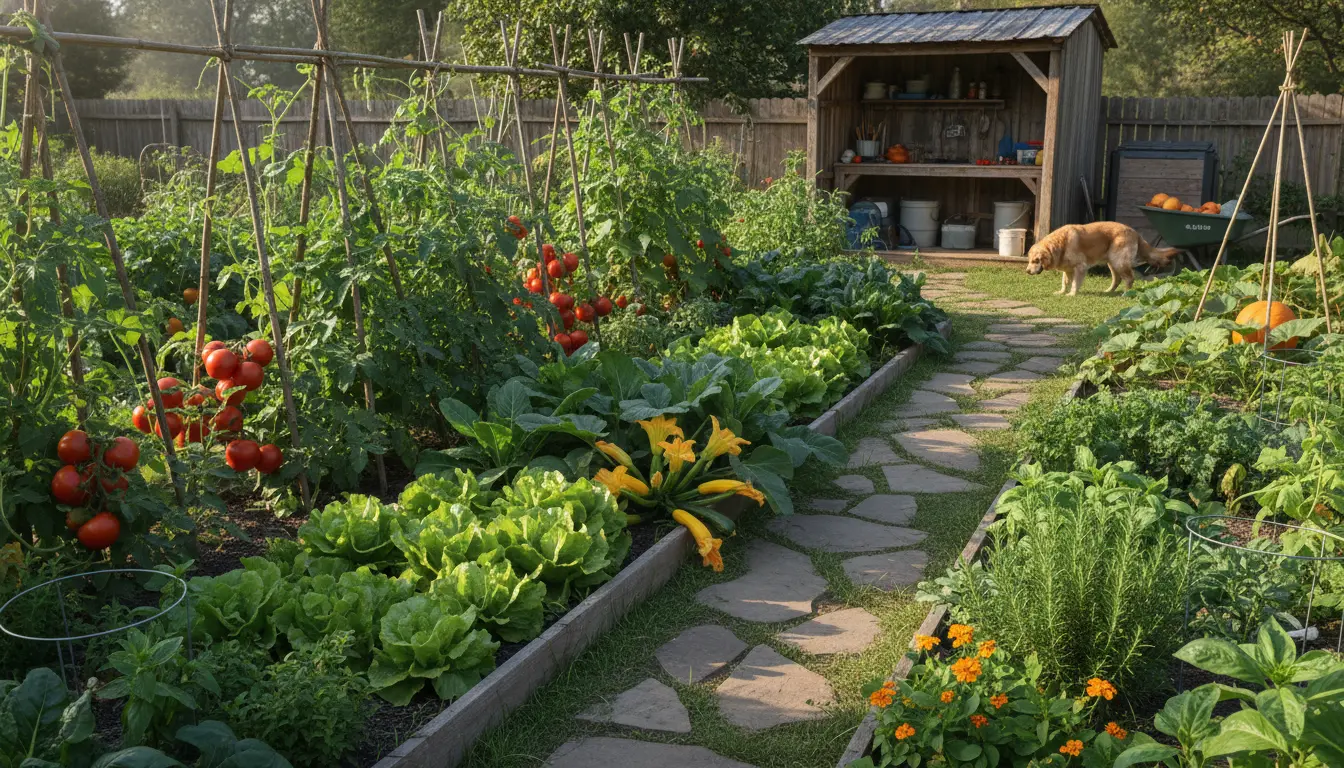
Starting a vegetable garden that brings profit requires planning, consistent care, and smart crop choices. This guide outlines practical steps to start a profitable vegetable garden you can manage at home or on a small plot.
Plan Your Space and Goals to Start a Profitable Vegetable Garden
Decide how much time and money you can invest before planting. A realistic plan balances upfront costs, ongoing maintenance, and expected returns.
Consider sun exposure, water access, soil quality, and local market demand. These factors determine which crops will be most profitable for your situation.
Choose a Location
Pick a spot with at least 6 hours of sun for most vegetables. Ensure easy access to water and good drainage to prevent root issues.
Raised beds or containers work well for small lots and reduce soil compaction and weeds.
Define Your Profit Goals
Set a clear goal: extra produce for the family, regular sales at a local market, or selling to restaurants. Goals change your crop choices and scale.
Small-scale sellers often target high-value crops rather than volume crops to maximize income per square foot.
Pick Profitable Crops for a Vegetable Garden
Select crops that match your climate, soil, and market. Some vegetables sell well at premium prices and require modest space.
- Leafy greens: fast turnover and steady demand
- Herbs: high value per square foot and low storage needs
- Cherry tomatoes and salad mixes: popular with restaurants and farmers markets
- Heirloom or specialty varieties: fetch higher prices from niche buyers
Stagger Planting for Continuous Income
Plan succession planting to harvest across the season. Staggering crops smooths cash flow and keeps customers coming back.
Example schedule: sow baby greens every 2–3 weeks, plant tomatoes and peppers for midsummer harvest, and start late-season brassicas for fall sales.
Soil, Fertility, and Water Management
Healthy soil boosts yields. Test your soil pH and amend with compost to improve structure and nutrients.
Mulch reduces water loss and weeds, saving time and increasing plant health.
- Soil test: pH and nutrient levels guide amendments
- Compost: use as a steady source of organic matter
- Drip irrigation: conserves water and reduces disease risk
Simple Fertility Strategy
Use a base of well-aged compost and supplement with balanced organic fertilizer during rapid growth phases. Monitor plants for signs of deficiencies and adjust.
Leafy greens can be ready for harvest in as little as 30 days, allowing multiple harvests per season and faster returns on small plots.
Marketing and Sales Tactics for a Profitable Vegetable Garden
Identify local buyers before planting. Options include farmers markets, community-supported agriculture (CSA), restaurants, and direct-to-consumer sales.
Packaging and presentation matter. Washed, labeled bunches and clear pricing increase customer trust and repeat business.
- Farmers markets: high visibility and direct feedback from customers
- CSAs: predictable income with subscription-style sales
- Restaurants: consistent buyers for specialty varieties
Simple Pricing Example
Calculate your cost per pound by totaling seed, soil amendments, water, and time. Add desired profit margin, then check local prices to remain competitive.
Record-Keeping, Scaling, and Risk Management
Keep a simple ledger of costs, harvest weights, and sales. Good records show which crops are truly profitable and which are not.
To scale, expand high-performing beds first. Consider season extension tools like row covers or a small hoop house to increase productive months.
- Track input costs and labor hours
- Note pest or disease incidents and remedies used
- Test one new crop per season rather than many at once
Mitigate Common Risks
Diversify crops to spread risk from pests or market fluctuations. Maintain good hygiene to reduce disease spread between beds.
Have a small emergency fund for replacing tools or unexpected inputs in a bad season.
Case Study: Small Urban Gardener Turns Profit
Maria used two 4×8 raised beds in her city backyard to start a vegetable garden. She focused on salad greens, basil, and microgreens targeted to local cafes.
In her first season, she sold weekly bundles to two cafes and a Saturday market stall. Her initial investment of $350 for soil, seeds, and a basic drip system returned about $2,100 in gross sales over five months.
Records showed basil and microgreens brought the highest margins. Maria reinvested profits into a small cold frame to extend production into fall.
Quick Checklist to Start a Profitable Vegetable Garden
- Assess site: sun, water, soil
- Set profit goals and sales channels
- Choose high-value, climate-appropriate crops
- Improve soil with compost and test pH
- Use succession planting for steady harvests
- Track costs, yields, and customer feedback
Starting a profitable vegetable garden is achievable with focused planning and disciplined record-keeping. Begin small, optimize what works, and scale gradually to grow both your harvest and your income.