
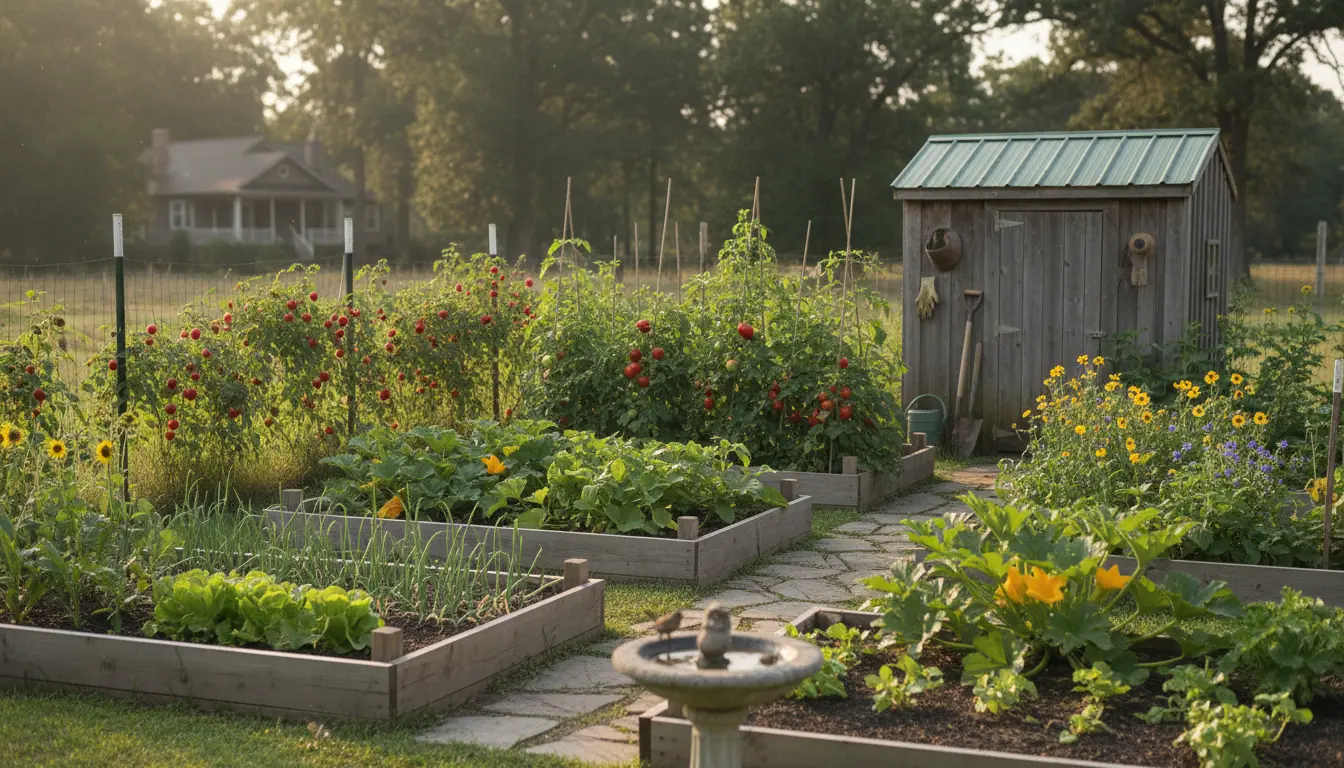
Quick overview before you start a vegetable garden
Starting a vegetable garden is a practical way to grow fresh food, save money, and enjoy outdoor activity. This guide gives step-by-step actions you can follow from planning to harvest.
Planning your vegetable garden
Good planning cuts mistakes and wasted effort. Begin by deciding location, size, and the vegetables you want to grow.
Choose the right location
Pick a spot with at least six hours of direct sunlight for most vegetables. Check for access to water and good drainage to avoid waterlogged soil.
Decide on garden size and type
Start small: a 4×8 foot raised bed or a few containers is enough for beginners. Raised beds, containers, and in-ground rows each have advantages depending on soil and space.
Prepare soil and tools to start a vegetable garden
Soil quality determines plant health. Test soil pH and texture, then amend accordingly before planting.
Basic soil preparation
- Remove weeds and debris from the area.
- Loosen soil to a depth of 8–12 inches for root crops.
- Mix in 2–4 inches of compost to improve structure and nutrients.
Essential tools
Keep a few durable tools on hand: a spade, hand trowel, hoe, watering can or hose with gentle nozzle, and pruning shears. These cover most tasks for a small vegetable garden.
Choose vegetables to plant in your garden
Select crops that match your climate, season, and tastes. Beginner-friendly choices include lettuce, radishes, tomatoes, beans, and zucchini.
Plan crop timing
Follow local planting dates for frost and season length. You can stagger plantings for continuous harvest through the season.
Planting basics to start a vegetable garden
Plant seeds or seedlings at correct depth and spacing as labeled on seed packets. Good spacing reduces disease and improves yields.
Watering and mulching
Water newly planted seeds or transplants gently but thoroughly. Aim for consistent moisture, especially during germination and early growth.
Apply 2–3 inches of organic mulch around plants to retain moisture, suppress weeds, and moderate soil temperature.
Maintenance: feed, protect, and prune
Regular maintenance keeps plants productive. This includes feeding, pest control, and pruning when needed.
Fertilizing and feeding
Use balanced organic fertilizer or compost tea during the growing season. Avoid over-fertilizing, which can lead to leafy growth and fewer fruits.
Pest and disease management
- Inspect plants weekly for pests and signs of disease.
- Handpick large pests like caterpillars, or use row covers for protection.
- Rotate crops yearly to reduce disease build-up in soil.
Harvesting and storage
Harvest vegetables at recommended maturity for best flavor. Many crops taste better when picked young and often.
Storing your harvest
Store leafy greens in the refrigerator wrapped in a damp towel. Tomatoes do best at room temperature unless fully ripe.
Beans and peas are natural nitrogen fixers. When planted in rotation, they can improve soil fertility for heavy feeders like tomatoes and corn.
Common mistakes when you start a vegetable garden
- Planting too much at once — leads to overwhelm and waste.
- Ignoring soil health — poor soil gives poor results even with good care.
- Overwatering or underwatering — both stress plants and reduce yields.
Small real-world case study
Case Study: Anna, a beginner in a city apartment, started a 4×4 raised bed on a sunny balcony. She chose lettuce, cherry tomatoes, and bush beans for a staggered harvest.
By testing soil and adding compost, she avoided early nutrient problems. Weekly inspections for aphids and using row covers solved pest issues. In the first season she harvested enough greens and beans to reduce grocery lettuce purchases by 60%.
Simple seasonal checklist to start a vegetable garden
- Week 1: Site selection and soil test.
- Week 2: Clear area, add compost, prepare beds or containers.
- Week 3: Plant cold-hardy crops or start seeds indoors for warm-season vegetables.
- Growing season: Water regularly, mulch, fertilize as needed, inspect weekly.
- Harvest: Pick regularly and store appropriately.
Final tips to start a vegetable garden successfully
Start small and learn from each season. Keep notes on what you planted, what worked, and what did not.
Join a local gardening group or use community resources for specific regional advice. Over time you can expand with confidence and better yields.