
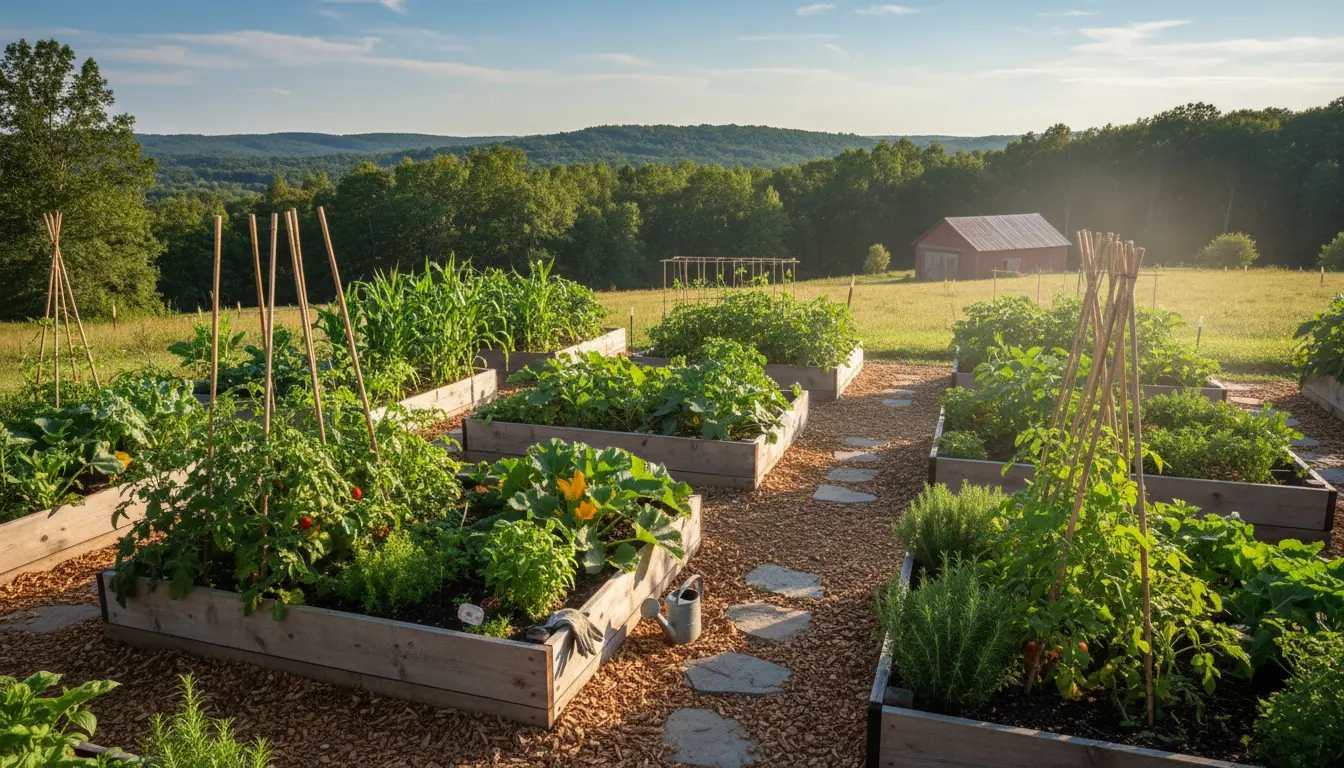
Raised bed vegetable gardens make growing food easier, especially for beginners or small yards. This guide gives clear, practical steps to plan, build, and maintain a productive raised bed vegetable garden.
Why Choose a Raised Bed Vegetable Garden
Raised beds warm faster in spring and drain better than in-ground plots. They allow you to control soil quality and reduce back strain while working.
Benefits include improved drainage, fewer weeds, clearer planting rows, and better yields per square foot.
Planning Your Raised Bed Vegetable Garden
Good planning reduces mistakes. Decide on location, size, and materials before buying soil or plants.
Site and Size for a Raised Bed Vegetable Garden
Pick a sunny spot with at least 6–8 hours of direct light for most vegetables. Ensure easy access to water and paths around the bed.
Common sizes: 4 ft wide and 8 ft long works well because you can reach the center from either side. Height of 12–18 inches is typical for vegetables.
Materials and Bed Construction
Use rot-resistant wood (cedar or redwood), recycled composite boards, or galvanized steel. Avoid treated wood with harmful chemicals for edible crops.
- Tools needed: saw, drill, level, screws or brackets.
- Tip: Pre-made kits speed up construction but may cost more.
Soil Mix for Raised Bed Vegetable Garden
Good soil is the key. A common mix: 40% topsoil, 40% compost, 20% aeration amendment (peat moss, coconut coir, or perlite).
Alternatively, use 50% compost and 50% high-quality topsoil for a faster start. Mix thoroughly before planting.
Plant Selection and Layout
Choose vegetables suited to your climate and season. Start with easy crops like lettuce, radishes, tomatoes, and bush beans.
Use square-foot gardening or row spacing to maximize production. Taller plants should be placed north side to avoid shading smaller crops.
Companion Planting and Crop Rotation
Companion planting helps reduce pests and improve yields. Examples: basil with tomatoes, marigolds to deter nematodes.
Rotate families each season to prevent soil-borne diseases; avoid planting the same crop family in the same bed year after year.
Watering and Maintenance
Consistent watering matters more than heavy, infrequent soaking. Aim for deep, regular watering that keeps the root zone moist.
- Install drip irrigation or soaker hoses for efficiency.
- Mulch with straw or leaf mulch to retain moisture and suppress weeds.
- Feed with balanced organic fertilizer or compost tea every 4–6 weeks during the growing season.
Seasonal Care and Common Problems
Monitor for pests, fungal issues, and nutrient deficiencies. Early detection reduces crop loss.
- Use row covers for insect protection in early season.
- Remove diseased leaves immediately and rotate crops to avoid disease build-up.
- Adjust soil pH to 6.0–7.0 for most vegetables.
Raised beds can produce up to 20% more vegetables per square foot than traditional row gardens because of better soil structure and closer planting.
Small Real-World Example: Community Raised Bed Success
In a small neighborhood, a group built three 4×8 ft. cedar raised beds on a previously unused lawn. They filled beds with a 50/50 topsoil-compost mix and planted tomatoes, leaf greens, and carrots.
Within the first season they reported earlier harvests and fewer weeds. Compost produced on-site supplied nutrients for the second year, reducing the need for purchased fertilizer.
Key takeaways: simple construction, good soil, and shared maintenance produced steady yields and community engagement.
Quick Checklist Before You Build
- Choose sunny, accessible location with water access.
- Decide bed dimensions (4×8 ft recommended) and height (12–18 in).
- Pick safe materials (cedar, composite, or metal) and assemble tools.
- Prepare high-quality soil mix and compost supply.
- Plan crops with companion planting and rotation in mind.
- Install irrigation or plan manual watering schedule.
Final Tips for a Productive Raised Bed Vegetable Garden
Start small and expand after you learn local conditions. Track what works: planting dates, varieties, and yields.
Keep a simple journal or photo log to refine your approach year to year. Raised beds are an efficient way to grow vegetables with less effort and better control over soil and pests.
Follow these steps and you can establish a productive raised bed vegetable garden that fits your space and experience level.