
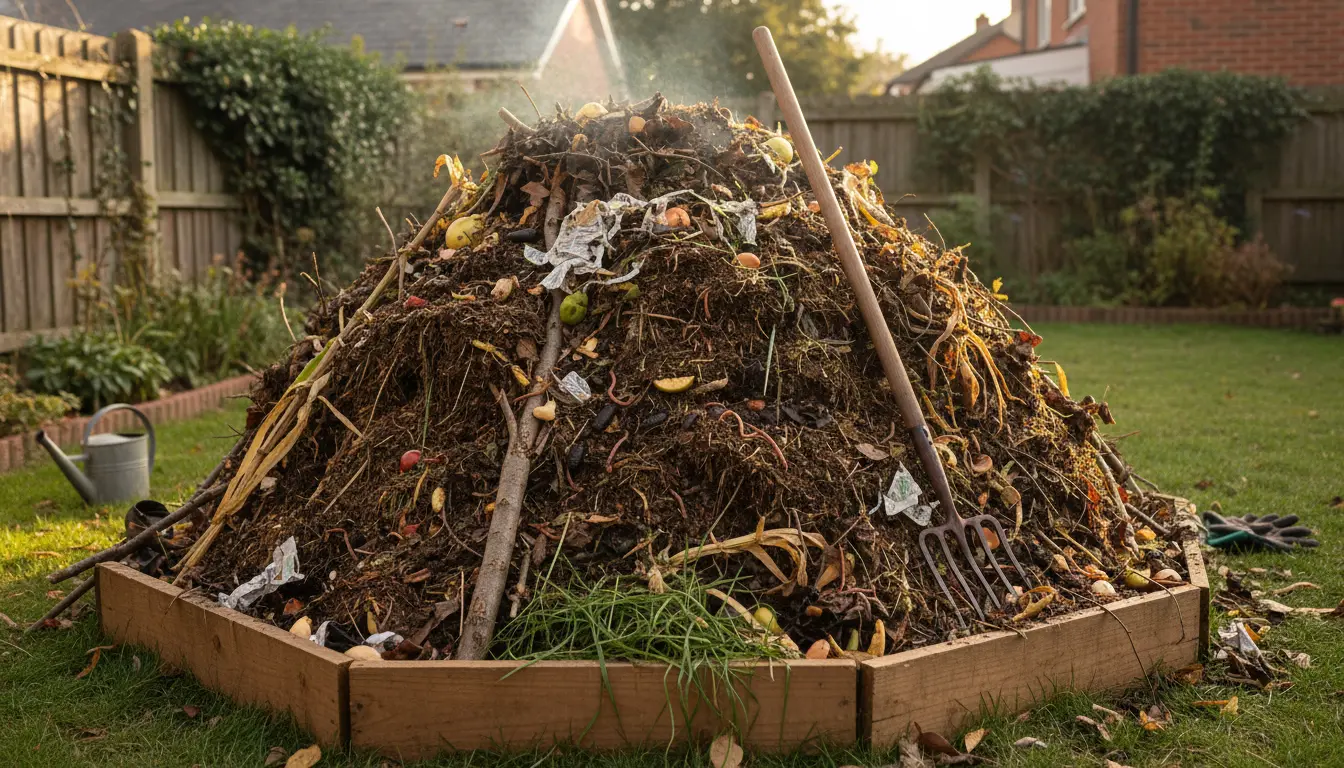
What is home composting?
Home composting is the natural breakdown of organic waste into nutrient-rich soil by microbes, worms, and other organisms. It reduces household waste and produces compost you can use in gardens or potted plants.
Why choose home composting
Composting lowers trash volume and methane emissions from landfills. It improves soil structure and water retention when added to garden beds or containers.
Getting started with home composting
Starting home composting is straightforward and requires a plan for materials, a container, and basic maintenance. Follow the steps below to set up a system that fits your space and lifestyle.
Step 1: Pick a composting method
Choose a method that matches available space and effort. Popular options include backyard bins, tumblers, worm bins, and indoor bokashi systems.
- Backyard compost bin: Good for yard waste and kitchen scraps if you have outdoor space.
- Compost tumbler: Faster turning and fewer pests, suitable for small yards.
- Vermicomposting (worm bin): Ideal for apartments or balconies; uses red worms to process food waste.
- Bokashi: Ferments food waste including meat and dairy before burying in soil.
Step 2: Choose a bin or site
Place a bin on bare soil or a well-drained surface to allow drainage and insect access. Ensure it gets partial sun and is easy to reach for adding material and turning.
What to compost: Greens and browns
Balance is key in home composting. Combine nitrogen-rich ‘greens’ and carbon-rich ‘browns’ to maintain a healthy pile.
Greens (nitrogen sources)
- Kitchen scraps: fruit and vegetable peels, coffee grounds, tea bags
- Fresh grass clippings and green plant trimmings
Browns (carbon sources)
- Dry leaves, straw, shredded paper, cardboard
- Wood chips and small twigs
A good rule of thumb is 2 to 3 parts browns to 1 part greens by volume. Adjust as needed to control moisture and odor.
Managing your compost pile
Keep the pile moist like a wrung-out sponge and turn it occasionally to aerate. Proper balance and airflow speed up decomposition and reduce smells.
Turning and monitoring
Turn a backyard pile every 1 to 2 weeks, or rotate a tumbler every few days for faster results. In a worm bin, avoid frequent turning—worms do the work for you.
Troubleshooting common problems
- Smelly compost: Add more browns and turn to introduce air.
- Too dry: Add water or more greens to increase moisture.
- Slow decomposition: Chop materials smaller, increase greens, and maintain warmth.
Compost can contain up to five times as many nutrients as commercial potting soil and helps retain moisture, reducing plant water needs by up to 30%.
How to use finished compost
Finished compost is dark, crumbly, and smells earthy. Use it as a top dressing, mix it into potting soil, or work it into garden beds before planting.
Application tips
- Vegetable gardens: Mix 2 to 4 inches into the top 6 to 8 inches of soil before planting.
- Containers and pots: Blend one part compost with two parts potting mix.
- Lawns: Apply a light topdressing in spring or fall to improve soil health.
Small real-world case study
Case Study: A small urban family of three started backyard composting in a 60-gallon bin. They used kitchen scraps and yard trimmings and followed a 2:1 browns-to-greens ratio. After six months they produced about 40 liters of finished compost.
The family used the compost in raised beds to grow tomatoes and herbs. Their plants showed improved vigor and they reduced weekly trash by nearly 30%.
Quick tips for success in home composting
- Chop or shred materials to speed decomposition.
- Keep a small counter bin for kitchen scraps to reduce trips outside.
- Monitor moisture and add browns if the pile gets soggy.
- Use a lid or cover to prevent excessive rain and pests.
Summary: Start simple and scale up
Begin with a small bin or worm box and learn as you go. Composting is flexible: you can improve your system over time to match your waste volume and gardening needs.
With consistent inputs, basic monitoring, and occasional turning, home composting turns organic waste into a valuable soil amendment and reduces your environmental footprint.