
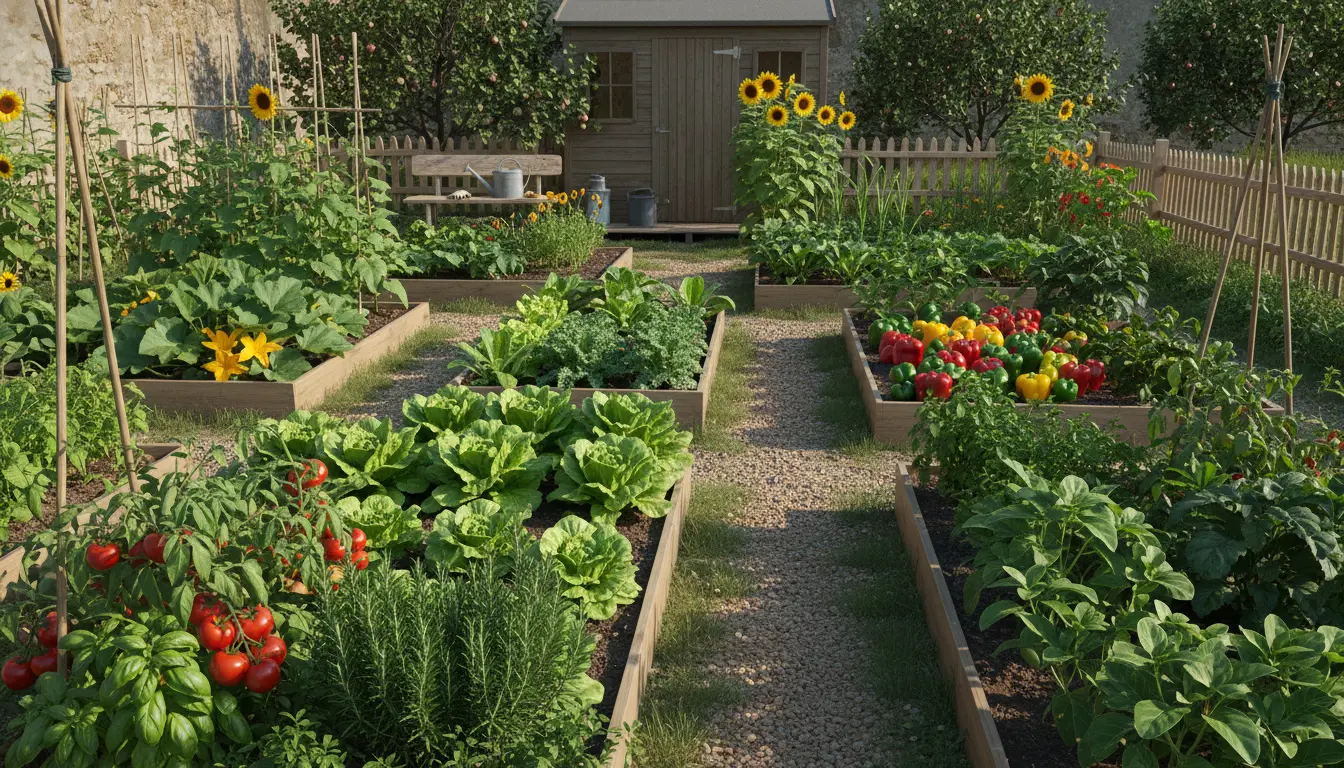
Starting a vegetable garden at home is practical and rewarding. This guide gives clear, step-by-step instructions to plan, plant, and maintain a productive vegetable garden in small or large spaces.
Plan Your Vegetable Garden
Good planning reduces mistakes and saves time. Begin by assessing space, light, and how much time you can commit weekly.
Choose the Right Location for Your Vegetable Garden
Most vegetables need 6 to 8 hours of direct sunlight per day. Observe the spot through a full day to track sun and shade patterns.
Pick an area with good drainage and easy access to water. Avoid low spots that collect cold air or stay wet after rain.
Decide Garden Type for Your Vegetable Garden
Garden type affects soil, pests, and effort. Common options are raised beds, in-ground plots, and containers.
- Raised beds: Better drainage, warms faster in spring, easier to control soil quality.
- In-ground: Lower cost, larger area, may need more soil improvement if native soil is poor.
- Containers: Ideal for small spaces and patios; choose large pots to reduce watering frequency.
Prepare Soil for Your Vegetable Garden
Healthy soil is the foundation of a successful vegetable garden. Test soil texture and pH if you can, or observe plant performance to guide improvements.
Mix in generous amounts of compost to increase fertility and structure. A typical raised bed mix is equal parts topsoil, compost, and a light amendment like coconut coir or peat for retention.
Soil Tips for a Vegetable Garden
- Aim for loose, crumbly soil that holds moisture but drains well.
- Add lime only if a soil test shows low pH; otherwise use compost to slowly balance nutrients.
- Work amendments into the top 6 to 12 inches where most roots grow.
Choose Vegetables and a Planting Schedule for Your Vegetable Garden
Select vegetables suited to your climate and season. Beginners should start with reliable, low-maintenance crops.
Easy Vegetables for Beginners
- Lettuce and salad greens: Fast-growing, great for succession planting.
- Radishes: Very quick harvests, clear success early in the season.
- Beans: Low care and productive; pole or bush varieties for different spaces.
- Zucchini and summer squash: High yields with straightforward care.
- Herbs: Basil, parsley, and chives add flavor and grow well in small spaces.
Use a simple planting calendar: sow cool-season crops in early spring or fall, and warm-season crops after last frost.
Planting and Watering the Vegetable Garden
Follow seed packet or plant tag spacing and depth instructions. Crowding plants reduces airflow and increases disease risk.
Water deeply and infrequently rather than shallow and often. Deep watering encourages stronger root systems and improves drought resilience.
Watering Guidelines for a Vegetable Garden
- Water early in the morning to reduce evaporation and disease.
- Aim for 1 to 1.5 inches of water per week, adjusting for rainfall and heat.
- Use drip irrigation or soaker hoses to deliver water directly to the root zone.
Maintain and Protect Your Vegetable Garden
Regular maintenance prevents small problems from becoming major ones. Spend 15–30 minutes several times a week checking plants.
Weed by hand or with shallow cultivation to avoid damaging roots. Mulch around plants to suppress weeds and retain moisture.
Pest and Disease Control in Your Vegetable Garden
- Use row covers to protect seedlings from insects while allowing light and water through.
- Practice crop rotation yearly to reduce soil-borne diseases and pest buildup.
- Employ organic methods first: handpicking, insecticidal soap, and encouraging beneficial insects.
Mulching reduces surface evaporation and can cut watering frequency, helping plants stay healthy through warm spells.
Harvesting and Ongoing Care for Your Vegetable Garden
Harvest regularly to encourage continued production. For many vegetables, picking early yields better flavor and keeps plants productive.
After harvest, amend soil with compost and plan fall or winter cover crops to protect and rebuild soil structure.
Simple End-of-Season Tasks for Your Vegetable Garden
- Remove spent plants and compost healthy debris.
- Add a layer of compost and mulch to beds.
- Plant cover crops like clover or winter rye if you plan to rest the bed through winter.
Case Study: Small Raised Bed Vegetable Garden
Maria, a first-time gardener, converted a 4 x 8 foot sunny corner into a raised bed. She filled it with a mix of topsoil, compost, and coconut coir.
She planted lettuce, radishes, bush beans, and basil. By following a weekly watering and weeding routine, she harvested her first greens in 6 weeks and a steady supply of beans by summer.
Key results: modest initial investment, manageable weekly upkeep, and continuous harvests that reduced grocery trips for fresh salad greens.
First 30 Days Checklist to Start Your Vegetable Garden
- Choose location and garden type (raised bed, in-ground, container).
- Prepare soil and add compost.
- Select easy vegetables and sow seeds or plant transplants.
- Set up a simple watering routine and mulch newly planted areas.
- Inspect weekly for pests, disease, and water needs.
Starting a vegetable garden at home is about consistent, simple actions more than perfect technique. With planning, the right soil, and weekly attention, you can grow reliable, healthy vegetables even in small spaces.