
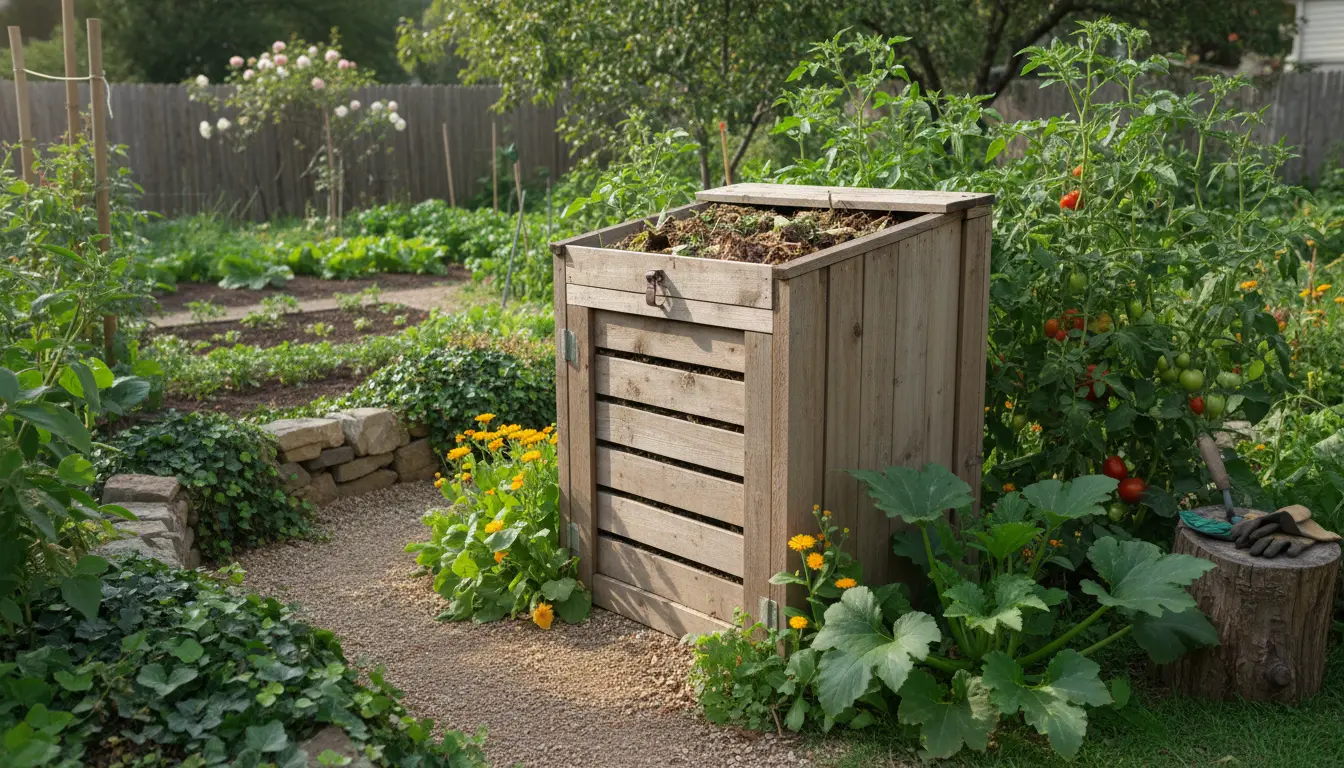
Why Use a Backyard Compost Bin
Starting a backyard compost bin turns kitchen and yard waste into nutrient-rich soil. It reduces landfill waste and improves garden health in a compact, practical way.
This guide explains choices, setup, maintenance, and troubleshooting so you can build a working bin in weeks, not months.
Choosing a Backyard Compost Bin
Select a bin that fits your space, budget, and activity level. Options include store-bought tumblers, wooden pallets, wire cages, or simple plastic bins.
Consider airflow, drainage, and access for turning. A good bin balances containment with easy maintenance.
DIY Bin Options
- Wooden crate or pallet bin: sturdy and breathable.
- Wire mesh cylinder: cheap and good for aeration.
- Plastic tumblers: easy to turn and pest-resistant.
Where to Place Your Backyard Compost Bin
Pick a level, well-drained spot with partial shade. Too much sun dries the pile; deep shade slows decomposition.
Place the bin near a water source and the garden for easy use. Ensure it’s accessible in all seasons.
What to Add to a Backyard Compost Bin
Compost needs a mix of ‘greens’ and ‘browns’ for balanced decomposition. Greens supply nitrogen; browns add carbon.
- Greens: vegetable scraps, coffee grounds, fresh grass clippings.
- Browns: dry leaves, straw, shredded cardboard, paper.
Aim for a rough 2:1 to 3:1 ratio of browns to greens by volume to avoid odors and soggy piles.
Materials to Avoid
- Meat, dairy, and oily foods that attract pests.
- Diseased plants or weed seeds when you need sterile compost.
- Large branches and woody material unless chipped first.
How to Build and Layer a Backyard Compost Bin
Start with a 4-6 inch layer of coarse browns for drainage. Add alternating layers of greens and browns in 3-6 inch increments.
Keep layers thin to maintain airflow and speed decomposition. Chop or shred materials to increase surface area.
Turning and Aeration
Turn the pile every 1-2 weeks in active systems to introduce oxygen. For a tumbler, rotate according to manufacturer instructions.
Signs the pile needs turning include bad smells or compacted, wet material. Aeration prevents anaerobic conditions that slow composting.
Maintaining Moisture and Temperature in a Backyard Compost Bin
Compost should be as damp as a wrung-out sponge. Add water during dry spells and cover or add browns if it’s too wet.
Ideal temperatures for hot composting are 130–160°F (55–70°C). A thermometer helps, but many home composters rely on regular turning and proper ratios instead.
Troubleshooting a Backyard Compost Bin
- Foul odor: add more browns and increase turning.
- Pile too dry: add water and more greens.
- Slow decomposition: chop materials finer, check moisture, and turn more often.
- Pests: avoid adding meat or dairy and use a closed bin or secure lid.
Adding a handful of finished compost or garden soil to a new pile introduces beneficial microbes and speeds up decomposition.
Speeding Up Composting in a Backyard Compost Bin
To accelerate results, increase surface area by shredding materials, maintain the proper browns-to-greens ratio, and turn regularly.
Using a compost activator, garden soil, or finished compost as an inoculant also helps establish microbial activity faster.
Small Case Study: A Homeowner’s Backyard Compost Bin
Maria, a homeowner in Austin, converted a 3×3 foot corner into a compost station using two stacked wooden bins. She layered leaves and kitchen scraps and turned the pile every 10 days.
Within three months she had dark, crumbly compost that reduced her grocery waste by about 25 percent and replaced store-bought soil amendments for her vegetable garden.
Using Finished Compost from Your Backyard Compost Bin
Finished compost should be dark, crumbly, and smell earthy. Use it as a top dressing, soil amendment, or starter mix for new beds.
- Mix 1 part compost to 3 parts soil for planting beds.
- Use a thin layer as mulch around established plants.
Summary Checklist for a Successful Backyard Compost Bin
- Choose a bin with good airflow and easy access.
- Place it on level ground with partial shade.
- Balance browns and greens and keep materials chopped.
- Maintain moisture like a wrung-out sponge.
- Turn regularly to introduce oxygen and avoid odors.
With basic materials and a weekly routine, a backyard compost bin becomes a reliable source of free, organic soil amendment. Start small, observe, and adjust ratios and turning to fit your local climate and the materials you produce.