
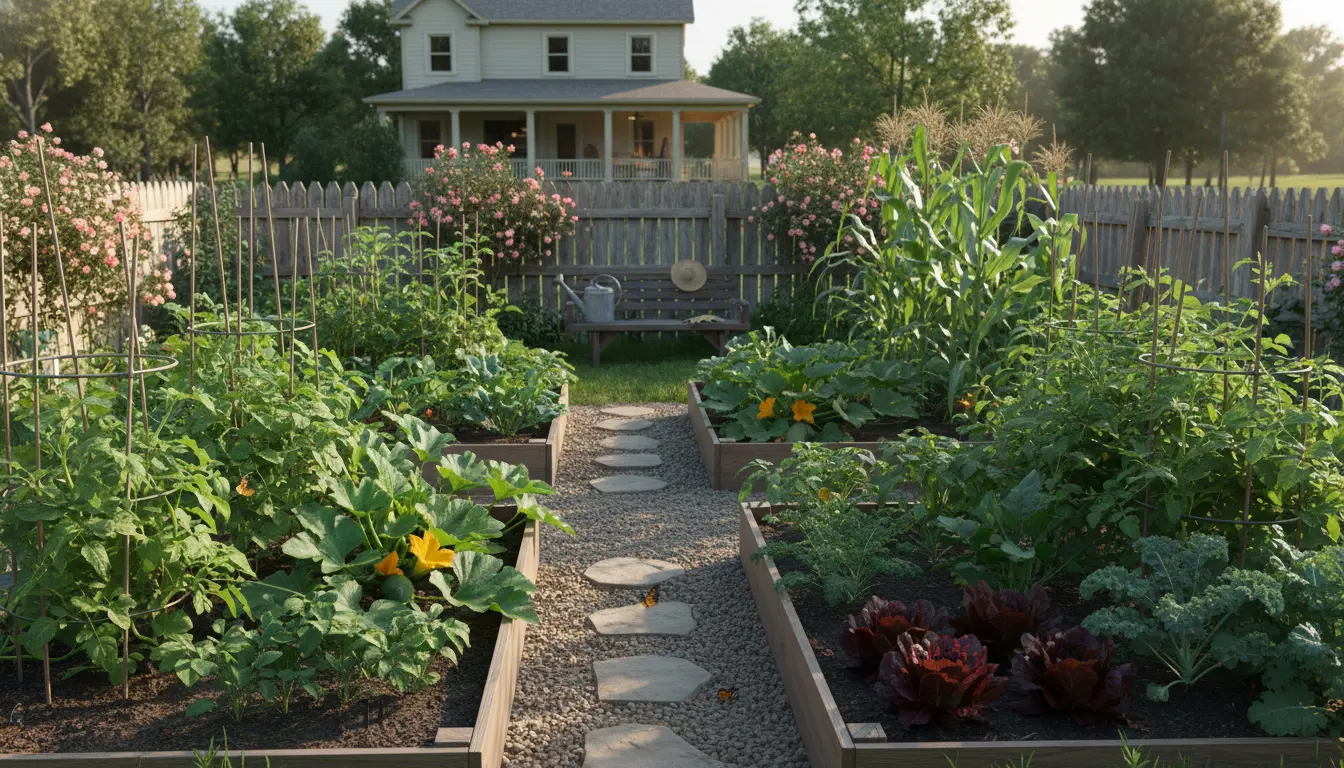
Why Start a Vegetable Garden
Starting a vegetable garden saves money, improves food quality, and reduces your environmental footprint. It also gives you fresh produce and satisfaction from growing food with your own hands.
Plan Your Vegetable Garden
Good planning makes gardening manageable and productive. A simple plan covers location, size, crops, and schedule.
Pick a Location for Your Vegetable Garden
Choose a spot with at least 6 hours of sunlight for most vegetables. Ensure easy access to water and good drainage to avoid waterlogged roots.
Choose What to Grow in Your Vegetable Garden
Select crops based on climate, season, and your family’s preferences. Start with 3–6 easy plants to learn basics without getting overwhelmed.
- Easy choices: lettuce, radishes, tomatoes, beans, herbs
- Consider succession planting to get continuous harvests
Prepare Soil for a Successful Vegetable Garden
Healthy soil is the single most important factor for a productive vegetable garden. Spend time testing and improving it before planting.
Test and Improve Soil in Your Vegetable Garden
Use a home soil test kit or send samples to a lab to check pH and nutrients. Most vegetables prefer a pH between 6.0 and 7.0.
Amend soil with organic matter like compost or well-rotted manure to improve structure and fertility. Mix amendments into the top 6–8 inches of soil.
Raised Beds and Containers for Small Vegetable Gardens
Raised beds warm faster and drain well, making them ideal for many gardeners. Containers work well on patios and balconies and let you control the soil mix precisely.
- Use a quality potting mix for containers
- Keep containers large enough for root growth (e.g., 12 inches deep for tomatoes)
Planting and Care for Your Vegetable Garden
Plant at the right time and follow basic care routines. Proper spacing, watering, and feeding reduce pest and disease problems.
When to Plant in Your Vegetable Garden
Check local frost dates and seed packet instructions. Start seeds indoors for long-season plants or buy transplants to plant after the last frost.
Watering and Feeding Your Vegetable Garden
Water deeply and less frequently to encourage strong roots. Aim for 1–1.5 inches of water per week, more in hot weather.
Apply a balanced organic fertilizer or side-dress with compost mid-season for heavy feeders like corn and tomatoes.
Pest and Disease Management in a Vegetable Garden
Use prevention first: crop rotation, good spacing, and clean tools reduce problems. Inspect plants regularly and remove affected leaves promptly.
- Handpick large pests like slugs and caterpillars
- Use row covers for early-season protection
- Apply organic solutions such as insecticidal soap when necessary
Harvesting and Crop Rotation in Your Vegetable Garden
Harvest vegetables when they are ripe for best flavor and to encourage further production. Regular harvesting prevents overripe produce and pests attracted to decaying fruit.
Rotate crops each year to reduce soil-borne disease and nutrient depletion. Avoid planting the same family of plants in the same spot for consecutive seasons.
Small Real-World Example: Balcony Vegetable Garden Case Study
Maria, a city renter, started a 4-container balcony vegetable garden. She used three 12-inch pots and one larger container for a tomato plant.
By choosing compact varieties and using a commercial potting mix with compost, she harvested fresh herbs, salad greens, and two large tomatoes weekly from June to September. Her total startup cost was under $120 and she cut grocery lettuce purchases by 50% that season.
Growing your own herbs and salad greens in containers can yield harvests in as little as 4–6 weeks, providing quick results and fast motivation for new gardeners.
Practical Tips for New Vegetable Gardeners
- Start small: limit initial space to one or two beds or a few containers.
- Keep a simple garden journal: note planting dates, varieties, and harvests.
- Use mulch to retain moisture and suppress weeds.
- Learn one new technique each season, such as pruning or seed saving.
Summary: Start a Vegetable Garden with Confidence
Starting a vegetable garden is a step-by-step process: choose a sunny site, test and improve soil, select easy crops, and establish simple care routines. Small, consistent efforts produce steady harvests and learning.
Begin with one goal—fresh salads, herbs, or a few tomato plants—and expand as your skills and confidence grow. A practical plan and regular care will make your vegetable garden productive and rewarding.