
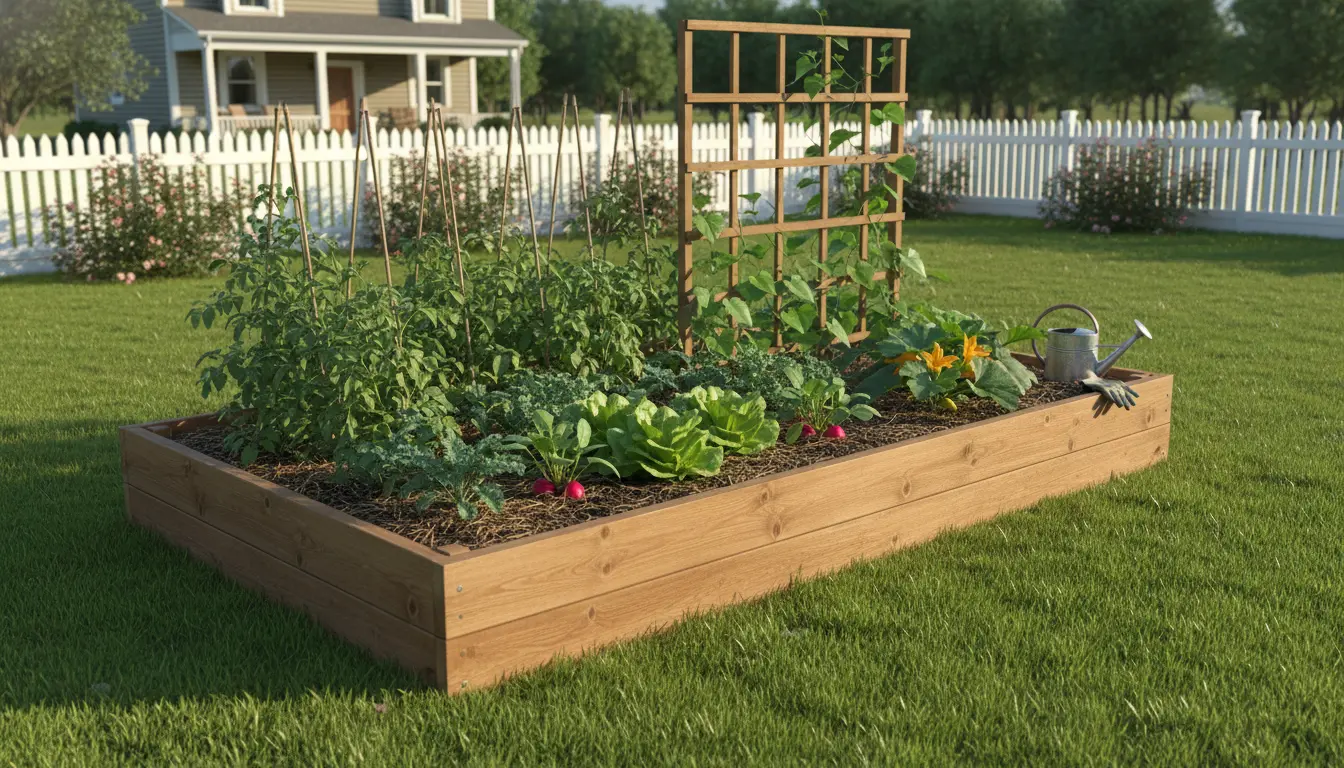
Plan Your Beginner Vegetable Garden
Starting a vegetable garden is easier with a clear plan. Decide where you will grow, how much time you can spend, and which crops you want to harvest.
Keep the scale small for your first season. A modest area or a few raised beds reduces work and helps you learn faster.
Choose the Right Location for Your Vegetable Garden
Sunlight is the most important factor for a successful vegetable garden. Most vegetables need at least six hours of direct sun daily.
Pick a level spot with good drainage and easy access to water. If ground soil is poor, consider raised beds or containers.
Site Checklist for a Beginner Vegetable Garden
- 6+ hours of sunlight per day
- Close to a water source
- Protected from strong winds
- Good drainage, not a low spot
Prepare Soil for Your Vegetable Garden
Healthy soil is the foundation of any vegetable garden. Test or assess soil texture and fertility before planting.
If you have heavy clay or sandy soil, amend it with compost and organic matter to improve structure and nutrients.
Simple Soil Improvement Steps
- Add 2–4 inches of compost over the planting area.
- Work the compost into the top 6–8 inches of soil.
- Use a pH test kit; most vegetables prefer pH 6.0–7.0.
Select Easy Crops for First-Time Gardeners
Choose vegetables that are forgiving and fast to harvest. These give quick rewards and build confidence.
Good starter crops include tomatoes, lettuce, radishes, green beans, and zucchini. Herbs like basil and parsley are also reliable.
Beginner-Friendly Vegetable List
- Tomatoes (determine if you want determinate or indeterminate)
- Lettuce and leafy greens (quick harvest cycles)
- Radishes (ready in 3–4 weeks)
- Green beans (bush varieties are low-maintenance)
- Zucchini (high yield with simple care)
Planting Basics for a Vegetable Garden
Follow planting dates for your region and choose seeds or seedlings based on your comfort level. Seeds are cheaper, seedlings give a head start.
Plant with appropriate spacing and depth; check seed packets or plant labels for guidance.
Watering and Mulching Tips
Water deeply and less often to encourage strong roots. Aim for consistent moisture, especially during germination and fruit set.
Apply 2–3 inches of organic mulch to retain moisture, suppress weeds, and moderate soil temperature.
Pest and Disease Management in a Beginner Vegetable Garden
Healthy plants resist pests and disease better. Start with clean soil, proper spacing, and crop rotation where possible.
Use these low-toxicity strategies before reaching for chemical controls.
Practical Pest Control Methods
- Handpick large pests like slugs and caterpillars.
- Use row covers to protect seedlings from insects and birds.
- Introduce beneficial insects (ladybugs, lacewings) for aphid control.
- Remove and compost diseased leaves; avoid spreading infection.
Maintenance: Keep Your Vegetable Garden Productive
Regular maintenance keeps yields high. Schedule weekly checks for watering, support, and harvesting.
Prune indeterminate tomatoes, stake tall plants, and thin crowded seedlings to improve air flow and reduce disease risk.
Seasonal To-Do List
- Spring: prepare beds, sow cool-season crops, and plant seedlings
- Summer: water, weed, and harvest frequently
- Fall: remove spent plants, add compost, and plant cover crops
Radishes can be ready to harvest in as little as 3 weeks, making them one of the fastest crops to teach beginners how harvesting works.
Case Study: Small Urban Vegetable Garden
Maria, an apartment dweller, started a 4×2 foot raised bed on her balcony. She chose compact tomatoes, lettuce, and bush beans for a summer season.
By using store-bought potting mix with added compost, daily morning watering, and weekly harvests, she produced enough greens and tomatoes for her household of two.
Lessons learned: start small, choose space-appropriate varieties, and harvest frequently to encourage more growth.
Simple Example Planting Plan for a Beginner Vegetable Garden
- Bed size: 4 x 8 feet
- Row 1: 3 tomato plants (staked)
- Row 2: Lettuce mix planted in blocks (succession plant every 2 weeks)
- Row 3: Bush beans spaced 4–6 inches apart
Final Tips for a Successful Beginner Vegetable Garden
Keep records of what you plant, when you plant it, and harvest dates. Notes help you improve each season.
Start small, observe often, and adjust. Gardening is practical and iterative; small experiments teach big lessons.
With basic planning, good soil, and regular care, a beginner vegetable garden can be productive and rewarding in the first season.