
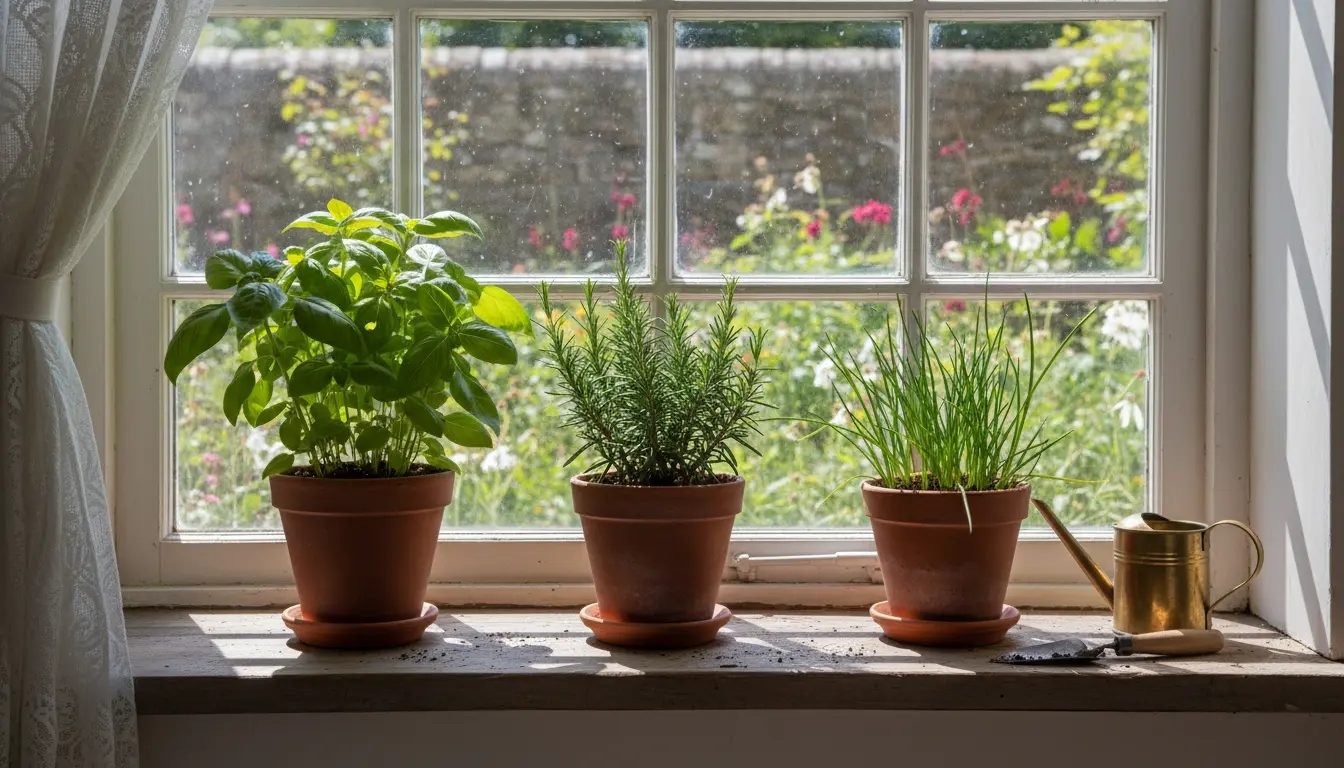
Indoor Herb Garden for Beginners: Start with a Plan
Starting an indoor herb garden is a practical way to add fresh flavor to meals and improve air quality. This guide covers essential steps for an indoor herb garden for beginners, from choosing containers to routine care.
Choosing Herbs for an Indoor Herb Garden
Select herbs that thrive indoors and match your cooking habits. Popular easy-to-grow choices include basil, mint, chives, parsley, and thyme.
Herb selection tips
- Choose 3–5 varieties to keep care manageable.
- Group herbs by light needs: high (basil, rosemary) and moderate (parsley, cilantro).
- Start with seeds or small starter plants from a nursery for faster results.
Containers, Soil, and Drainage
Good containers and soil are crucial for healthy roots. Use pots with drainage holes and a light potting mix formulated for herbs or vegetables.
Container and soil checklist
- Containers: 4–8 inch pots for single herbs, wider pots for mixed plantings.
- Soil: well-draining potting mix with perlite or vermiculite.
- Drainage: saucers to catch excess water, but empty them after watering to avoid root rot.
Light Requirements for an Indoor Herb Garden
Light is the most common limiting factor indoors. Most culinary herbs need 6–8 hours of bright light each day.
Providing enough light
- Place herbs on a south or west-facing windowsill if possible.
- Use a full-spectrum LED grow light for 10–12 hours a day in low-light rooms.
- Rotate pots weekly so all sides of the plant receive light evenly.
Watering and Feeding an Indoor Herb Garden
Overwatering is a common mistake. Most herbs prefer to dry slightly between waterings rather than staying soggy.
Watering routine
- Check soil with your finger: water when the top 1 inch feels dry.
- Water thoroughly until water drains out, then discard excess from the saucer.
- Decrease watering in cooler months when growth slows.
Feeding schedule
Feed herbs with a balanced liquid fertilizer every 4–6 weeks during active growth. Use a half-strength solution to avoid excessive leaf growth and reduced flavor.
Pruning and Harvesting in an Indoor Herb Garden
Regular harvesting encourages bushier growth and prevents legginess. Learn how to prune without harming the plant.
Harvesting rules
- Pinch tips regularly to encourage branching; remove up to one-third of the plant at a time.
- Cut above a pair of leaves or a node to promote new shoots.
- Harvest in the morning for the best flavor and essential oil concentration.
Troubleshooting Common Problems with an Indoor Herb Garden
Watch for yellow leaves, leggy stems, pests, and mold. Quick action prevents small problems from becoming fatal.
Quick fixes
- Yellow lower leaves: likely overwatering — check drainage and reduce frequency.
- Leggy growth: increase light and pinch back to encourage bushiness.
- Pests like aphids or spider mites: rinse plants with water and use insecticidal soap if needed.
Many herbs release stronger flavors just before flowering, so pinch flower buds to keep leaves flavorful and productive.
Case Study: A Simple Windowsill Indoor Herb Garden
Anna, a city renter, set up three 6-inch pots on her east-facing windowsill. She chose basil, chives, and parsley because she cooks with them weekly.
After moving the pots to a brighter south window and adding a 10,000K LED light during winter, all three herbs thrived. Anna watered when the top inch of soil dried and fed a half-strength fertilizer monthly. Within six weeks she went from limp seedlings to frequent harvests, saving money and reducing grocery trips.
Practical Setup Example and Weekly Care Plan
Use this simple plan to maintain an indoor herb garden for beginners. It fits small apartments and busy schedules.
- Day 1: Plant herbs in pots with fresh potting mix and position in bright light.
- Weekly: Check soil moisture, rotate pots, pinch tips to encourage growth.
- Monthly: Feed with half-strength liquid fertilizer; inspect for pests.
- Seasonal: Move herbs closer to light in winter or add supplemental grow lighting.
Final Tips for Success with an Indoor Herb Garden
Start small and observe how your space affects growth. Adjust water and light gradually rather than making big changes.
- Label pots with planting dates to track progress.
- Keep a small spray bottle for occasional misting of delicate herbs like cilantro.
- Share cuttings with friends to expand your garden without extra cost.
With the right selection, light, and a simple care routine, an indoor herb garden for beginners can provide fresh herbs year-round. Start with a few hardy varieties, follow the watering and light guidelines, and you’ll build confidence quickly.