
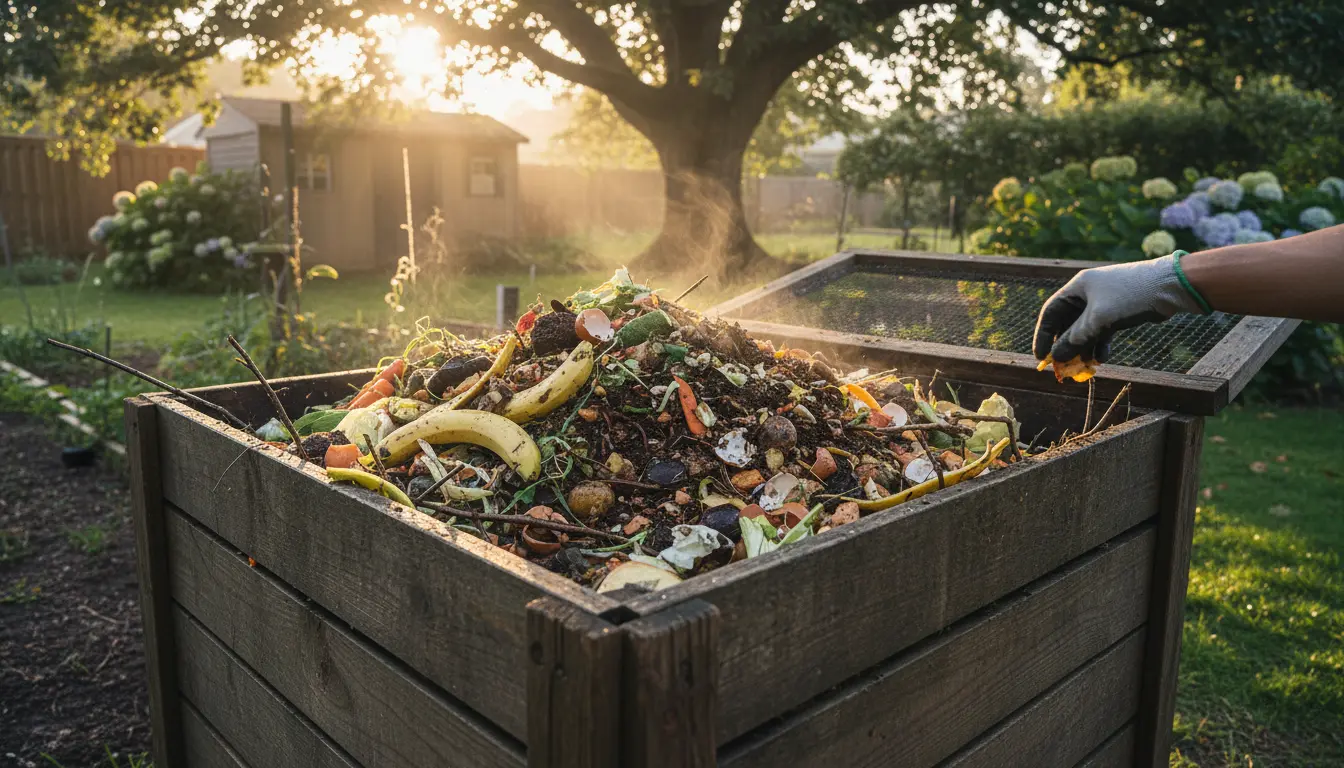
Why start composting at home
Composting at home turns kitchen scraps and yard waste into valuable soil amendment. It reduces household waste and improves garden health without chemical fertilizers.
This guide explains simple, practical steps to begin home composting and keep the process working reliably.
Choose the right method for home composting
There are a few common methods to composting at home. Pick one that fits your space, time, and goals.
- Outdoor pile or bin: Best for yards and gardens. Requires some space and occasional turning.
- Tumbler: Enclosed drum that you rotate. Faster decomposition and tidy for small yards.
- Vermicomposting: Uses worms in a bin indoors or outdoors. Ideal for apartments and small kitchens.
- Bokashi: Fermentation method good for food scraps and can handle meat or dairy.
Essential materials for composting at home
Successful home composting balances carbon-rich and nitrogen-rich materials. Think of it as a recipe.
- Greens (nitrogen): Vegetable peels, coffee grounds, fresh grass clippings.
- Browns (carbon): Dry leaves, shredded paper, cardboard, straw.
- Air and moisture: Oxygen and dampness (like a wrung-out sponge) keep microbes active.
- Optional additives: Garden soil or finished compost to introduce microbes.
How to layer your compost
Layering helps maintain oxygen and moisture balance. Start with a coarse base of twigs or straw to aid drainage.
Alternate layers of greens and browns roughly in a 1:2 ratio (by volume) and add water if the pile is dry.
Step-by-step setup for backyard composting at home
Follow these steps to set up a basic outdoor compost bin.
- Choose a level, partially shaded spot near a water source.
- Place a bin or frame that allows airflow but keeps animals out.
- Add a 4–6 inch layer of browns to start the base.
- Alternate greens and browns, keeping the pile moist but not soggy.
- Turn or mix the pile every 1–2 weeks to add oxygen and speed up decomposition.
Troubleshooting common issues in home composting
Some problems are easy to fix with simple adjustments.
- Smell: Usually too wet or too many greens. Add more browns and turn the pile.
- Slow decomposition: Increase turning, chop materials smaller, or add water if dry.
- Fruit flies: Bury food scraps in the pile or add a layer of browns each time you add greens.
- Pests like rodents: Use a secure bin, avoid adding meat or fatty scraps, and bury new food under a layer of browns.
Composting at home in small spaces
Apartment dwellers can still compost at home effectively.
Vermicomposting and Bokashi systems work well indoors and require little space. Use a small countertop pail for scraps and empty it into the worm bin or Bokashi bucket regularly.
How to tell when compost is ready
Finished compost is dark, crumbly, and smells earthy. Most backyard piles take 3–12 months depending on method and maintenance.
Use finished compost as a top dressing, mix into potting soil, or incorporate into garden beds to improve texture and nutrient content.
Simple uses for finished home compost
- Top-dress lawn or garden beds in spring or fall.
- Mix 1 part compost to 3 parts garden soil for planting beds.
- Add to potting mixes for container plants at about 10–20% of the mix.
Real-world case study: Small apartment to thriving balcony garden
Maria, a city apartment resident, started vermicomposting in a 10-liter bin under her sink. She fed it vegetable scraps and coffee grounds. After three months she harvested crumbly castings and used them in her balcony planters.
Results in six months: her houseplant growth improved, she cut kitchen waste by about 50%, and her grocery bill fell slightly because she grew herbs and lettuce.
This shows that composting at home works even with limited space and can yield fast, tangible benefits.
Quick checklist to start composting at home
- Choose a method: outdoor bin, tumbler, vermicompost, or Bokashi.
- Gather materials: greens, browns, a bin or container, and basic tools.
- Set up in a convenient spot and begin layering.
- Monitor moisture and turn the pile periodically.
- Harvest finished compost and apply to your garden or plants.
Composting at home is a low-cost, practical way to reduce waste and build healthier soil. Start with one simple bin or system and refine your routine as you learn what works for your space and schedule.