
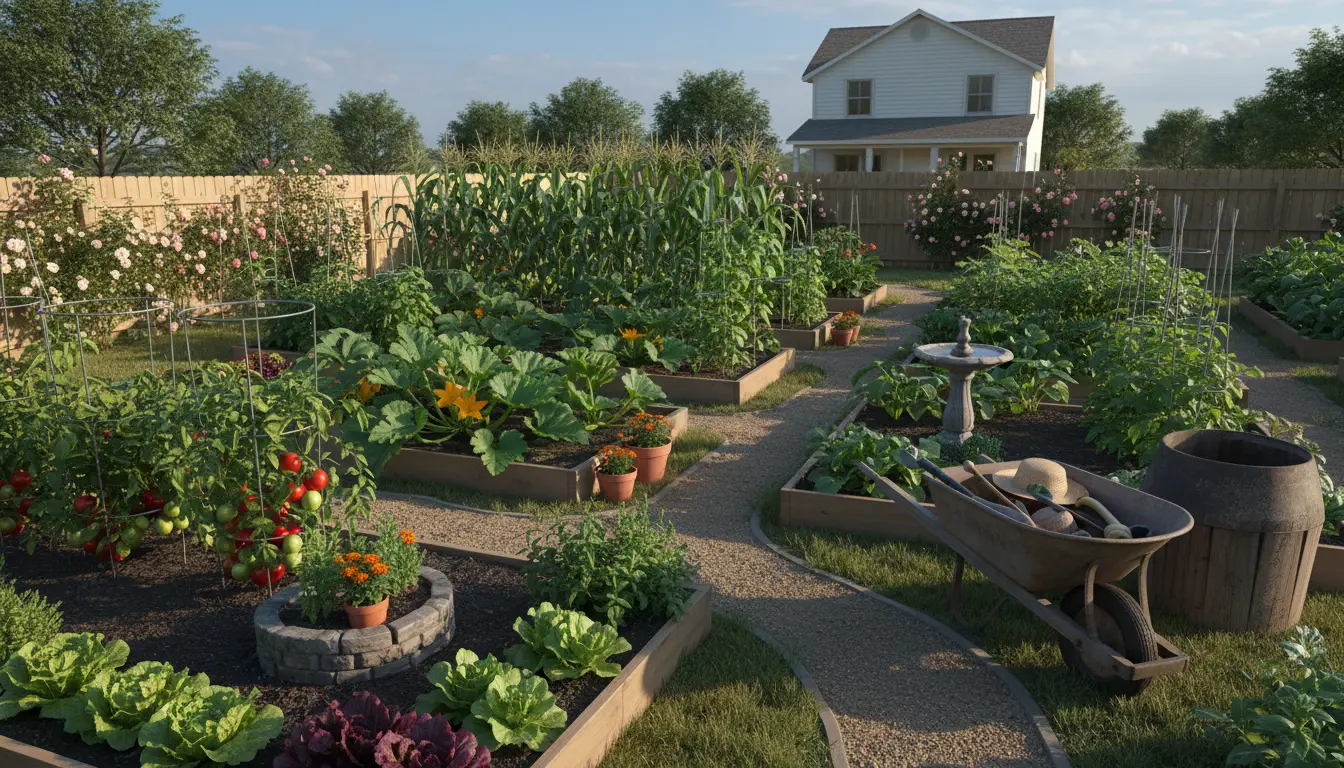
Starting a home vegetable garden is practical, cost-effective, and rewarding. This guide covers the core steps you need to plan, prepare, plant, and maintain a productive garden in a small backyard or on a balcony.
Planning Your Home Vegetable Garden
Good planning saves time and money. Begin by assessing available space, sunlight, and water access. Most vegetables need 6–8 hours of direct sun each day.
Choosing the Right Location for a Home Vegetable Garden
Select a spot with the best sun exposure and easy access to a hose. Avoid low areas where water pools after rain. If ground space is limited, raised beds or large containers work well.
Selecting Vegetables for Beginners
Choose a mix of fast-growing and reliable crops to keep motivation high. Good beginner vegetables include lettuce, radishes, spinach, bush beans, cherry tomatoes, and herbs like basil.
- Fast harvests: radishes, leaf lettuce, spinach
- Low maintenance: bush beans, chard, kale
- Higher commitment: tomatoes, peppers
Preparing Soil for a Home Vegetable Garden
Healthy soil is the foundation of a productive home vegetable garden. Test the soil pH and texture early. Many vegetables prefer slightly acidic to neutral soil (pH 6.0–7.0).
Soil Testing and Amendments
Use a simple home test kit or send a sample to a local extension service. Based on results, add compost, well-rotted manure, or balanced organic fertilizer to improve structure and nutrients.
- Add 2–4 inches of compost and mix into the top 6–8 inches of soil.
- Use coarse sand or perlite for heavy clay to improve drainage.
- Apply lime only if the pH is low and a test recommends it.
Planting and Spacing in a Home Vegetable Garden
Follow seed packet or plant tag spacing recommendations. Crowded plants compete for light and nutrients and are more prone to disease.
Seed vs Seedlings
Start seeds indoors for long-season crops like tomatoes, or buy healthy seedlings from a trusted nursery. Direct-sow fast crops such as radishes and beans when the soil is warm enough.
Stagger plantings of lettuce and spinach every two weeks to maintain a steady harvest. Use short trellises for vining crops to save space.
Watering, Feeding, and Basic Maintenance
Consistent watering is critical. Aim for deep, infrequent watering rather than light daily sprinkling. This encourages deeper roots and improves drought resilience.
- Water early in the morning when possible to reduce evaporation.
- Mulch around plants with straw or shredded leaves to retain moisture and suppress weeds.
- Fertilize lightly according to plant needs—leafy greens need more nitrogen, while fruiting vegetables benefit from phosphorus and potassium.
Pest and Disease Basics for a Home Vegetable Garden
Inspect plants weekly for pests and signs of disease. Most problems are easier to manage when caught early. Use physical controls like hand-picking, row covers, or insecticidal soap for soft-bodied insects.
Practice crop rotation and avoid planting the same family in the same bed year after year to reduce soil-borne disease buildup.
Seasonal Calendar and Crop Rotation for a Home Vegetable Garden
Map a simple seasonal calendar: cool-season crops in spring and fall, warm-season crops in summer. Plan rotations by plant family—solanaceae (tomato, pepper) away from other solanaceae the next season.
- Spring: peas, spinach, radish, lettuce
- Summer: tomatoes, eggplant, peppers, beans
- Fall: kale, carrots, beets, late lettuce
Tools and Supplies Checklist
You do not need many tools to start. Begin with the essentials and add items as your garden grows.
- Hand trowel and fork
- Garden hose or watering can
- Half-moon weeder or hoe
- Pruning shears and plant ties
- Compost or organic fertilizer
Companion planting can reduce pests and improve yields. For example, planting basil near tomatoes may enhance tomato flavor and help repel some pests.
Case Study: Small Backyard Home Vegetable Garden
Maria converted a 10 x 4 foot strip of lawn into three raised beds. She filled them with a mix of compost and topsoil and planted cherry tomatoes, bush beans, lettuce, and herbs.
In the first season she harvested weekly salads and 20 pounds of cherry tomatoes. She reported less watering time due to mulching and fewer pest issues after using row covers early in the season.
This example shows that modest space and simple practices can deliver regular fresh produce and measurable savings at the grocery store.
Quick Troubleshooting Tips
- Yellow lower leaves on tomatoes: check for nitrogen deficiency or overwatering.
- Stunted seedlings: improve light or check for root-bound containers.
- Chewed leaves: inspect undersides for slugs or caterpillars and remove by hand.
Starting a home vegetable garden is an iterative process. Keep records of planting dates, varieties, and results to improve next season. With basic planning and consistent care, most beginners can harvest fresh vegetables in their first year.