
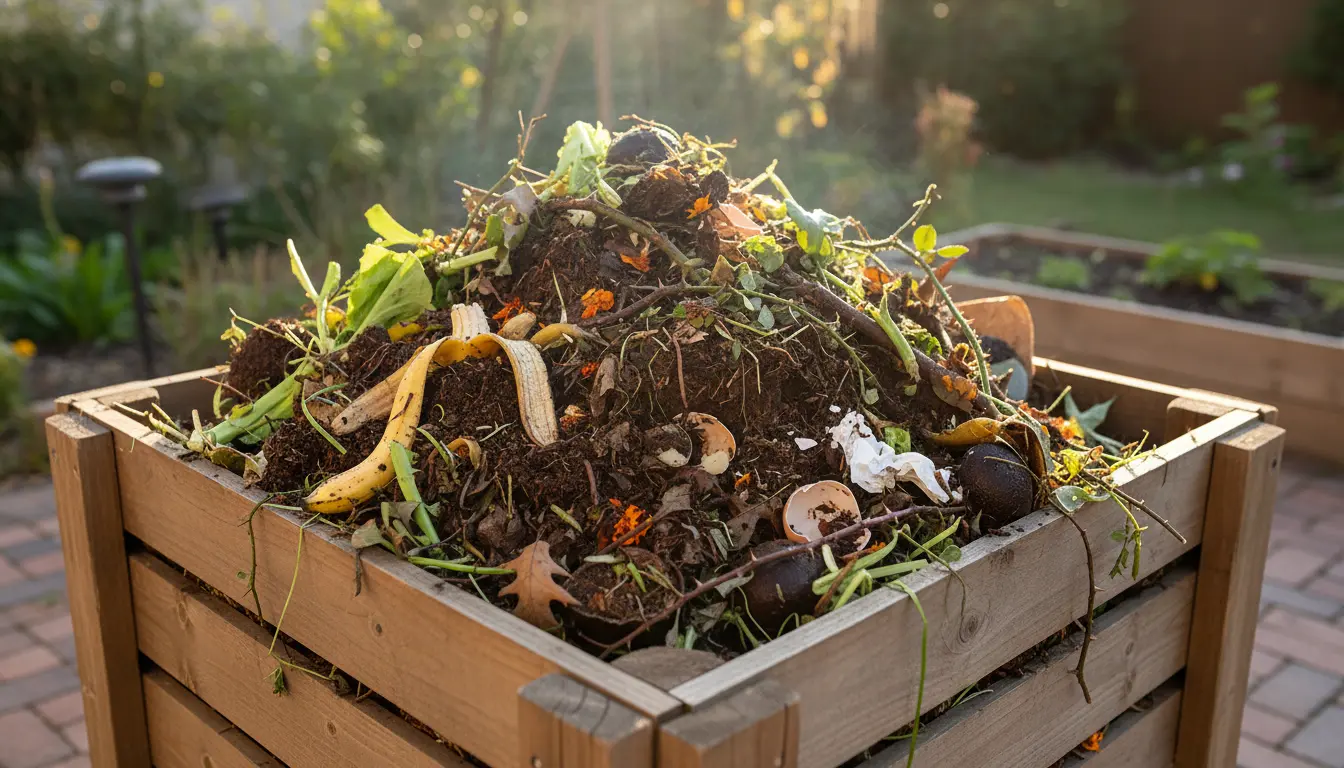
Why Home Composting Matters
Home composting reduces kitchen and garden waste while producing nutrient-rich soil for plants. It cuts landfill waste and lowers greenhouse gas emissions from organic matter decomposition in landfills.
This guide explains simple steps to start home composting, maintain a healthy pile, and troubleshoot common problems.
Choosing a Composting Method for Home Composting
Pick a method that fits your space and lifestyle. The most common options are backyard compost bins, tumblers, and vermicomposting (worms).
- Backyard bin: Low cost, good for yard waste.
- Tumbler: Faster aeration, easier turning.
- Vermicompost: Works indoors or on small scales with kitchen scraps.
Choose a location with partial shade and good drainage. Place bins on bare soil to allow worms and microbes to enter.
What to Add to Your Compost Bin
Home composting works best when you balance carbon-rich “browns” and nitrogen-rich “greens.” Aim for roughly a 25–30:1 carbon-to-nitrogen ratio by volume.
- Greens (nitrogen): fruit and vegetable scraps, coffee grounds, fresh grass clippings.
- Browns (carbon): dry leaves, straw, shredded cardboard, paper.
- Avoid: meat, dairy, oils, diseased plants, and pet waste to prevent pests and odors.
How to Build a Compost Pile
Start with a layer of coarse material like twigs to aid drainage. Alternate layers of greens and browns, lightly moistening dry materials as you go.
Aim for a pile size at least 3 feet wide by 3 feet high for efficient heating, but smaller systems work with tumblers or worm bins.
Turning and Aeration
Oxygen is essential for aerobic decomposition. Turn your pile every 1–2 weeks for a backyard bin to speed breakdown and reduce smells.
Tumblers require less effort; rotate them a few times per week. For vermicomposting, avoid turning; the worms do the work.
Moisture and Temperature
The pile should be as damp as a wrung-out sponge. Add water during dry periods and cover or add browns if it gets too wet.
Internal temperatures of 120–160°F (49–71°C) indicate active decomposition and help kill weed seeds. High heat requires a larger pile and regular turning.
Composting one ton of organic waste can save about 1,100 pounds of carbon dioxide equivalent emissions compared with landfilling the same material.
Troubleshooting Common Problems in Home Composting
Odors, pests, and slow decomposition are common but solvable with basic adjustments.
- Bad smells: Add more browns and turn the pile to introduce oxygen.
- Pests: Avoid meat and dairy; use a closed bin or bury food scraps in the pile.
- Slow breakdown: Shred materials, increase greens, and ensure adequate moisture and aeration.
How to Know When Compost Is Ready
Mature compost is dark, crumbly, and smells earthy. Most backyard systems produce finished compost in 3–12 months depending on method and management.
Sift out large pieces and return them to the bin for further breakdown if needed.
Using Finished Compost
Mix finished compost into garden beds, use as a top dressing, or blend into potting mixes. It improves soil structure, water retention, and nutrient content.
Recommended applications include:
- Vegetable beds: mix 1–2 inches into the top 6–8 inches of soil.
- Lawns: spread a thin 1/4-inch layer to boost soil health.
- Potted plants: replace 10–20% of potting mix with compost.
Small Case Study: Neighborhood Compost Project
A small urban community in Seattle started a shared backyard compost bin for eight households. They rotated responsibilities and used a lockable tumbler to prevent pests.
Within six months they produced enough compost to refill two raised vegetable beds. Tomato yields improved and participation reduced weekly trash volume by about 25%.
Quick Checklist to Start Home Composting
- Choose a method (bin, tumbler, worm farm).
- Select a spot with partial shade and good drainage.
- Collect kitchen scraps and yard waste in a covered container.
- Layer greens and browns; maintain moisture and aeration.
- Turn regularly and monitor for issues.
Final Tips for Successful Home Composting
Keep expectations realistic—composting is a process that improves with practice. Start small and adjust based on what you observe.
Record simple notes: what you add, how often you turn, and how the pile smells. These notes help refine your approach and speed up results.
With minimal effort, home composting turns everyday organic waste into a valuable resource for your garden and local environment.