
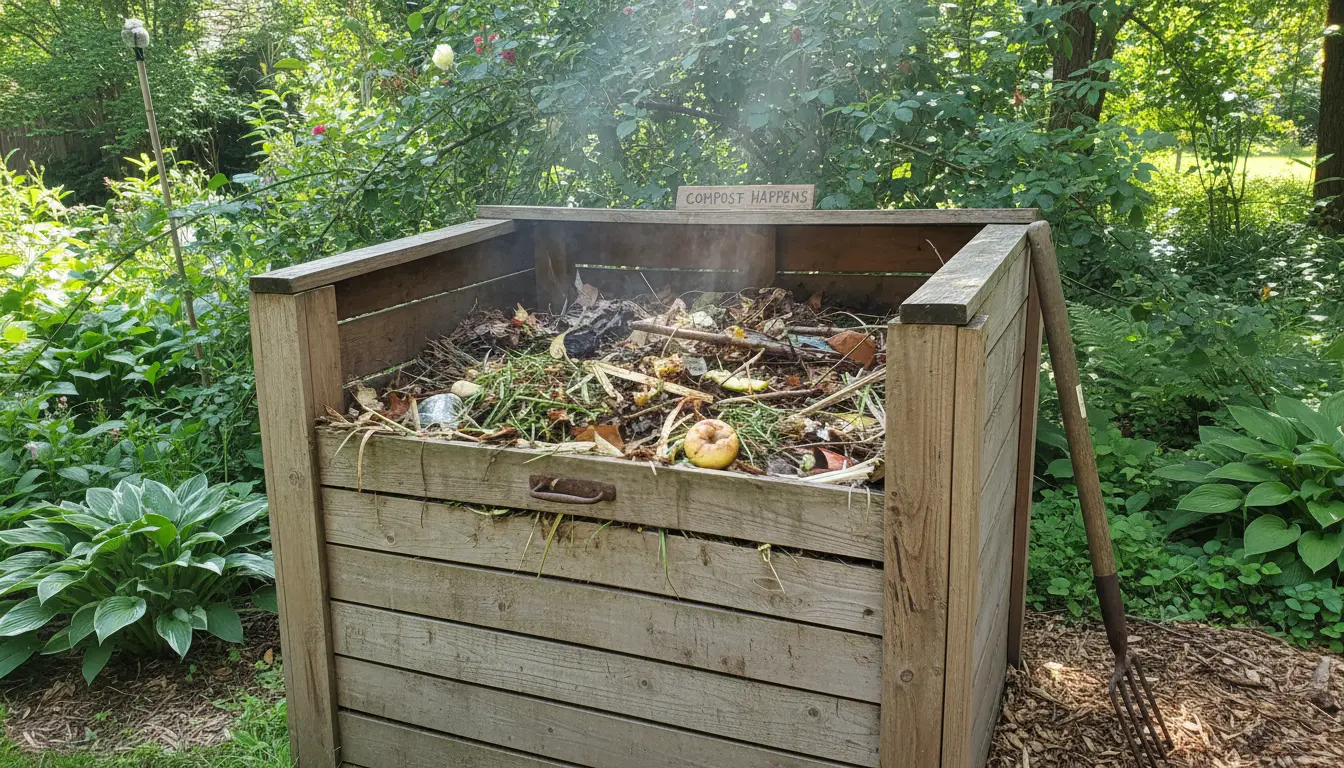
Composting at home turns kitchen scraps and yard waste into rich soil that improves plant health and reduces landfill trash. This guide shows simple steps you can follow to start and maintain an effective compost system.
Why Choose Home Composting
Home composting reduces household waste and lowers your environmental footprint. It also supplies nutrient-rich compost that improves soil structure and plant growth.
Compost conserves water, reduces the need for chemical fertilizers, and helps capture carbon in the soil. Those benefits make it a practical choice for gardeners and apartment dwellers alike.
Basic Principles of Composting at Home
Composting relies on microorganisms breaking down organic matter into humus. To work well, a compost pile needs a balance of carbon, nitrogen, moisture, and air.
Think of the mix like a recipe: brown materials provide carbon and structure, while green materials supply nitrogen and moisture.
Key Composting Ingredients
- Brown materials (carbon): dry leaves, straw, cardboard, shredded paper.
- Green materials (nitrogen): vegetable peels, coffee grounds, grass clippings.
- Water: keeps microorganisms active. Aim for a damp sponge texture.
- Air: turn the pile occasionally to supply oxygen.
How to Start a Home Compost Bin
Choose a container that fits your space and needs. Options include a simple pile, a wire bin, or a closed plastic composter for small yards or balconies.
Location matters. Place the bin in a partly shaded spot with good drainage for easier maintenance.
Step-by-Step Setup
- Pick a bin or make a pile about 3 feet wide and deep to retain heat.
- Start with a layer of coarse browns for drainage and airflow.
- Add alternating layers of greens and browns, aiming for a 2:1 brown-to-green volume ratio.
- Moisten each layer so it is damp but not soggy.
- Cover the bin to retain heat and moisture while keeping pests out.
Troubleshooting Common Problems in Home Composting
Composting issues usually come from imbalance of moisture, air, or materials. Identifying the cause lets you fix it quickly.
Too Smelly
A foul, ammonia-like smell means excess green material or poor aeration. Add more browns and turn the pile to introduce air.
Too Dry or Cold
A dry, inactive pile needs water and more green material. If the pile is small it may also struggle to heat. Increase the pile size or insulate it with straw.
Slow Decomposition
Slow breakdown often comes from large pieces or compacted layers. Shred or chop materials and turn the pile regularly to speed up decomposition.
Composting Timeline and When to Use Compost
Well-managed compost can be ready in 2–6 months; slower systems may take a year. Finished compost looks dark, crumbly, and earthy-smelling.
Use finished compost as a soil amendment, top dressing, or in potting mixes. Apply a 1–2 inch layer to garden beds or mix into planting holes for best results.
Tips for Small Spaces and Apartments
Even without a backyard you can compost. Consider a tumbling composter, worm bin (vermicomposting), or a bokashi system for indoor use.
Worm bins work well for food scraps and fit under counters. Maintain them by feeding in small amounts and keeping the bedding moist.
Did You Know?
Adding coffee grounds to your compost not only provides nitrogen but also attracts earthworms that help aerate and mix the pile.
Small Real-World Example: Backyard Compost Case Study
Maria, a city homeowner, started a 3×3 foot compost bin in spring. She layered shredded leaves and vegetable scraps, kept the pile moist, and turned it weekly.
After four months she had dark, crumbly compost. She mixed it into her raised bed soil and reported stronger tomato growth and fewer watering needs that season.
Quick Checklist for Successful Home Composting
- Balance browns and greens (roughly 2:1 by volume).
- Keep the pile moist like a wrung-out sponge.
- Turn the pile every 1–2 weeks for faster results.
- Shred large items to speed decomposition.
- Use finished compost to improve garden soil and plant vigor.
Final Notes on Composting at Home
Home composting is low-cost and scalable. Start small and adjust your method based on results and available space.
With modest effort you can reduce waste, enrich your soil, and support healthier plants. Begin with the basics and experiment to find the routine that fits your home.