
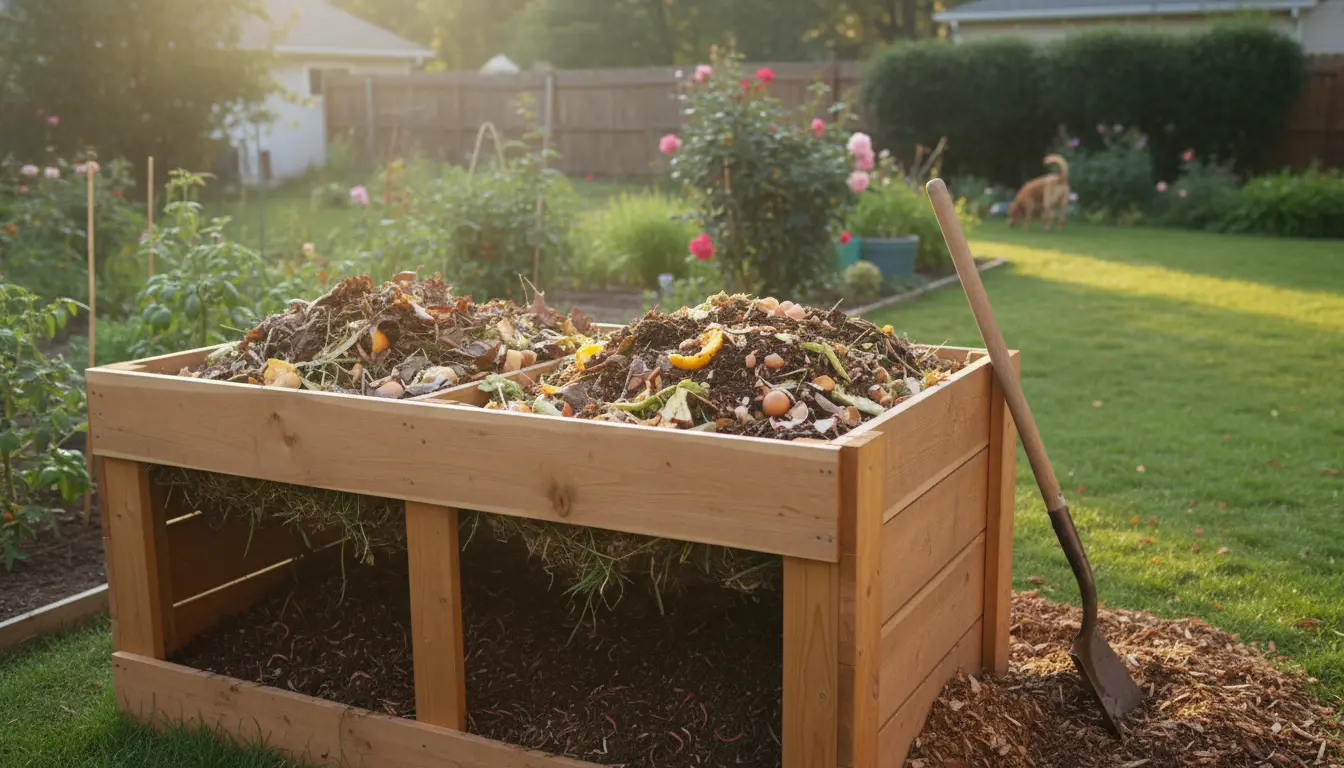
Composting converts kitchen and yard waste into rich soil material. This guide on home composting basics gives clear, practical steps so you can start composting at home with minimal equipment.
Home Composting Basics: What You Need to Know
Composting relies on a balance of carbon and nitrogen, airflow, and moisture. Follow a few simple rules and you will produce healthy compost for houseplants or your garden.
Key Components for Home Composting
Understand the two main categories of materials: browns and greens. Browns provide carbon and include dry leaves, shredded paper, and straw. Greens supply nitrogen and include vegetable scraps, coffee grounds, and fresh grass clippings.
- Browns (Carbon): dry leaves, cardboard torn into strips, newspaper, straw.
- Greens (Nitrogen): fruit and vegetable scraps, tea bags, coffee grounds, fresh grass.
- Air: oxygen fuels the microbes that break down materials.
- Moisture: materials should be damp but not waterlogged.
How to Start Composting at Home: Step-by-Step
Pick a container: a simple tumbling bin, a wooden pallet bin, or a covered pile in a corner of the yard will work. If you live in an apartment, consider a worm bin (vermicompost) or a sealed kitchen collector that you empty regularly.
Step 1: Choose a Site and Container
Place the bin on well-drained soil if possible to allow worms and microbes to access the pile. Keep it in partial shade to avoid drying out in summer.
Step 2: Layer Materials
Start with coarse browns like small branches or straw to help airflow. Add alternating layers of greens and browns in roughly 2:1 or 3:1 brown-to-green volume ratio. This reduces odors and speeds decomposition.
Step 3: Maintain Your Pile
Turn the pile every 1–2 weeks to introduce oxygen. Check moisture: the pile should feel like a wrung-out sponge. Add water if it is dry, or add more browns if it smells sour or is too wet.
Troubleshooting Common Home Composting Issues
Even simple systems can develop problems. Here are quick fixes for common issues so your home composting keeps moving forward.
- Bad Odor: Usually too much green or poor aeration. Add browns and turn the pile.
- Pests: Avoid meat, dairy, oily foods, and large fruit pieces. Bury food scraps and use a closed bin if rodents are a problem.
- Slow Breakdown: Chop materials smaller and maintain moisture and air. Adding finished compost or garden soil introduces helpful microbes.
- Too Wet: Mix in dry browns and turn. Elevate the bin or add drainage if needed.
Home Composting Options for Different Living Situations
Composting at home adapts to your space and lifestyle. Choose the method that fits your living situation and waste volume.
Backyard Composting
Backyard bins handle larger volumes and warm up faster. Tumblers and multi-bin systems make turning easier. They are ideal for households with regular yard waste.
Apartment and Small-Space Composting
Use a worm bin or a sealed bokashi system for indoor use. Worm bins process food scraps quickly and are odor-free when maintained. Bokashi ferments waste and can be buried or added to a compost pile after fermentation.
How to Use Finished Compost
Finished compost looks dark, crumbly, and earthy. Use it to improve soil structure, boost water retention, and add nutrients to potted plants and garden beds.
- Mix compost into garden beds at a ratio of 1:4 soil to compost.
- Top-dress lawns with a thin layer to slowly feed grass.
- Use as potting mix ingredient: blend one part compost with two parts potting soil.
Well-maintained compost reaches temperatures of 130 to 160 F (55 to 70 C) in backyard piles, which helps kill weed seeds and pathogens. Turning the pile and keeping the right balance of materials helps achieve these temperatures.
Small Case Study: Suburban Family Starts Home Composting
A family of four in a small suburban yard started with a 3-bin wooden system. They separated kitchen scraps into a covered bucket and added dry leaves from the yard each week.
Within four months of regular turning and a 3:1 brown-to-green ratio, their middle bin produced dark compost. They used it to top-dress flower beds and saw improved soil moisture and happier plants the next season.
Practical Tips to Keep Your Home Composting Successful
- Chop scraps smaller to speed decomposition and reduce odors.
- Keep a balance of browns and greens; store dry browns near your kitchen for convenience.
- Record what you add for the first few months to learn what ratio works best for your climate.
- Wear gloves and use a pitchfork when turning larger piles for safety and ease.
Home composting is a low-cost, practical way to reduce waste and improve soil health. Start small, monitor the pile, and adjust materials based on results. With a little routine, you will produce nutrient-rich compost that benefits plants and reduces household trash.