
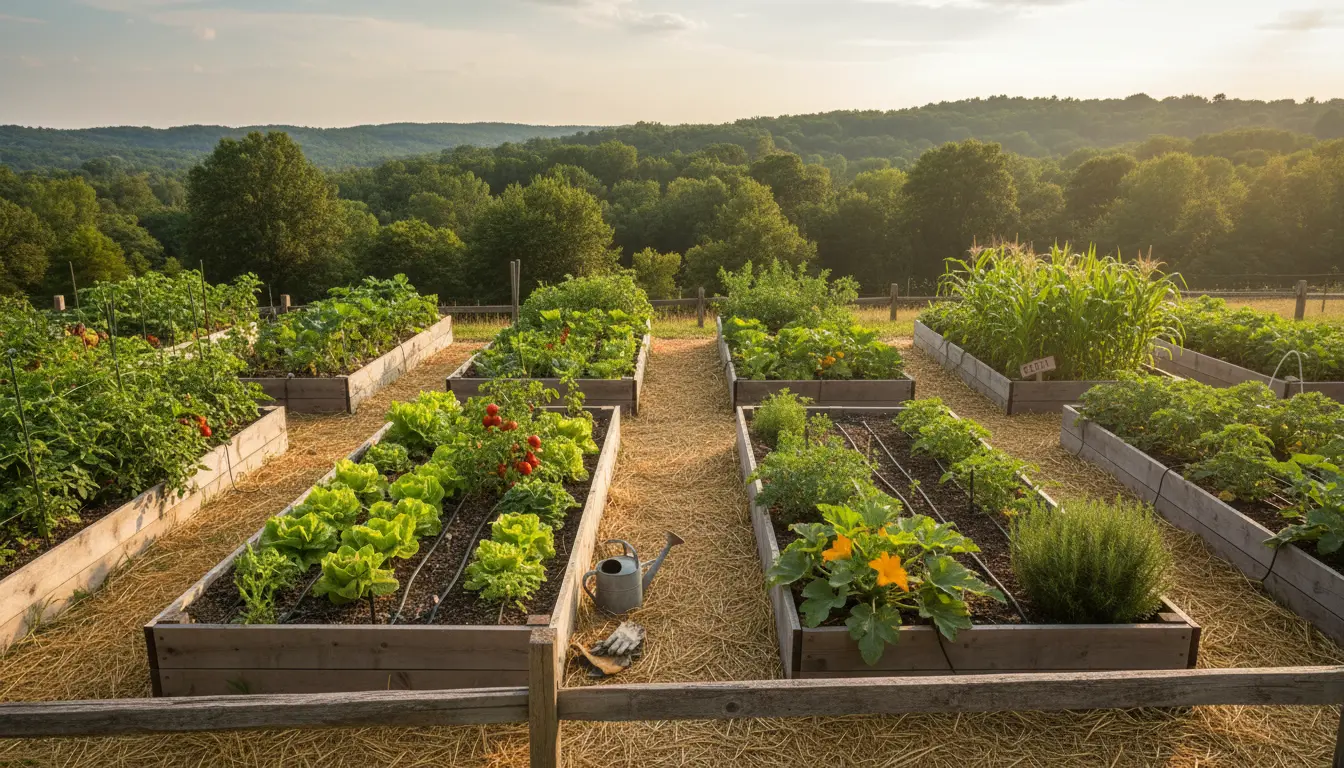
Starting a vegetable garden is a practical way to grow fresh food, save money, and enjoy outdoor activity. This guide walks you through clear, actionable steps you can follow whether you have a yard, balcony, or small patio.
How to Start a Vegetable Garden: Plan Your Garden
Good results start with simple planning. Decide what you want to grow, how much time you can commit, and where to place the garden.
Consider these factors when planning:
- Sunlight — Most vegetables need 6–8 hours of direct sun.
- Space — Measure available space and note dimensions.
- Time — Estimate 2–4 hours per week for maintenance.
- Climate — Check your USDA zone or local frost dates.
Selecting a Site for Your Vegetable Garden
Site affects soil, water access, and plant health. Choose a location with good drainage and easy access to water.
Sun and Shade Considerations
Place your garden in the sunniest spot possible. If shade is unavoidable, pick shade-tolerant crops like leafy greens and herbs.
Accessibility and Visibility
Position beds near a water source and in view of your home. Frequent checks make pest and watering problems easier to catch early.
Soil Preparation and Fertility
Healthy soil gives plants a strong start. Test soil pH and texture before planting if possible.
Steps to prepare soil:
- Clear weeds and debris from the area.
- Loosen soil to a depth of 8–12 inches for root crops.
- Add organic matter: compost or well-rotted manure improves structure.
- Adjust pH if needed—most vegetables prefer pH 6.0–7.0.
Choosing Crops for Your Vegetable Garden
Select crops that match your climate and skill level. Beginners should start with reliable, low-maintenance plants.
- Easy choices: lettuce, radishes, cherry tomatoes, bush beans, zucchini.
- Support-requiring: indeterminate tomatoes, pole beans, cucumbers need trellises.
- Succession planting: plant small amounts every 2–3 weeks for continuous harvest.
Planting: Seeds vs. Transplants
Decide whether to sow seeds or buy transplants. Seeds are cheaper but need more time; transplants give a head start.
Planting Basics
- Follow seed packet or plant tag spacing and depth instructions.
- Water gently after planting to settle soil around roots.
- Label rows or beds to avoid confusion later.
Watering and Irrigation
Consistent moisture is more important than frequent shallow watering. Aim for deep, infrequent watering to encourage strong roots.
- Water early in the morning to reduce evaporation and disease risk.
- Use soaker hoses or drip irrigation for efficiency.
- Mulch with straw or wood chips to retain moisture and suppress weeds.
Pest and Disease Management
Healthy practices reduce pest and disease pressure. Start with prevention and use targeted controls when needed.
- Rotate crops each season to avoid soil-borne problems.
- Encourage beneficial insects with flowering plants and avoid broad-spectrum pesticides.
- Hand-pick large pests like caterpillars and slugs where possible.
Maintenance and Seasonal Tasks
Regular tasks keep the garden productive and tidy. Set a simple weekly routine for weeding, inspection, and harvesting.
- Weed 10–20 minutes per session to prevent competition for nutrients.
- Prune only when needed; remove yellowing leaves to limit disease.
- Fertilize according to crop needs—leafy greens benefit from nitrogen, fruiting crops need balanced fertilizer.
Harvesting and Storage
Harvest vegetables at peak maturity for best flavor and yield. Frequent harvesting often encourages more production, especially for beans and greens.
- Pick tomatoes when they reach full color and yield slightly to touch.
- Harvest leafy greens before they bolt for best texture.
- Store root vegetables in cool, dark places and process or preserve surplus produce quickly.
Small Case Study: A Backyard Raised Bed
Emma, a beginner gardener in Portland, built a 10×4 foot raised bed and filled it with a 50/50 mix of topsoil and compost. She planted tomatoes, bush beans, lettuce, and basil in spring.
Results after one season:
- Tomatoes produced 18 pounds of fruit from three plants.
- Continuous lettuce harvest for 8 weeks using succession planting.
- Minimal pest issues thanks to companion planting and weekly checks.
Her routine was 30 minutes twice a week for watering, weeding, and harvesting, which kept the bed productive with low effort.
Simple Checklist to Start a Vegetable Garden
- Choose site with 6+ hours of sun and access to water.
- Decide between in-ground beds, raised beds, or containers.
- Prepare soil and add compost for fertility.
- Select 4–6 easy crops for your first season.
- Set up watering (soaker hose or watering can) and mulch beds.
- Inspect weekly and harvest regularly.
Starting a vegetable garden is a step-by-step process that rewards patience and routine. Begin small, learn from each season, and expand as you gain confidence. With basic planning and regular care, you can enjoy fresh homegrown vegetables before long.