
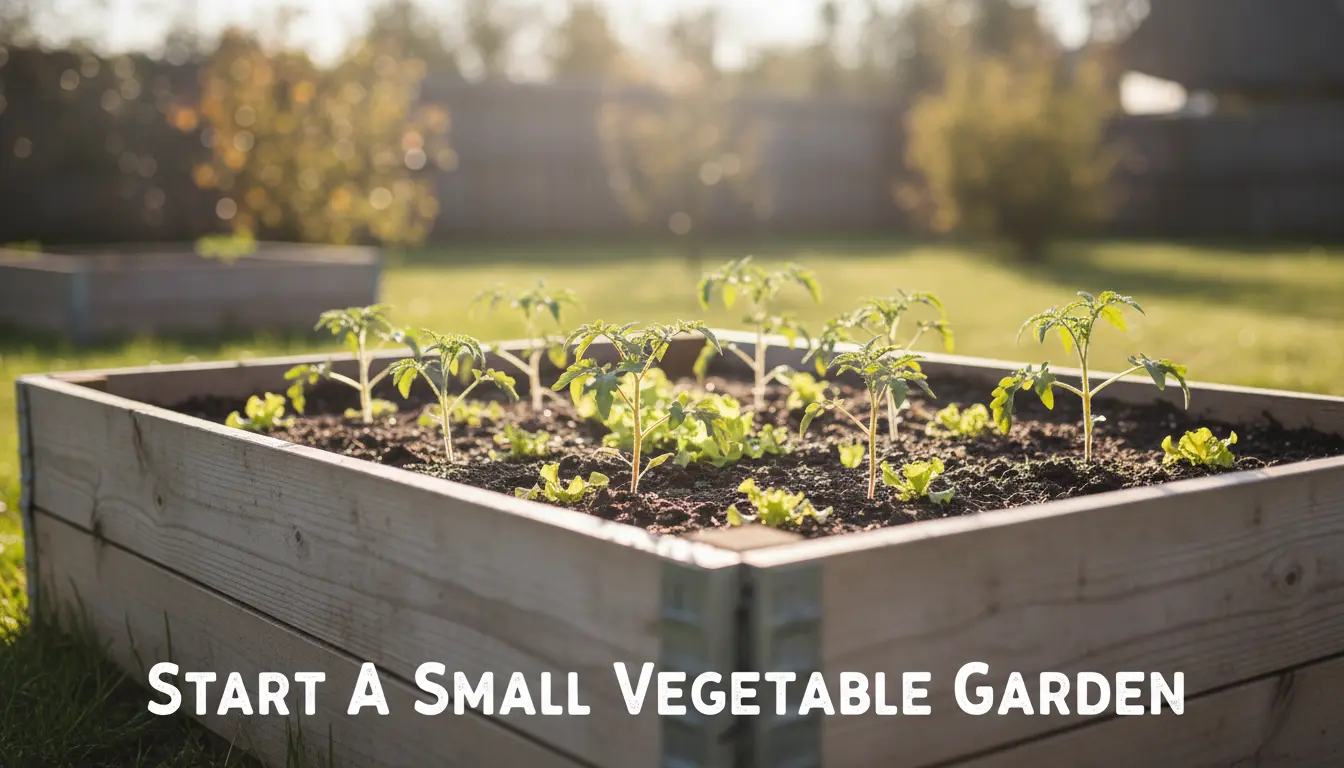
Why start a small vegetable garden
Growing vegetables in a small space saves money, improves nutrition, and gives reliable access to fresh produce. Small gardens are easier to manage and ideal for beginners, balconies, or compact yards.
This guide explains how to plan, prepare, plant, and maintain a successful small vegetable garden with practical steps you can follow today.
Planning your small vegetable garden
Good results start with a clear plan. Decide location, size, and the crops you want to grow before you order seeds or prepare soil.
Consider sunlight, access to water, and how much time you can commit each week.
Choose the right location for a small vegetable garden
Most vegetables need at least six hours of direct sunlight. Pick a spot with the best available sun, even if it is on a balcony or patio.
Ensure easy access to water and a flat area to place containers or raised beds.
Decide garden size and layout
Start small: a 4×4 or 4×6 raised bed, a few containers, or a 6-foot balcony box are easier to manage. Smaller spaces reduce weeding and watering time.
- Raised bed: good drainage and soil control.
- Containers: flexible, great for patios and balconies.
- Square-foot method: maximizes yield in limited area.
Soil and containers for a small vegetable garden
Healthy soil is the foundation of a productive garden. If using the ground, improve soil with compost. For containers or raised beds use a quality potting mix blended with compost.
Check drainage: containers must have holes and raised beds should drain well to prevent root rot.
Soil mix recommendations
Mix equal parts compost, peat-free potting mix, and coarse composted bark or perlite for containers. This gives nutrients and good drainage.
A simple starter recipe: 40% high-quality compost, 40% topsoil or loam, 20% coarse sand or perlite for drainage.
Choosing vegetables for a small garden
Select crops that match your climate, space, and skills. Focus on high-yield, easy-to-grow varieties for the best return on effort.
Good beginner choices include lettuce, radishes, bush beans, cherry tomatoes, herbs, and short-season peas.
High-yield and space-saving vegetables
- Lettuce and salad greens: quick harvests and compact.
- Radishes: ready in 3–4 weeks.
- Bush beans: compact plants with steady yields.
- Cherry tomatoes: productive in containers with support.
- Herbs (basil, chives, parsley): small footprint and frequent harvests.
Planting and spacing in a small vegetable garden
Follow seed packet or plant tag spacing guidelines, but use intensive methods like succession planting and interplanting to maximize output.
Example: plant fast-growing radishes between slower-growing tomatoes to harvest multiple crops from one bed.
Succession planting and companion planting
Succession planting keeps the bed productive all season by reseeding or transplanting after a harvest. Companion planting places compatible crops close together to save space and reduce pests.
- Succession example: plant lettuce, then replace it with bush beans midseason.
- Companion example: plant basil near tomatoes to improve flavor and repel some pests.
Watering, feeding, and maintenance
Consistent watering is more important than frequent watering. Aim for deep, infrequent watering so roots grow strong and drought tolerant.
Feed plants with compost tea or balanced organic fertilizer every 3–4 weeks during the growing season.
Weeding, staking, and pest control
Keep weeds low by mulching with straw or shredded bark. Stake taller plants like tomatoes to save space and improve airflow.
Use simple pest controls first: hand-pick, use row covers, or apply organic sprays like neem oil when needed.
Container-grown tomatoes can produce as much as ground-grown plants if given a 20–30 gallon container, regular feeding, and full sun.
Harvesting and season extension
Harvest crops regularly to encourage more production. Pick herbs and greens often, and remove overripe vegetables to redirect energy into new growth.
Extend your season with row covers in spring and fall, or use cold frames for winter greens.
Small garden case study: A practical example
Case study: In a small urban backyard, a gardener used one 4×6 raised bed and four 12-inch containers to grow a summer vegetable supply.
They planted cherry tomatoes, basil, bush beans, lettuce, and radishes. After three months they harvested weekly salads, several quarts of tomatoes, and multiple small bean harvests.
Time invested: around 3–4 hours per week for watering, harvesting, and light maintenance. Cost: initial setup about $120 for a bed and soil, recovered in the first season by reduced grocery purchases.
Simple checklist to start a small vegetable garden
- Choose location with good sun and water access.
- Select a small bed or containers (4×4 or 4×6 recommended).
- Buy quality soil mix and compost.
- Pick 3–6 easy crops for your first season.
- Plant with appropriate spacing and mulch to reduce weeds.
- Water deeply, feed monthly, and harvest regularly.
Final tips for long-term success with a small vegetable garden
Start small and learn one season at a time. Keep a simple notebook with planting dates, varieties, and notes on what worked or failed.
Gradually expand or change crops based on results and preferences. Small gardens are flexible living systems—observe, adapt, and enjoy the fresh produce you grow.