
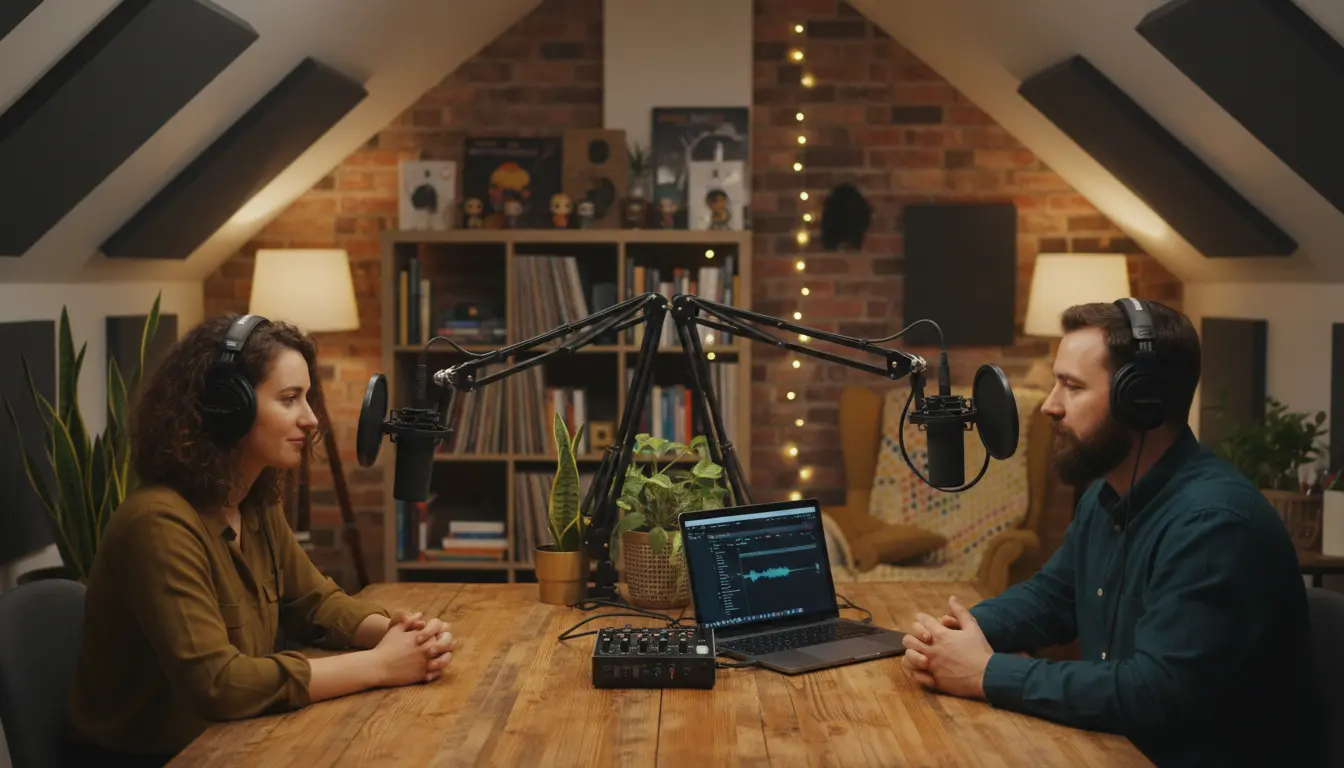
Why start a podcast and what to expect
Podcasting is a flexible medium for sharing expertise, building an audience, and supporting a business or creative project. Expect to plan topics, learn simple audio tools, and commit to a consistent schedule.
This guide explains how to start a podcast in clear, practical steps so you can launch your first episodes with confidence.
How to Start a Podcast: Plan your show
Start with a clear concept. Define the topic, audience, and episode format before you record a single minute of audio.
Key planning tasks include choosing a niche, episode length, frequency, and a simple content calendar.
Choose a topic and audience
Pick a specific subject you can sustain for many episodes. Narrow topics attract loyal listeners more quickly than very broad themes.
Write a one-sentence show description that explains who the show is for and what listeners will gain.
Decide format and length
Common formats include solo monologue, interview, co-host conversation, and narrative storytelling. Each has different production needs and preparation time.
Typical episode lengths run from 15 to 60 minutes. Choose a length that fits your content, guest availability, and production capacity.
How to Start a Podcast: Essential equipment and software
You do not need expensive gear to begin. A clear starting setup keeps costs low and helps you focus on content quality.
Essentials include a microphone, headphones, recording software, and a quiet space to record.
Recommended starter gear
- USB microphone with cardioid pattern for clarity and low noise
- Closed-back headphones for reliable monitoring
- Basic pop filter and microphone stand
- Simple audio interface if using an XLR mic
Recording and editing software
Use free or affordable software to edit your audio. Programs like Audacity, GarageBand, or free tiers of Reaper are common choices.
Learn basic editing: trimming silence, normalizing levels, and adding intro/outro music.
How to Start a Podcast: Record and edit reliably
Follow a short pre-record checklist to reduce rework later. Test levels, confirm mic placement, and disable notifications.
Record a short test clip and listen back to check for room echo, background noise, and consistent voice volume.
Editing workflow
- Import audio and remove long silences or mistakes
- Apply gentle compression and equalization for a balanced voice
- Normalize audio levels to a consistent target
- Add intro/outro music and chapter markers if needed
How to Start a Podcast: Host and distribute episodes
Choose a podcast host to store files and provide an RSS feed. Hosts distribute your episodes to platforms like Apple Podcasts, Spotify, and Google Podcasts.
Compare hosts by price, storage limits, analytics, and ease of use.
Key setup steps
- Create podcast title, description, and category tags
- Design simple cover art that meets platform specifications
- Upload episodes with show notes and timestamps
How to Start a Podcast: Launch strategy and promotion
A good launch plan increases the chance your show gets noticed. Prepare at least 3 episodes for launch so new listeners can engage deeper.
Promote episodes on social media, email lists, and through guest networks.
Promotion tactics
- Share episode highlights as short clips on social channels
- Repurpose show notes into blog posts or newsletters
- Ask guests and listeners to share and leave ratings
Many listeners decide whether to subscribe after sampling two or three episodes. Launching multiple episodes improves the chance of gaining subscribers.
Monetization and growth tips
If you want to monetize, common paths include sponsorships, listener memberships, affiliate marketing, and selling digital products.
Focus on consistent quality and a niche audience before pursuing significant monetization efforts.
Growth checklist
- Maintain a regular release schedule
- Engage listeners through calls to action and social interaction
- Measure performance with host analytics and adjust content based on data
Small case study: Local Career Coach Podcast
A local career coach launched a weekly podcast targeting mid career job seekers. The coach recorded three episodes before launch and published them weekly.
Within two months the show reached 1,200 downloads and led to several coaching inquiries. Key factors were a focused niche, repurposed clips on LinkedIn, and a simple website with episode transcripts.
Common mistakes to avoid when you start a podcast
Avoid these pitfalls to keep momentum and avoid wasted effort.
- Skipping planning and changing topics every episode
- Starting with poor audio quality that turns listeners away
- Publishing erratically without a predictable schedule
Checklist to launch your first three episodes
Use this quick checklist to stay organized during your first month.
- Define niche and target listener
- Write show description and episode outlines
- Record and edit three episodes
- Choose a podcast host and upload episodes
- Create cover art and show notes
- Announce launch on social channels and email
Next steps after you start a podcast
After launch, collect feedback, review analytics, and iterate on topics and format. Keep improving audio quality and promotion tactics over time.
Podcasting rewards consistency and audience focus. By following these steps you can start a podcast that reaches and retains listeners.