
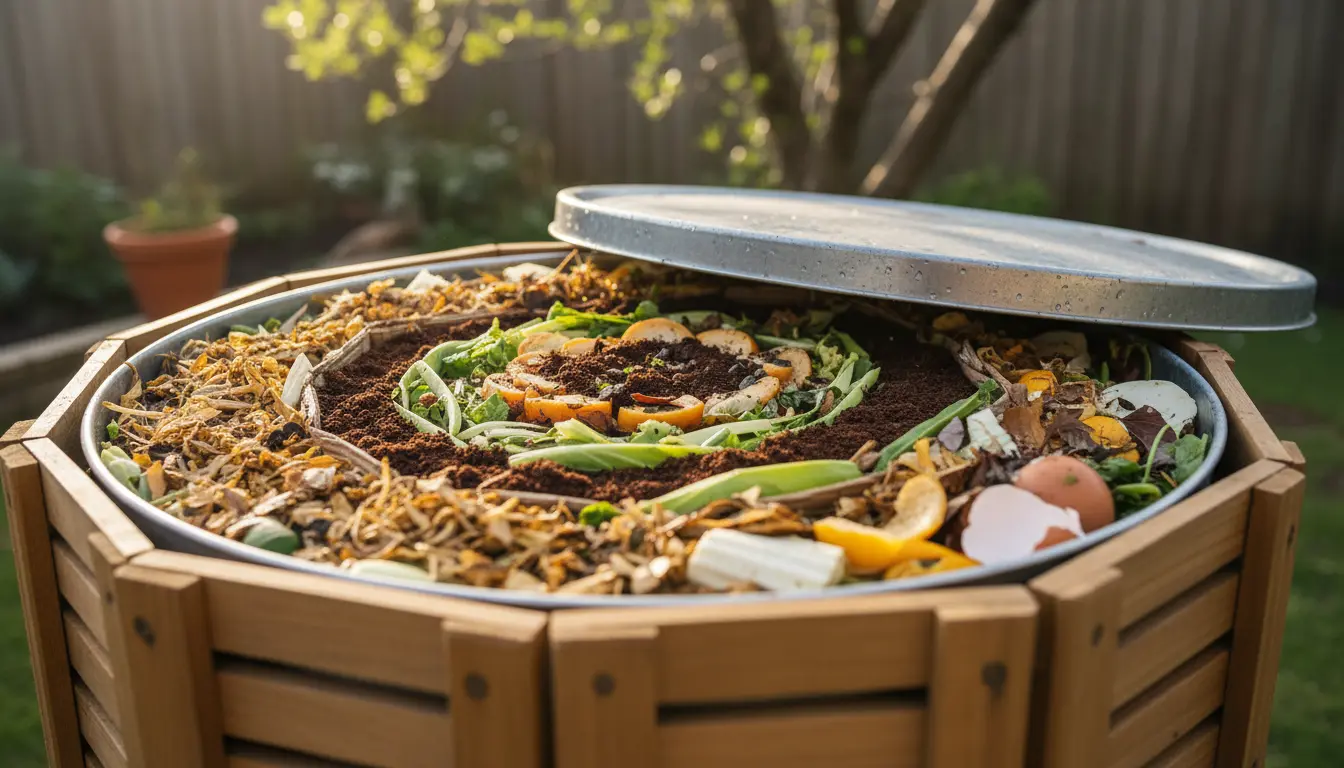
Home Composting for Beginners: A Practical Start
Home composting for beginners is an accessible way to turn kitchen scraps and yard waste into nutrient-rich soil. This guide gives a simple, step-by-step method you can follow today, with common mistakes and practical fixes.
Why Home Composting for Beginners Matters
Composting reduces household waste and improves garden soil without added chemicals. It also saves money and lowers your environmental footprint by diverting organic material from landfills.
Simple Setup for Home Composting for Beginners
Choose a location that is convenient and has good drainage, such as a corner of the yard or a shady spot near the house. If you live in an apartment, use a countertop bin and a small outdoor tumbler or a worm bin for limited space.
What you need
- Compost bin or tumbler (plastic or wooden)
- Kitchen collection container with a lid
- Garden fork or aerator tool
- Brown materials: dry leaves, shredded paper, straw
- Green materials: vegetable scraps, coffee grounds, grass clippings
What to Compost: Clear Lists
Knowing what to add prevents smell and pests. Follow this simple separation of materials for good balance.
Acceptable (Greens and Browns)
- Vegetable and fruit scraps, coffee grounds, tea bags
- Yard waste: grass clippings, leaves, small branches
- Paper towels, shredded newspaper, cardboard (small pieces)
Do Not Compost
- Meat, dairy, oily foods (attract pests)
- Diseased plants, invasive weeds with seeds
- Pet waste or treated wood
Compost temperatures can reach 130°F (54°C) in an active pile, killing many weed seeds and pathogens. Turning and balancing greens and browns helps reach these temperatures.
Step-by-Step Care for Home Composting for Beginners
Start with a 6-inch layer of browns in the bin, then add a 3-4 inch layer of greens. Repeat layers and keep the pile moist like a wrung-out sponge. Turn the pile every 1–2 weeks to add oxygen and speed decomposition.
Balancing Greens and Browns
A good rule is roughly 2–3 parts browns to 1 part greens by volume. If the pile smells, add more browns and turn it. If decomposition is slow, add water and more greens to feed microbes.
Troubleshooting Common Problems
Problems are usually easy to fix once you know the cause. Here are common issues and practical solutions for beginners.
- Smell: Add dry browns, turn the pile, and check drainage.
- Pests: Avoid adding meat/dairy and use a closed bin or bury food deep in the pile.
- Slow breakdown: Chop materials smaller, increase moisture, and turn more often.
Small Real-World Example: Quick Case Study
Case study: A suburban family of four started composting in a 65-gallon tumbler. They saved two kitchen bags of waste weekly and produced a steady supply of compost in six months. By layering shredded cardboard and kitchen greens, turning weekly, and monitoring moisture, they reduced odor and avoided pests.
Result: The family used the compost on flower beds and vegetables, improving soil structure and cutting fertilizer costs by about 30% in the first growing season.
Finished Compost: How to Tell It’s Ready
Compost is ready when it is dark, crumbly, and smells earthy. There should be no large recognizable food pieces. Small twigs or seeds are fine—they will continue to break down in the soil.
Using Your Compost
- Top-dress flower beds and vegetable plots in spring or fall.
- Mix 1–2 inches into potting mixes or topsoil to improve water retention.
- Use as mulch around trees and shrubs, keeping a small gap at the base.
Quick Tips for Success
- Keep the bin in a convenient location to encourage regular use.
- Chop or shred large scraps to speed decomposition.
- Keep a balance of browns and greens to avoid odors and pests.
- Use a tumbling composter for faster turnover and easier aeration.
Next Steps for Home Composting for Beginners
Start small and scale up as you learn. Track what you add and how often you turn the pile, then adjust based on results. Composting is a low-risk, high-reward habit that benefits your garden and the planet.
Follow these practical steps and you’ll have rich compost within months. If you have limited space, research worm bins and bokashi systems as alternatives that work well in apartments.