
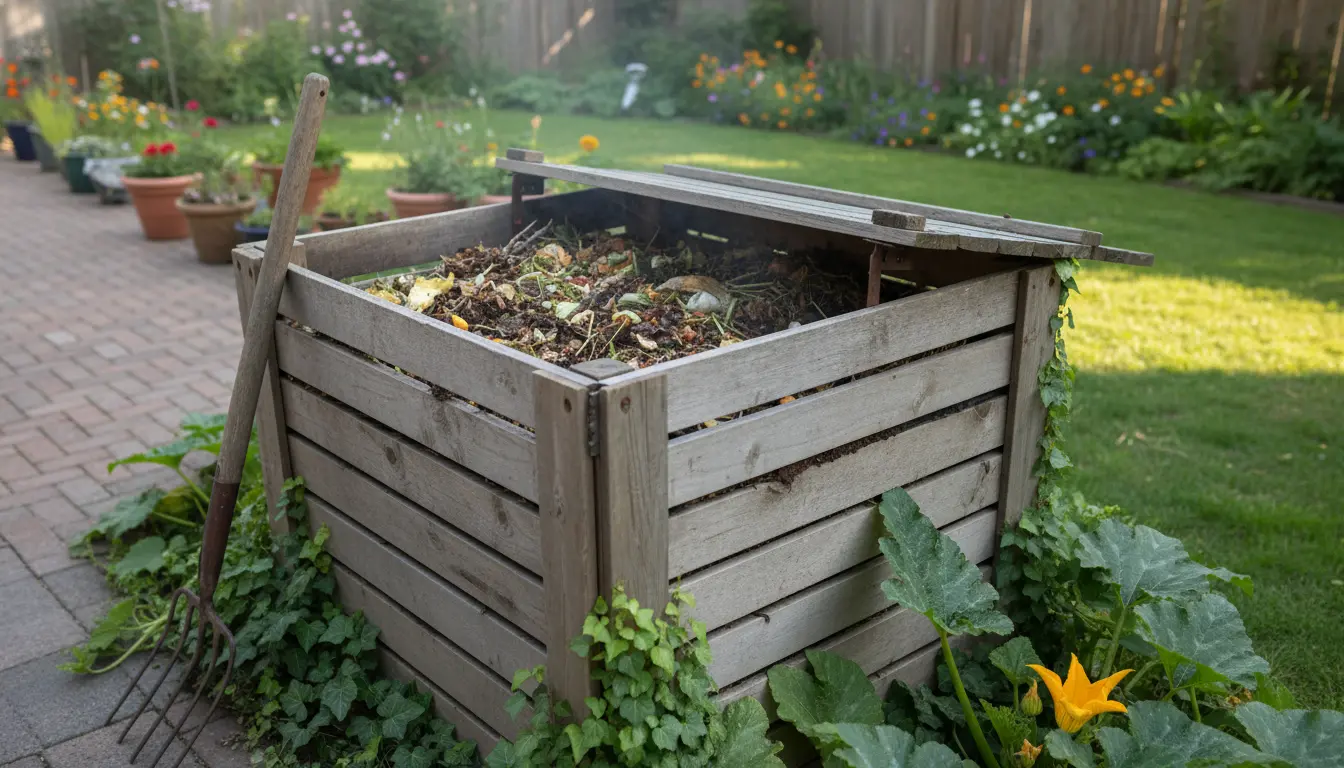
Composting turns kitchen and yard waste into nutrient-rich soil you can use in pots, gardens, or lawns. This guide explains how to start composting at home with clear steps, simple tools, and common troubleshooting tips.
Why Start Composting at Home
Composting reduces household waste, lowers landfill contributions, and returns organic matter to the soil. It is a low-cost practice that supports healthier plants and cleaner gardens.
Benefits of home composting
- Reduces kitchen and yard waste sent to landfills.
- Produces free, nutrient-rich compost for gardens and pots.
- Improves soil structure, moisture retention, and plant health.
- Reduces the need for chemical fertilizers.
How to Start Composting at Home: Step-by-Step
Follow these steps to set up a reliable compost system whether you have a backyard or a small balcony. The process is flexible and can be adapted to available space and time.
How to Start Composting at Home: Materials and tools
Gather basic items before you begin. Most setups need only a few inexpensive tools and a container or area for the pile.
- Container: compost bin, tumbler, or a simple pile in a corner.
- Tools: pitchfork or garden fork, small shovel, and a watering can or hose.
- Optional: kitchen scrap bucket with a tight lid for storing food waste.
Location and setup
Choose a well-drained spot that is easy to access and has some shade to prevent drying. If you use a bin, place it on soil rather than concrete to allow worms and microbes to enter.
Start by placing coarse material like straw or small branches at the bottom to improve airflow. This creates a base that helps decomposition.
Building layers: greens and browns
Compost needs a balance of carbon-rich ‘browns’ and nitrogen-rich ‘greens.’ Layer these materials to maintain steady decomposition.
- Greens: vegetable scraps, coffee grounds, fresh grass clippings.
- Browns: dry leaves, shredded paper, cardboard, straw.
- Goal: roughly 3 parts browns to 1 part greens by volume.
Moisture, aeration, and turning
Keep the pile as damp as a wrung-out sponge. Too wet and it smells; too dry and decomposition slows. Turn the pile every 1–2 weeks with a fork to add oxygen and speed up the process.
If you use a tumbler, rotate it regularly following the manufacturer’s guidance. For a static pile, turning is more important to avoid compaction and odor.
How to Start Composting at Home: Troubleshooting common issues
Problems are normal and usually easy to fix. Adjusting moisture, adding browns, or increasing aeration solves most issues.
- Bad smell: add dry browns and turn the pile to introduce air.
- Too dry: add water and more greens.
- Pests: avoid adding meat, dairy, or oily foods and use a closed bin if necessary.
How Long Before Compost Is Ready?
Decomposition time depends on materials, particle size, moisture, and turning frequency. With regular turning and a good green-to-brown balance, usable compost appears in 2–4 months.
Slower methods like cold composting can take 6–12 months but require less effort and still yield rich compost.
Small Case Study: Suburban Home Composting
Emma, a homeowner with a small backyard, started a 3-bin system to manage food scraps and yard clippings. She balanced greens and browns, turned weekly, and kept the pile moist.
After four months she harvested dark, crumbly compost and used it to topdress her vegetable beds. Her household waste to trash container decreased noticeably, and plants showed better growth the next season.
Practical tips from the case study
- Cut or shred materials to speed decomposition.
- Use finished compost as mulch or mix it into planting holes.
- Keep a small counter caddy to collect scraps and reduce trips to the compost pile.
Final Tips to Keep Composting at Home Successful
Start small and build your system as you learn. Consistency with layering, moisture, and occasional turning produces the best results.
Monitor the pile weekly for moisture and smell, and adjust inputs to keep the system balanced. Over time you will refine the process to match your household needs.
Composting at home is a practical, low-cost way to close the loop on organic waste and support healthier gardens. Begin with the basics, observe, and adapt the system to your space and schedule.