
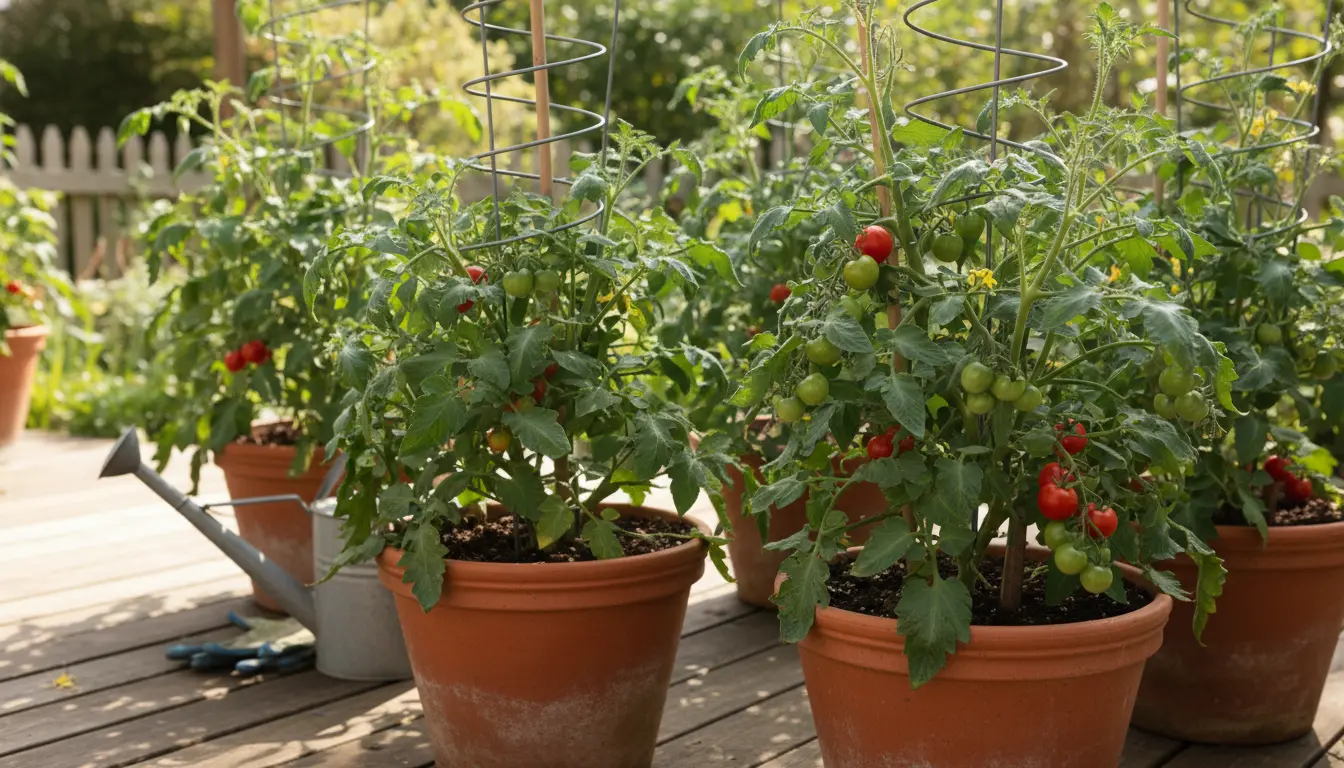
Container tomato growing is a reliable way to harvest fresh fruit when space is limited. This guide explains practical steps to set up, plant, and care for tomatoes in pots or grow bags.
Why Grow Tomatoes in Containers
Growing tomatoes in containers makes gardening possible on balconies, patios, and small yards. Containers control soil quality, reduce some diseases, and make maintenance easier.
Containers are also portable. You can move plants to follow sun, avoid wind, or protect from late frost. This flexibility helps extend the growing season for many gardeners.
How to Grow Tomatoes in Containers: Step-by-Step
Choosing Varieties to Grow Tomatoes in Containers
Select determinate or dwarf indeterminate varieties for containers. Determinate types stay compact and set fruit over a shorter period. Look for varieties labeled patio, dwarf, or container.
Popular choices include cherry and bush tomatoes. Examples: “Patio” and “Tiny Tim” are compact and productive. If you want larger fruit, choose a small indeterminate and plan for a larger pot and strong support.
Container Selection to Grow Tomatoes in Containers
Choose containers 5 gallons or larger for one plant. Larger pots hold more soil and retain moisture longer. Materials such as fabric grow bags, plastic, or glazed ceramic all work well.
- Minimum sizes: 5 gallons for compact varieties, 10+ gallons for larger indeterminate types.
- Ensure drainage with holes or a well-draining mix.
- Use saucers or trays to protect surfaces from water runoff.
Soil and Fertilizer for Grow Tomatoes in Containers
Use a high-quality potting mix, not garden soil. Potting mixes are lighter, drain better, and supply air to roots. Mix in slow-release fertilizer or use a balanced liquid feed during the season.
Suggested mix: commercial potting mix plus 10 to 20 percent compost for nutrients. Add perlite or coarse sand if the mix seems heavy.
Planting and Support to Grow Tomatoes in Containers
Plant seedlings deep, burying part of the stem. Tomatoes form roots along buried stems, promoting a stronger root system. Space one plant per container unless the pot is very large.
Install supports at planting time. Use cages, stakes, or trellises sized for your variety. Proper support reduces stress on branches and improves air circulation.
Watering and Sunlight to Grow Tomatoes in Containers
Tomatoes need 6 to 8 hours of direct sun daily. Place containers in full sun and rotate if needed to encourage even growth. Morning sun helps dry foliage and reduce disease risk.
Water consistently. Containers dry faster than beds. Aim for deep, even watering so the root zone stays moist but not waterlogged. Consider drip irrigation or self-watering containers for steady moisture.
Pest and Disease Management to Grow Tomatoes in Containers
Container plants often face fewer soil-borne problems, but pests like aphids, whiteflies, and hornworms still appear. Inspect plants weekly and remove pests by hand when possible.
- Use insecticidal soap or neem oil for soft-bodied pests.
- Remove yellowing leaves and prune crowded growth to improve airflow.
- Rotate containers and refresh potting mix each season to reduce disease buildup.
Tomato roots grow better when planted deep because roots form along buried stems. This increases water uptake and drought resilience in container-grown plants.
Feeding and Pruning When You Grow Tomatoes in Containers
Feed plants every 2 to 3 weeks with a balanced liquid fertilizer once flowers appear. Containers have limited nutrients, so regular feeding keeps plants productive.
For indeterminate varieties, remove lower suckers and train a main stem to a support. Determinate varieties need minimal pruning to preserve fruiting nodes.
Harvesting Tips to Grow Tomatoes in Containers
Harvest when fruit is fully colored and slightly soft to the touch. For better flavor, pick at peak ripeness and avoid leaving overripe fruit on the plant for long periods.
Staggering planting times or growing a mix of early and late varieties keeps harvests steady across the season.
Small Case Study: Balcony Cherry Tomatoes
Sarah, a city renter, grew cherry tomatoes on a sunny balcony using two 10-gallon fabric pots. She chose cherry varieties and used a commercial potting mix with compost.
She watered every other day in summer and fed with liquid fertilizer biweekly. By mid-summer she harvested 20 to 30 cherry tomatoes per plant weekly, enough for salads and snacks.
Key takeaways from this case: choose appropriate pot size, maintain consistent watering, and use supports to keep plants productive.
Common Mistakes to Avoid When You Grow Tomatoes in Containers
- Using garden soil that compacts and drains poorly.
- Planting in undersized pots that restrict root growth.
- Irregular watering that causes blossom end rot or cracking.
Address these issues early by repotting, adjusting watering schedules, and adding calcium if blossom end rot appears.
Final Checklist to Grow Tomatoes in Containers
- Choose a suitable variety for containers.
- Use at least 5 to 10 gallon pots with drainage.
- Plant deep and provide sturdy support.
- Water consistently and feed regularly.
- Monitor pests and remove diseased material promptly.
With correct variety selection, container size, and regular care, you can reliably grow tomatoes in containers and enjoy fresh fruit even in small spaces. Start small, track what works, and adjust each season for better results.