
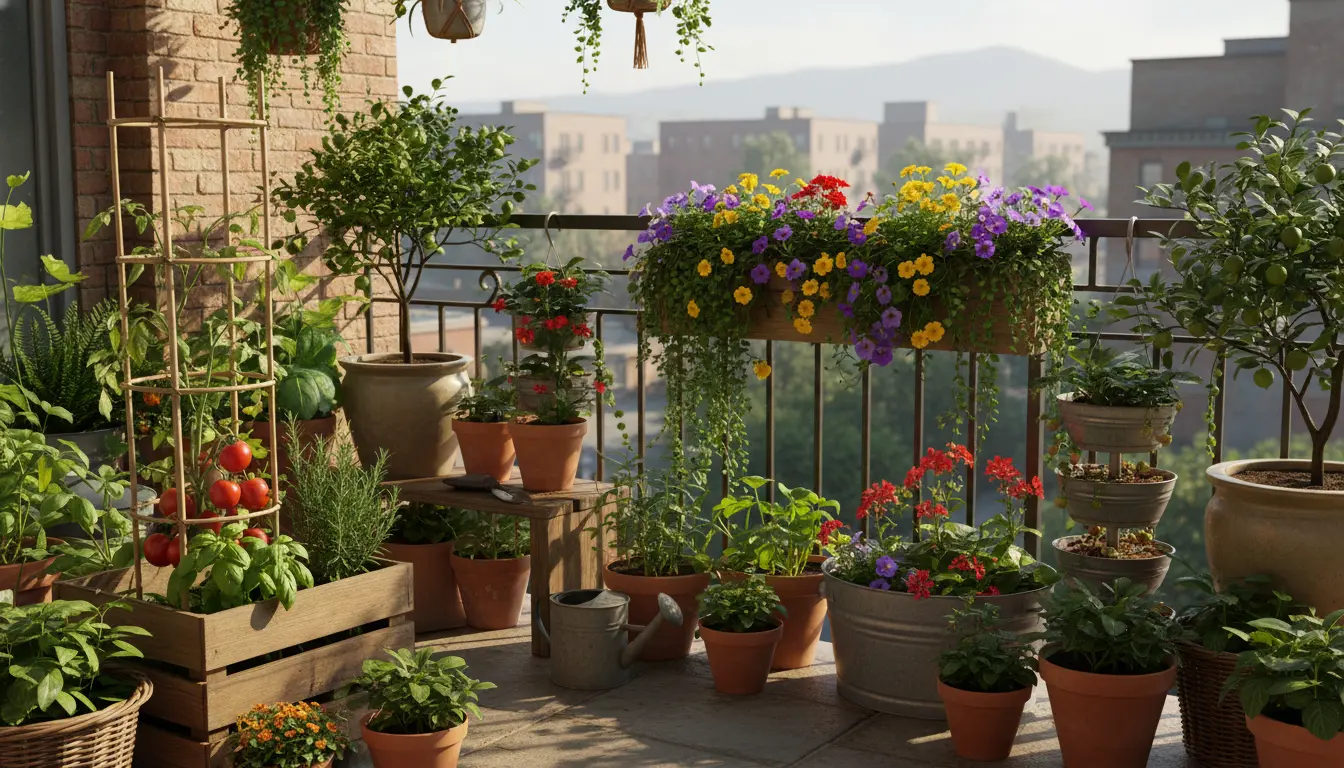
Growing vegetables in containers is a practical way to produce food when you have limited space. This guide shows clear steps to plan, set up, and maintain a container vegetable garden that fits balconies, patios, or small yards.
Why a container vegetable garden works
Containers let you control soil, drainage, and sunlight more easily than in-ground beds. They also reduce weed and pest pressure and make harvesting simpler.
For urban growers, containers transform small outdoor areas into productive spaces with predictable yields.
Choosing the right containers for a container vegetable garden
Container choice affects plant health and productivity. Select containers with drainage holes and enough volume for roots.
- Small containers (1–3 gallons): herbs, lettuce, baby greens.
- Medium containers (5–10 gallons): peppers, bush tomatoes, dwarf beans.
- Large containers (15+ gallons): full-size tomatoes, eggplants, potatoes.
Materials matter: plastic retains moisture, terracotta breathes but dries faster, and fabric pots provide air pruning for roots.
Container placement and sunlight
Most vegetables need 6–8 hours of direct sun. Observe your balcony or patio for morning and afternoon light before placing pots.
Consider sun maps: track light for a day or use a smartphone app to record sun exposure patterns.
Soil and fertilizer for a container vegetable garden
Use a high-quality potting mix designed for containers; avoid garden soil, which compacts and drains poorly.
Look for mixes with peat or coconut coir, perlite for drainage, and slow-release fertilizer included.
Feeding schedule
Container plants have limited nutrients. Apply a balanced liquid feed every 2–3 weeks during the growing season or follow label directions for slow-release pellets.
Tip: Choose a fertilizer with an NPK ratio appropriate for vegetables, like 5-5-5 or 10-10-10, and adjust if plants show specific deficiencies.
Watering techniques for container vegetable garden success
Containers dry out faster than soil beds. Watering frequency depends on container size, plant type, and weather.
- Small pots: daily watering in warm weather.
- Medium pots: every 1–2 days; check moisture level.
- Large pots: every 2–4 days; deeper root systems retain moisture longer.
Water deeply until it runs from drainage holes to ensure the entire root mass is moist rather than just the surface.
Signs of under- and over-watering
Wilting in morning often indicates underwatering. Yellowing leaves with soft stems can signal overwatering or root problems. Check soil moisture by sticking a finger 2 inches deep.
Best vegetables for a container vegetable garden
Some crops are naturally suited to containers. Choose compact, productive varieties to maximize space.
- Leafy greens: lettuce, spinach, chard.
- Herbs: basil, parsley, cilantro.
- Fruiting: cherry tomatoes, peppers, dwarf eggplants.
- Root crops: radishes, baby carrots, small potatoes.
Use dwarf or determinate cultivars where possible to control growth and simplify maintenance.
Pest and disease management in a container vegetable garden
Containers reduce but do not eliminate pests. Inspect plants regularly and act early when you spot issues.
- Hand-pick larger pests like caterpillars and slugs.
- Use insecticidal soap for aphids or soft-bodied insects.
- Rotate crops between containers and clean pots each season to limit disease carryover.
Preventive practices
Keep good air circulation by spacing containers and pruning crowded foliage. Remove spent leaves promptly to reduce fungal risk.
Growing in containers can yield equal or higher production per square foot than traditional beds because you can optimize soil, feeding, and water for each plant.
Simple maintenance checklist for a container vegetable garden
- Daily: quick check for moisture and pests.
- Weekly: feed, prune, and remove dead foliage.
- Monthly: inspect drainage and top up soil or compost as needed.
Real-world example: Balcony container vegetable garden case study
Case: A two-bedroom apartment balcony (6 feet by 10 feet) was converted into a container vegetable garden. The gardener used ten 10-gallon pots and four 5-gallon pots.
Plants included three determinate tomato plants, four pepper plants, lettuce in two 5-gallon pots, and herbs in hanging planters. With daily watering and biweekly feeding, the gardener harvested tomatoes and peppers throughout summer and multiple lettuce cuttings.
Yield: roughly 20–30 pounds of fresh vegetables over a single season, plus continuous herbs. Investment: under $200 for pots, soil, and starter plants, with low ongoing costs.
Final tips for starting your container vegetable garden
Start small and expand as you learn what works on your balcony or patio. Track sunlight, water needs, and plant performance to refine choices each season.
Keep a short journal: record planting dates, varieties, and harvest weights to improve yields over time.
With simple planning and routine care, a container vegetable garden can supply fresh produce, enhance your outdoor space, and fit any size of living area.