
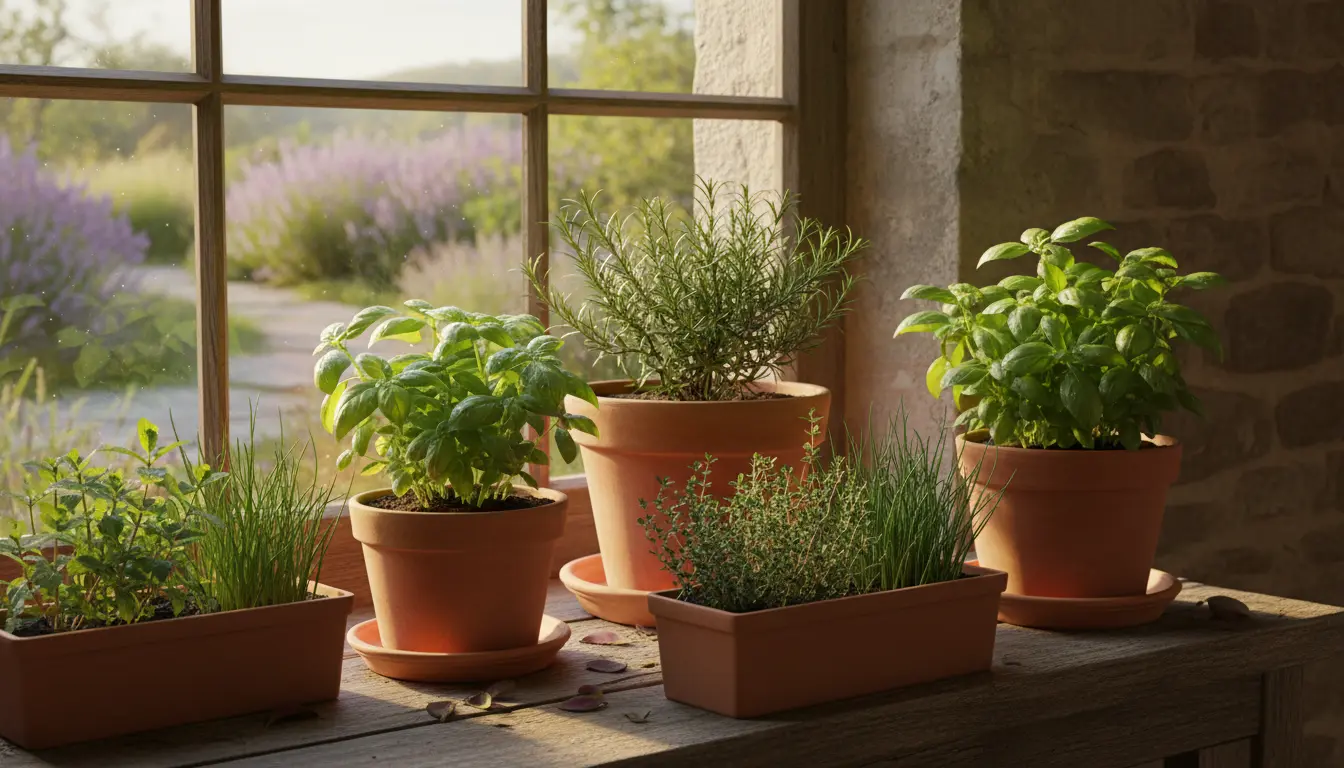
Why Choose Growing Herbs Indoors
Growing herbs indoors gives fresh flavors year-round and saves trips to the store. It is a small-space hobby that fits apartments, kitchens, and offices.
Indoor herbs are low-cost, fast to start, and useful in cooking and aromatherapy. This guide focuses on practical, repeatable steps for beginners.
Growing Herbs Indoors Select the Right Herbs
Begin with hardy, forgiving herbs that adapt to indoor light. Good starter herbs include basil, mint, chives, parsley, and rosemary.
Avoid herbs that need long, hot seasons at first, such as large perennial varieties. Pick two to four herb types to manage easily.
Growing Herbs Indoors Light and Placement
Most herbs need 6–8 hours of bright light. A south- or west-facing windowsill is ideal for sunny herbs like basil and rosemary.
For low-light spaces, choose herbs that tolerate shade such as mint and parsley, or use a small LED grow light to supplement natural light.
Signs Your Herbs Need More Light
- Leggy, thin stems
- Pale or slow-growing leaves
- Plants leaning toward the window
Growing Herbs Indoors Containers and Soil
Use containers with drainage holes to prevent root rot. Choose pots that are proportionate: small herbs in 4–6 inch pots, larger ones in 8–10 inch pots.
Use a loose, well-draining potting mix labeled for herbs or vegetables. Avoid garden soil that compacts easily indoors.
Container Tips
- Place a saucer under pots to catch excess water.
- Consider self-watering pots for forgetful gardeners.
- Repot after 6–12 months if roots crowd the container.
Growing Herbs Indoors Watering and Feeding
Watering needs vary by herb and container size. Check soil moisture by touching the top inch: water when it feels dry, not when the surface is fully dry.
Overwatering is the most common indoor mistake. Allow light drying between waterings and reduce frequency in winter when growth slows.
Fertilizing Schedule
Feed herbs with a balanced liquid fertilizer diluted to half strength every 4–6 weeks during active growth. For slow-growing or flavor-sensitive herbs, fertilize less often.
Growing Herbs Indoors Pruning and Harvesting
Pruning encourages bushier growth and prevents legginess. Pinch or cut stems above a leaf node to promote branching.
Harvest regularly but avoid removing more than one-third of the plant at once. Use clean scissors and harvest in the morning for best flavor.
Growing Herbs Indoors Pest Management and Troubleshooting
Indoors pests are usually small: aphids, spider mites, and fungus gnats. Inspect plants weekly and isolate any new purchases for a week.
Treat minor infestations with a soap and water spray or neem oil. Improve airflow and avoid overwatering to reduce fungal issues.
Common Problems and Solutions
- Yellow leaves: Check overwatering and drainage.
- Leggy stems: Move to brighter light or prune back.
- Slow growth: Ensure proper pot size, soil quality, and occasional feeding.
Simple Weekly Care Plan for Growing Herbs Indoors
Follow a short weekly routine to keep herbs healthy. This routine suits busy beginners and prevents common failures.
- Day 1: Inspect plants for pests and moisture levels.
- Day 2: Water if top inch of soil is dry; empty saucers after 15 minutes.
- Day 3: Rotate pots slightly to even light exposure.
- Day 4: Prune dead or overgrown stems; harvest as needed.
- Day 7: Feed with diluted liquid fertilizer if in active growth.
Many culinary herbs release the most essential oils—and best flavor—right before they flower. Regular pinching of flower buds preserves leaf production and taste.
Real-World Example: A Windowsill Basil Success
Anna, a city renter, started with three basil seedlings on a south-facing windowsill. She used 6-inch pots, a quality potting mix, and a saucer for each pot.
After two weeks of consistent light and weekly feeding, her basil produced a steady supply of leaves for pesto and salads. Regular pruning prevented flowering and kept growth productive.
Quick Checklist Before You Start Growing Herbs Indoors
- Choose beginner herbs: basil, mint, chives, parsley, rosemary.
- Find a bright spot or buy a small LED grow light.
- Use pots with drainage and a light potting mix.
- Follow a simple weekly care routine for watering and feeding.
- Inspect regularly for pests and prune to encourage growth.
Final Tips for Growing Herbs Indoors
Start small and expand as you gain confidence. Consistency with light, water, and occasional feeding is more important than complex techniques.
Keep a small notebook to track watering, feeding, and any problems. That record will speed up learning and increase your success over each season.