
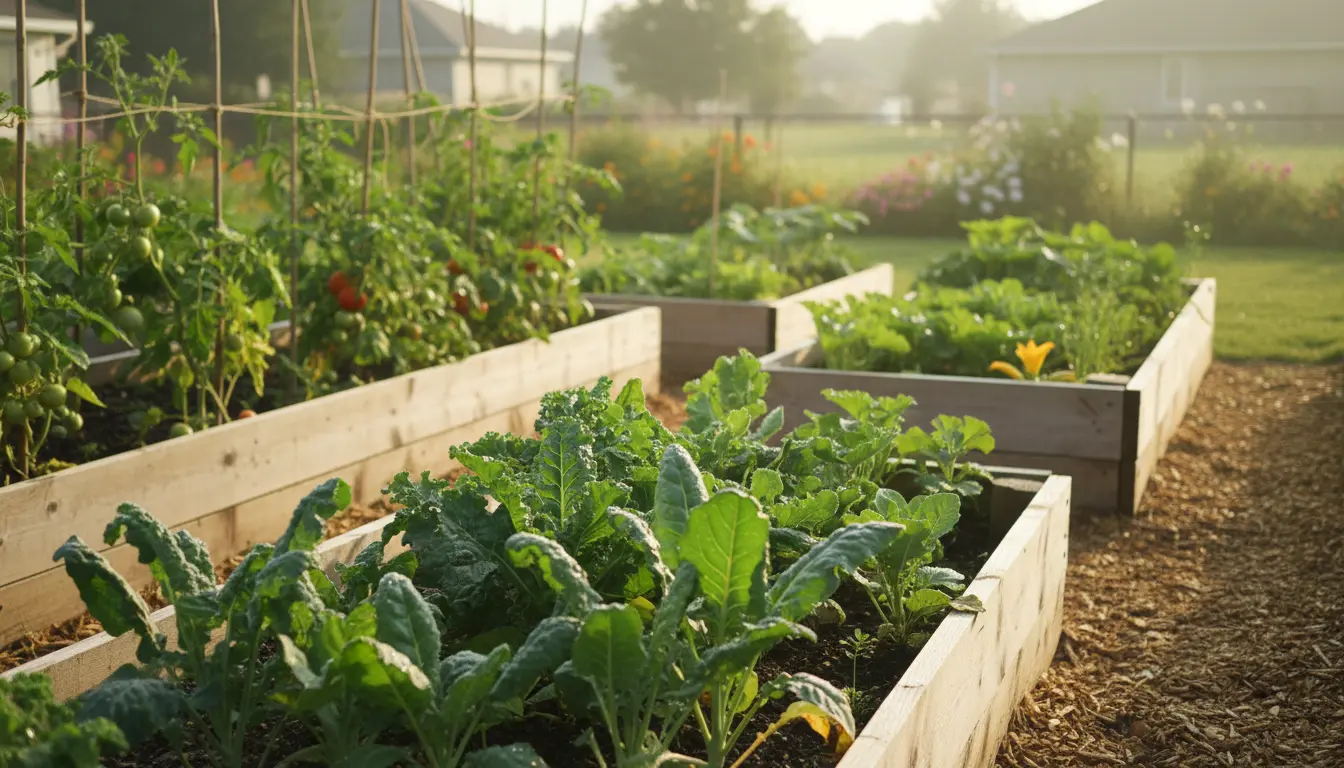
Starting a vegetable garden is a practical way to grow fresh food, save money, and enjoy outdoor activity. This guide covers the essential steps to plan, prepare, plant, and maintain a productive vegetable garden.
Plan Before You Plant: Choose Location and Layout for Your Vegetable Garden
Good planning prevents problems later. Choose a site that receives at least 6 hours of direct sunlight daily and has good drainage.
Decide on a layout that fits your space and time. Options include in-ground rows, raised beds, or container gardens for patios and balconies.
Sun, Soil, and Access to Water
Vegetables need steady sun and consistent moisture. Locate the garden near a water source to reduce effort and avoid dragging hoses across the yard.
Consider access paths of 2 to 3 feet between beds so you can reach plants without compacting the soil.
Selecting Vegetables to Start a Vegetable Garden
Begin with easy, productive crops that suit your climate. Fast-growing and forgiving options include lettuce, radishes, tomatoes, beans, and zucchini.
Mix leafy greens, root crops, and a couple of warm-season plants to spread your harvest across the season.
Prepare the Soil and Planting Steps for a Vegetable Garden
Healthy soil is the foundation of a productive vegetable garden. Invest time in testing and improving the soil before planting.
Test and Improve Your Soil
Start with a basic soil test to check pH and nutrient levels. Local extension services often offer inexpensive testing and tailored recommendations.
Amend heavy clay with compost and coarse sand, and improve sandy soil with organic matter to increase water retention. Aim for a crumbly, friable texture.
Planting Timing and Spacing
Follow planting dates for your USDA zone or local climate. Plant cool-season crops like peas and spinach early, and warm-season crops like tomatoes after the last frost.
Respect spacing recommendations on seed packets to avoid overcrowding and reduce disease risk. Thin seedlings if necessary to reach proper spacing.
Maintenance: Watering, Weeds, and Pest Control in a Vegetable Garden
Maintenance tasks are regular but manageable. Establish simple routines for watering, weeding, and checking for pests.
Watering and Mulching
Water deeply and less frequently to encourage strong roots. Early morning watering reduces evaporation and disease risk.
Apply a 2–3 inch layer of organic mulch like straw or shredded leaves to retain moisture and suppress weeds.
Weed Management and Simple Pest Control
Remove weeds regularly while they are small to prevent competition for nutrients and water. Hand weeding is often sufficient in small gardens.
Use row covers or companion planting to deter pests without chemicals. For persistent pests, identify the insect and choose a targeted control method such as insecticidal soap or beneficial insects.
Fertilizing and Crop Rotation for a Vegetable Garden
Feed plants based on need. Use balanced organic fertilizers or compost tea during active growth, especially for heavy feeders like tomatoes and corn.
Rotate families of vegetables each year to reduce disease and soil nutrient depletion. Avoid planting the same crop family in the same bed for at least three seasons.
Companion planting lettuce near taller crops like tomatoes can provide light shade and extend harvest by keeping greens cooler in summer.
Small Real-World Example: Case Study of a Starter Vegetable Garden
Case Study: Sarah converted a 10×4 foot patch into two raised beds and started with tomatoes, bush beans, lettuce, and carrots. She prepared beds with 3 buckets of compost per bed and adjusted soil pH after testing.
In her first season she harvested consistent salad greens, multiple tomato flushes, and a steady supply of beans. mulching and a drip line reduced weeds and maintained soil moisture with minimal effort.
Quick Checklist to Start a Vegetable Garden
- Choose a sunny site near water.
- Decide on raised beds, containers, or in-ground planting.
- Test soil and add compost or amendments.
- Select 3–6 beginner-friendly crops for your first year.
- Plant according to local frost dates and spacing guidelines.
- Mulch, water deeply, and remove weeds weekly.
- Monitor pests and use targeted, low-toxicity controls.
- Rotate crops each season and replenish organic matter annually.
Simple Seasonal Timeline for a Vegetable Garden
Spring: Test soil, prepare beds, sow cool-season crops, and plant transplants after frost risk passes. Summer: Maintain watering, harvest regularly, and plant quick second crops where space allows.
Fall: Harvest remaining crops, plant cover crops if possible, and add compost for winter. Winter: Plan next year’s crop rotations and order seeds.
Starting a vegetable garden is a step-by-step process that rewards attention and planning. With basic site selection, soil preparation, and regular maintenance, even small gardens can produce a meaningful harvest.