
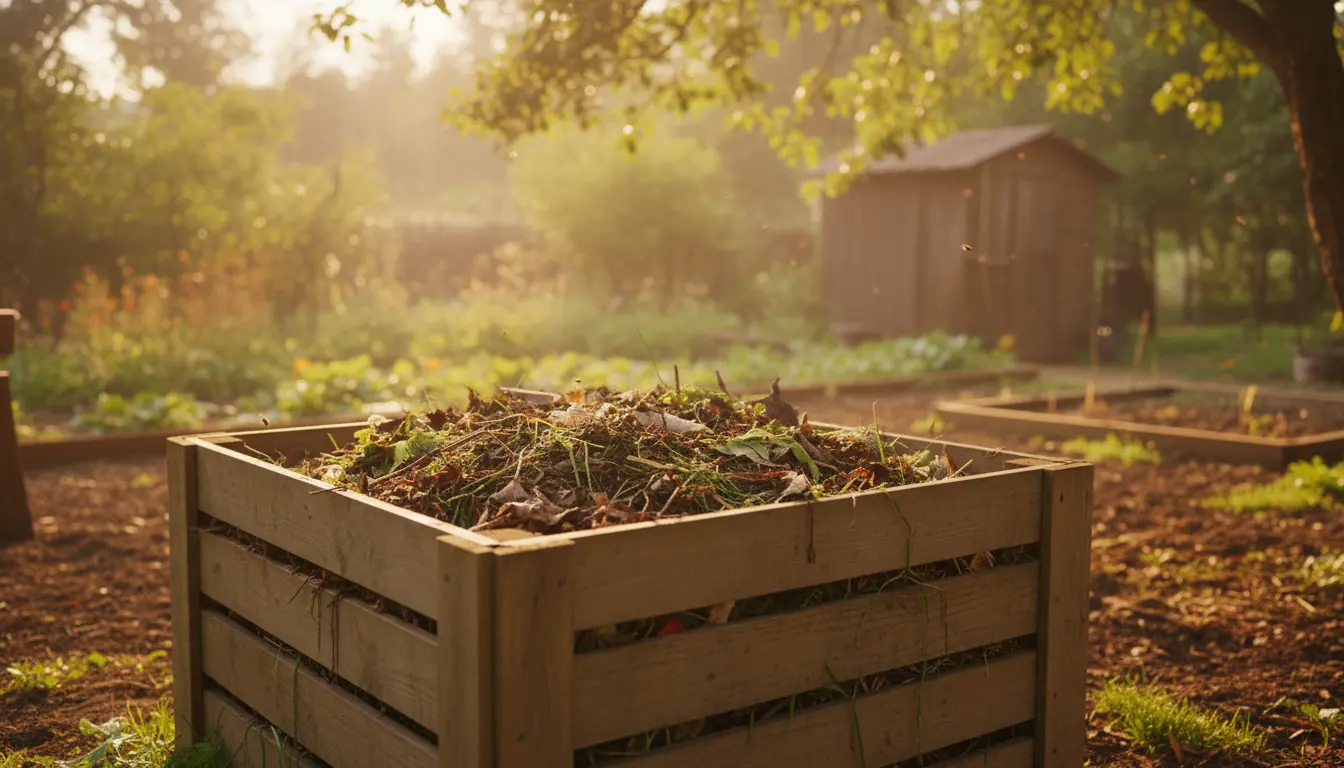
What Is Home Composting?
Home composting is the process of turning kitchen scraps and yard waste into nutrient-rich soil using natural decomposition. It reduces household waste and produces a free soil amendment for gardens or potted plants.
Why Start a Compost Bin at Home?
Starting a compost bin at home saves money on soil amendments and helps lower your household’s landfill contribution. It also supports healthier plants by returning organic matter to the soil.
How to Start a Compost Bin at Home
Follow these clear steps to set up a reliable compost bin. Each step is simple enough for beginners and scalable for any space.
- Choose a location: pick a level spot with partial sun and good drainage.
- Select a bin: decide between a store-bought tumbler, a stationary bin, or a DIY wooden or wire system.
- Gather materials: collect both green (wet) and brown (dry) inputs and a handful of soil or finished compost to seed microbes.
- Layer and maintain: build alternating layers of brown and green materials, keep the pile moist, and turn periodically.
Choosing the Right Compost Bin
Select a bin based on space, budget, and how quickly you want finished compost. Tumblers speed mixing, while stationary bins are cheaper and hold more volume.
- Small balconies: use a compact tumbling bin or indoor bokashi pre-composter.
- Backyards: pick a 3-bin system or large stationary bin for larger volumes.
- Cost-conscious: build a simple wooden pallet bin or wire enclosure.
What to Put in Your Compost Bin
Feed your compost with a balanced mix of greens and browns. Too much of one type slows decomposition or causes odor.
- Greens (nitrogen): vegetable scraps, coffee grounds, fresh grass clippings.
- Browns (carbon): dry leaves, shredded paper, cardboard, straw.
- Avoid: meat, dairy, oily foods, diseased plants, and pet waste for typical home systems.
Adding a thin layer of finished compost or garden soil when starting a bin introduces beneficial microbes and speeds up decomposition.
Maintaining a Healthy Home Composting System
Maintenance is straightforward: balance materials, keep the pile slightly moist, and turn or aerate the pile every 1–2 weeks.
Simple Maintenance Checklist
- Check moisture: compost should feel like a wrung-out sponge.
- Turn the pile: aerate to supply oxygen and prevent bad smells.
- Chop large items: smaller pieces break down faster.
- Monitor temperature: a hot pile (131–160°F/55–71°C) breaks down material faster; cooler piles are slower but still work.
Troubleshooting Common Compost Bin Problems
Some issues are easy to fix. Here are frequent problems and practical solutions to keep your compost working well.
- Bad smell: add more brown material, mix, and ensure proper drainage.
- Pile too wet: add dry browns and turn to increase airflow.
- Pile not heating: add more greens, reduce excess browns, or chop materials smaller.
- Pests are around: avoid putting meat or oily foods in the bin and use a covered container or fine mesh around the bin base.
Using Finished Compost
Compost is ready when it looks dark, crumbly, and smells earthy. Use finished compost to enrich garden beds, potting mixes, or as a top dressing for lawns.
- Vegetable gardens: mix 1–2 inches into topsoil before planting.
- Houseplants: add a small amount to potting soil to improve nutrient content.
- Mulch: spread around plants to retain moisture and suppress weeds.
Small Case Study: A Real-World Example
Emma, a city apartment gardener, started a 50-liter tumbler on her balcony. She collected kitchen scraps and paper towels, and added dry leaves from a neighbor.
After four months of turning the tumbler weekly and maintaining moisture, she harvested rich compost. She used it to repot herbs, which showed improved growth and fewer watering sessions.
Key takeaways from Emma’s case: choose a compact system, maintain a mix of greens and browns, and turn regularly for consistent results.
Tips and Examples for Different Spaces
Adapt your approach depending on your living situation and available materials. Below are quick examples.
- Small balcony: use a sealed tumbler and collect only plant-based kitchen scraps.
- Large yard: build a three-bin system to manage large volumes and continuous turning.
- Cold climates: insulate the bin or use a covered tumbler to retain heat and accelerate decomposition.
Final Checklist Before You Start Your Compost Bin
- Choose a bin type and location with good access and drainage.
- Collect a balanced supply of greens and browns.
- Seed the bin with soil or finished compost.
- Monitor moisture and aerate regularly.
Starting a compost bin at home is a low-cost, high-impact way to recycle organic waste and improve your soil. With a few simple practices, anyone can run a successful home composting system.