
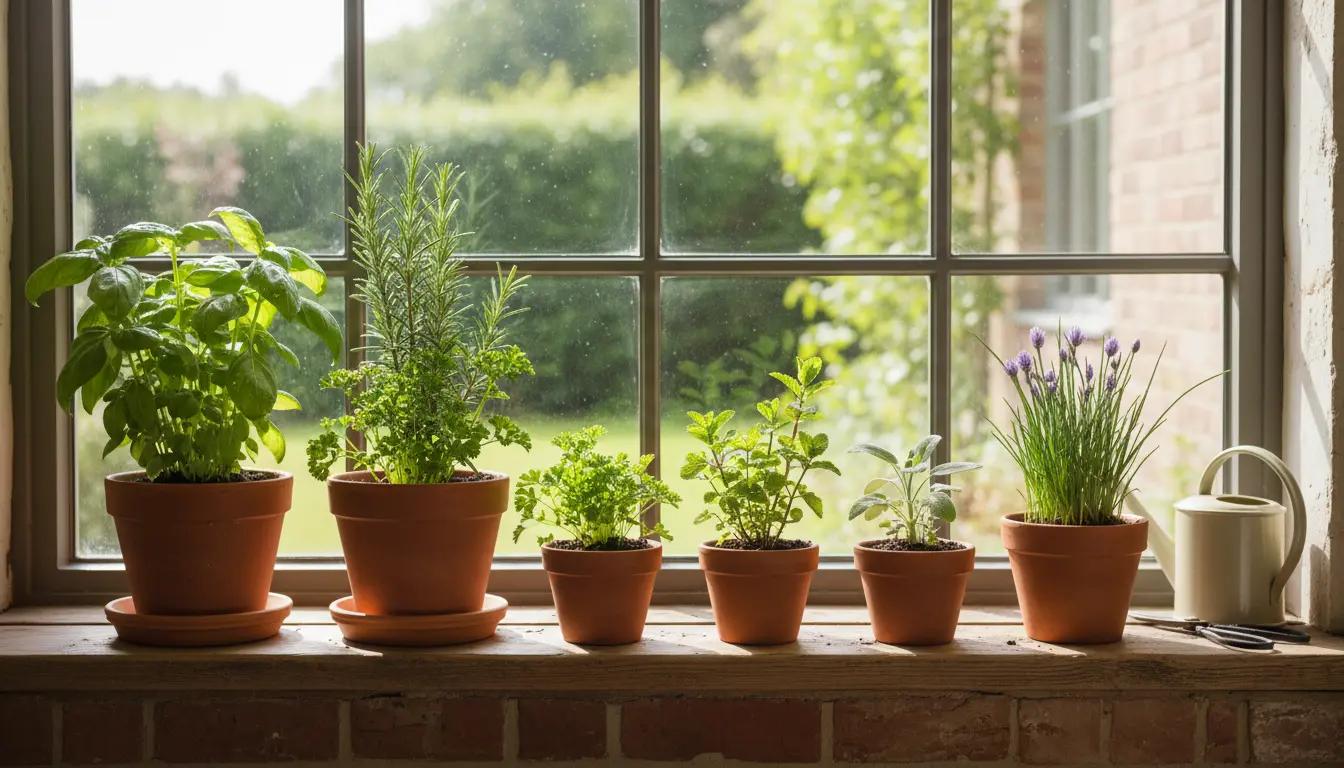
How to Start Indoor Herb Gardening
Indoor herb gardening is a low-cost way to add fresh flavors to meals and bring greenery into small spaces. With basic supplies and the right location, even beginners can grow healthy herbs year-round.
This guide covers step-by-step care, best herb choices, common problems, and harvesting tips to help you start an indoor herb garden that thrives.
Why Choose Indoor Herb Gardening
Growing herbs indoors saves money and ensures you have fresh ingredients on hand. Herbs are compact, fast-growing, and suitable for windowsills, balconies, or under grow lights.
Indoor herb gardening also improves indoor air quality and can be a stress-relieving hobby that teaches basic plant care skills.
Essential Supplies for Indoor Herb Gardening
Before you begin, gather a few practical items. These supplies keep care simple and consistent for beginners.
- Containers with drainage holes (4–8 inch pots work well)
- Potting mix formulated for container plants
- Small hand trowel and pruning scissors
- Tray or saucer to catch excess water
- Natural light source or LED grow light
- Small spray bottle for misting (optional)
Choosing Herbs for Indoor Herb Gardening
Select herbs that tolerate container life and moderate indoor light. Start with forgiving varieties to build confidence.
- Basil: Fast-growing, prefers bright light and warmth.
- Peppermint or spearmint: Hardy, can be invasive in pots if not contained.
- Parsley: Slower to start but steady; tolerates moderate light.
- Thyme and oregano: Drought-tolerant and compact.
- Chives: Great for windowsills and frequent harvesting.
Planting Steps for Indoor Herb Gardening
Follow simple planting steps to give herbs a healthy start. Use quality potting mix and avoid garden soil, which can be too dense for containers.
- Fill the pot with potting mix, leaving 1 inch from the rim.
- Plant seedlings or sow seeds according to packet depth.
- Water lightly after planting to settle the soil.
- Place the pot in a bright spot or under a grow light.
Light and Location Tips for Indoor Herb Gardening
Most culinary herbs need 6–8 hours of bright light. A south- or west-facing window is ideal in the northern hemisphere.
If natural light is insufficient, use a full-spectrum LED grow light set on a 12–14 hour schedule to mimic daylight.
Watering and Soil Care
Water when the top inch of soil feels dry. Overwatering is the most common problem in indoor herb gardening, so ensure good drainage and avoid waterlogged soil.
Fertilize lightly every 4–6 weeks with a balanced liquid fertilizer at half strength during active growth.
Common Problems and Fixes in Indoor Herb Gardening
Knowing common issues helps you respond quickly and keep herbs healthy. Most problems come from light, water, or pests.
- Yellowing leaves: Check for overwatering or poor drainage.
- Leggy stems: Plant isn’t getting enough light; move it closer to a light source.
- Sticky leaves or webbing: Inspect for aphids, spider mites, or scale; treat with insecticidal soap.
- Slow growth: Ensure adequate light, fresh potting mix, and occasional fertilizer.
Harvesting and Using Herbs from Indoor Herb Gardening
Harvest herbs regularly to encourage bushy growth. Snip stems just above a leaf node and avoid removing more than one-third of the plant at once.
Use fresh leaves in cooking, or dry extras by hanging small bunches in a warm, dry spot to preserve flavor for later use.
Many herbs like basil and mint release stronger aromas when harvested in the morning, making them more flavorful for cooking and teas.
Real-World Example: Windowsill Herb Success
Laura, an apartment renter, started a windowsill herb garden with three 6-inch pots: basil, chives, and thyme. She used a south-facing window and rotated pots weekly.
Within six weeks, Laura harvested basil for pesto and chives for omelets. She solved a yellowing basil leaf issue by reducing watering frequency and improving drainage with perlite mixed into the potting soil.
This small routine produced a steady supply of fresh herbs and reduced her grocery trips for herbs.
Simple Weekly Care Routine for Indoor Herb Gardening
Follow this short routine to maintain healthy herbs without extra work.
- Monday: Check soil moisture and water if top inch is dry.
- Wednesday: Rotate pots for even light exposure.
- Friday: Pinch back growth or harvest for cooking.
- Monthly: Feed with diluted liquid fertilizer during active growth.
Final Tips for Long-Term Success with Indoor Herb Gardening
Start small, choose easy herbs, and keep a consistent schedule for watering and light. Replace or repot plants that show persistent decline rather than letting them drag down the rest.
With a little attention and the right setup, indoor herb gardening is a reliable, rewarding way to grow fresh flavors at home year-round.