
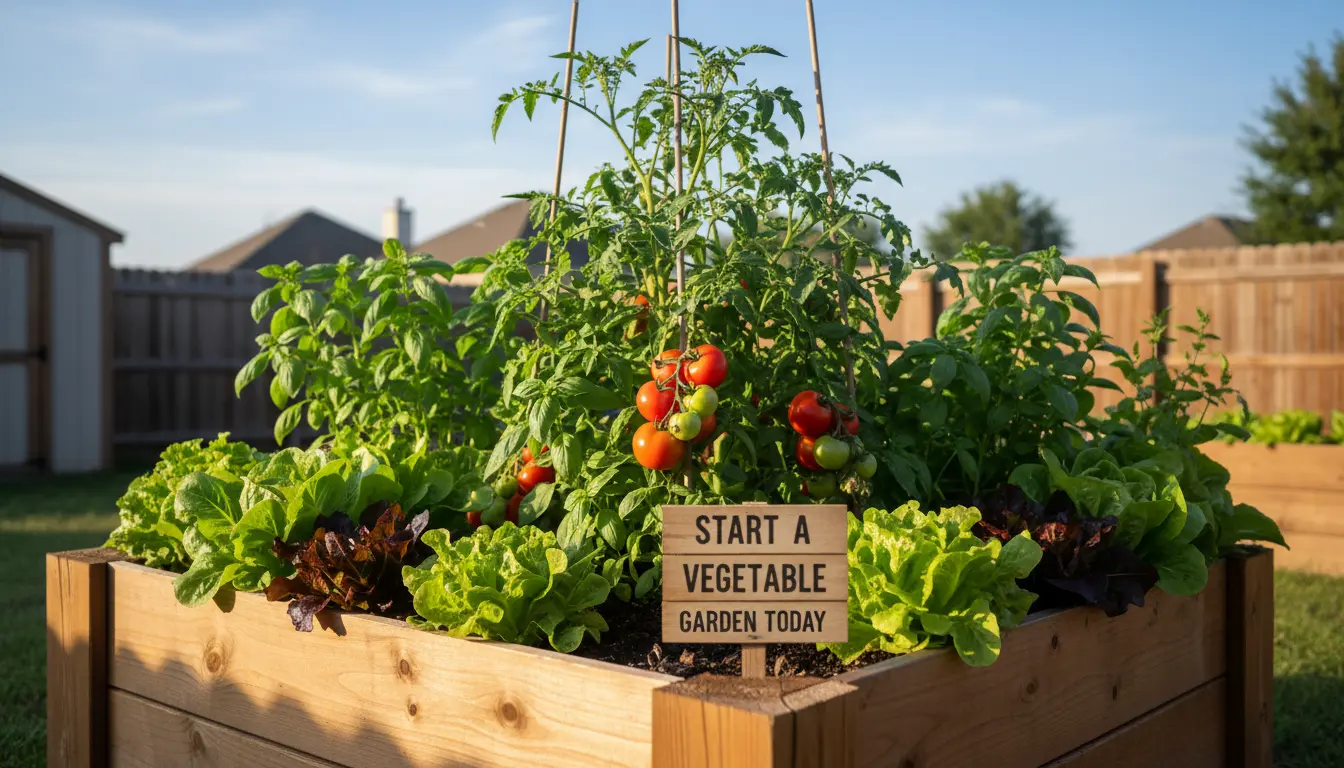
Starting a vegetable garden is a practical way to grow fresh food, save money, and enjoy time outdoors. This guide shows clear steps you can follow whether you have a yard, balcony, or small patio.
Start a Vegetable Garden: Getting Ready
Before you dig, plan what you want to grow and how much space you have. List vegetables you eat often and choose easy varieties for your first season.
Decide between in-ground beds, raised beds, or containers. Each option affects soil depth, drainage, and watering needs.
Choose a Site to Start a Vegetable Garden
Pick a spot with at least 6 hours of direct sunlight for most vegetables. Morning sun is especially helpful to dry leaves and reduce disease.
Consider water access and protection from strong wind. If sunlight is limited, select vegetables that tolerate partial shade.
Prepare Soil When You Start a Vegetable Garden
Good soil is the foundation of a productive garden. Test soil pH with a kit or send a sample to a local extension service.
Improve soil by adding compost and well-rotted organic matter. For raised beds or containers, use a high-quality, loamy potting mix.
- Loosen soil to at least 8–12 inches for root crops.
- Mix in 2–3 inches of compost for nutrients and structure.
- Adjust pH if needed: most vegetables prefer pH 6.0–7.0.
Start a Vegetable Garden: Planting and Timing
Planting at the right time improves success. Use your local last frost date to schedule seeds and transplants.
Group plants by growth habit: tall sun-loving crops at the back and low or shade-tolerant plants in front. Companion planting helps maximize space.
Starter Vegetables for New Gardeners
- Tomatoes (transplants) — reliable and productive.
- Leaf lettuce and spinach — quick harvests in cool weather.
- Radishes and carrots — easy root crops with fast results.
- Zucchini and bush squash — high yield with little space.
- Herbs like basil and parsley — useful and low maintenance.
Start a Vegetable Garden: Watering and Care
Consistent watering is vital. Water deeply 1–2 times per week depending on weather and soil type.
Use drip irrigation or soaker hoses to wet the root zone and minimize leaf wetness. Mulch helps retain moisture and suppress weeds.
- Check soil moisture by feeling 1–2 inches below the surface.
- Water early in the day to reduce evaporation and fungal disease.
- Reduce water for cool-season crops and increase for heat-loving plants.
Fertilizing When You Start a Vegetable Garden
Use a balanced organic fertilizer at planting and side-dress with compost during the season. Follow label rates to avoid overfeeding.
Observation helps: slow growth or pale leaves can indicate nutrient needs.
Start a Vegetable Garden: Pest and Disease Management
Preventive practices reduce problems: rotate crops, sanitize tools, and remove diseased plants quickly. Healthy plants resist pests better.
Use physical barriers like row covers for young crops and handpick larger pests such as slugs and caterpillars.
- Encourage beneficial insects by planting flowers and herbs.
- Apply organic controls (neem oil, insecticidal soap) when needed.
- Keep good records to spot recurring problems and treat them early.
Many commonly grown vegetables, such as lettuce and radishes, can be harvested in 30 days or less, making them ideal for quick success and learning.
Start a Vegetable Garden: Harvest and Rotation
Harvest regularly to encourage more production. Pick leafy greens when young for better flavor and harvest tomatoes when they reach full color.
Rotate plant families each year to reduce soil-borne disease and nutrient depletion. Follow legumes with heavy feeders like tomatoes or squash.
Small Real-World Case Study
Case: Maria, a first-time gardener with a 10-foot balcony, wanted fresh salad greens. She used two 18-inch containers and a 1:1 mix of compost and potting soil.
Maria planted leaf lettuce, spinach, and basil from transplants and watered with a small drip emitter. Within four weeks she harvested baby greens twice a week, extending the season with shade cloth in midsummer.
Result: Low cost, high satisfaction, and a steady supply of salad greens for her household of two.
Start a Vegetable Garden: Common Mistakes to Avoid
- Planting too densely — gives disease room to spread.
- Overwatering — leads to root rot and nutrient loss.
- Skipping soil improvement — poor soil reduces yields.
- Neglecting records — tracking planting dates and issues helps next season.
Starting small and learning each season is the best approach. Use notes and photos to track what worked and what did not.
With proper planning, good soil, sensible watering, and regular care you can start a vegetable garden that provides fresh food and enjoyment for years to come.