
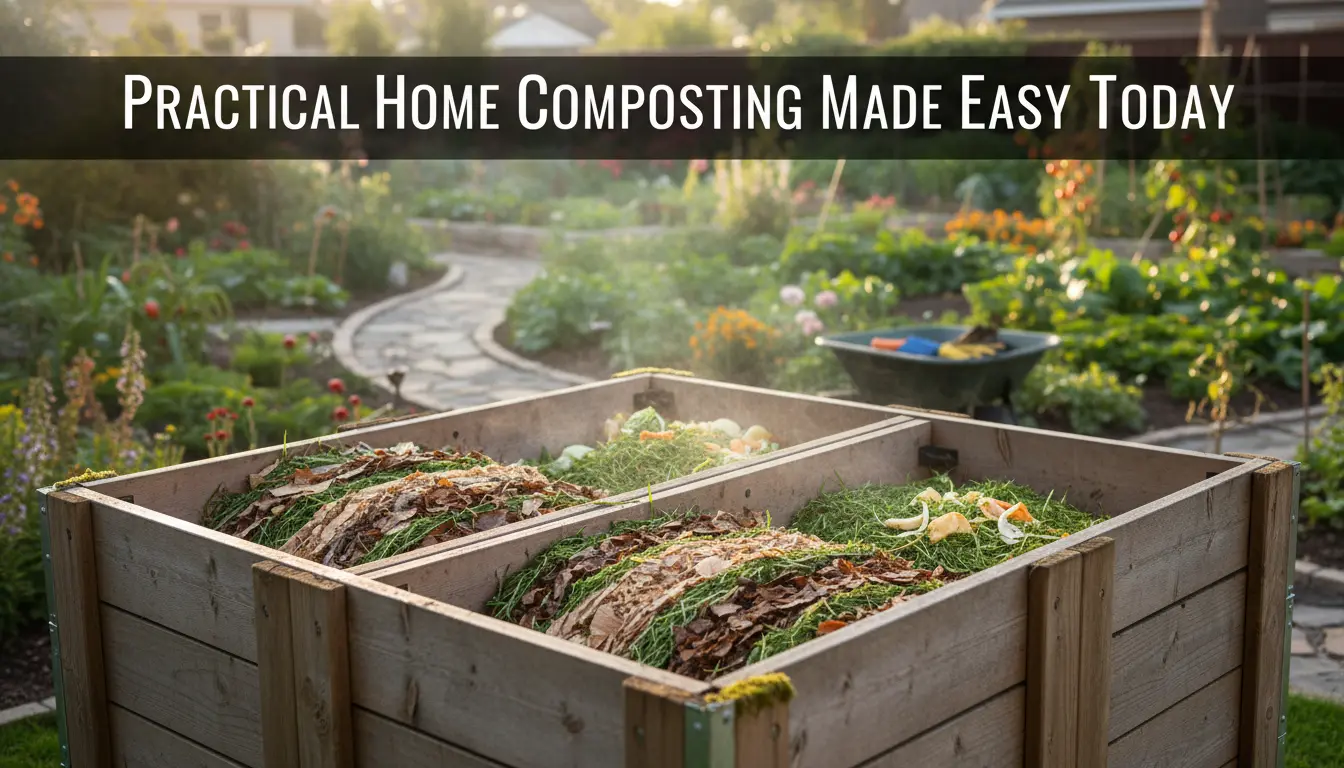
Why Choose Home Composting
Home composting turns kitchen scraps and yard waste into nutrient-rich soil. It reduces landfill waste, cuts odor from food trash, and improves garden health.
This guide gives clear, practical steps for home composting so you can start composting at home with confidence.
Benefits of Home Composting
Composting at home has environmental and practical benefits. It lowers methane emissions from landfills and saves money on soil amendments.
Plants thrive in compost-amended soil because compost improves structure, drainage, and nutrient availability.
What You Need for Home Composting
Basic home composting needs are simple and affordable. Choose a container, collect materials, and monitor moisture and aeration.
- Container: bin, tumbler, or open pile.
- Brown materials: dried leaves, shredded paper, cardboard.
- Green materials: vegetable scraps, coffee grounds, grass clippings.
- Water and a garden fork or aerator tool.
Popular Methods of Composting at Home
Pick a method that fits your space and schedule. Each method has pros and cons for maintenance and speed.
Bin Composting
Bin composting uses a stationary container placed on soil or a pad. It keeps the pile contained and deters pests.
Best for small yards or beginners. Turn the pile every 1–2 weeks for faster decomposition.
Tumbler Composting
Compost tumblers are enclosed drums you rotate to aerate the mix. They speed up decomposition and reduce odor.
Tumblers are ideal for people who prefer low-burden turning and compact setups.
Vermicomposting (Worm Bin)
Vermicomposting uses red wiggler worms to convert food scraps into castings. It’s efficient for apartment dwellers and indoors.
Requires temperature control, moisture balance, and appropriate feedstock to keep worms healthy.
Step-by-Step Home Composting Process
Follow these steps to get your compost system running quickly and effectively. Keep steps short and consistent for best results.
1. Pick a Spot and Container
Choose a shady, well-drained spot near a water source. Use a bin, tumbler, or build a simple pallet enclosure.
Leave the bottom open to soil to allow beneficial organisms to enter the pile.
2. Start with a Base Layer
Place coarse brown materials like twigs or straw at the bottom. This helps airflow and drainage.
Avoid compacting layers; air movement is essential for aerobic decomposition.
3. Add Materials in Layers
Alternate green and brown layers. A common target is about 2–3 parts brown to 1 part green by volume.
Chop or shred large items so microbes can break them down faster.
4. Maintain Moisture and Aeration
Keep the pile damp like a wrung-out sponge. Add water during dry spells or more brown material if too wet.
Turn the pile every 1–2 weeks for a hot compost or less often for slower, cold composting.
5. Know When Compost Is Ready
Mature compost is dark, crumbly, and smells earthy. Most home systems produce usable compost in 2–6 months.
Sift out large undecomposed pieces and return them to the pile for another cycle.
Troubleshooting Common Home Composting Issues
Problems are usually easy to fix with small adjustments to balance, moisture, or aeration.
- Bad odor: Add more brown material and increase turning to introduce air.
- Pests: Use a closed bin, bury food scraps in the pile, or avoid meat and dairy.
- Slow decomposition: Chop materials finer, maintain proper moisture, and add nitrogen-rich greens.
Home composting can reduce household waste volume by up to 30 percent. Compost improves garden soil structure, leading to healthier plants and reduced need for chemical fertilizers.
Simple Example: Kitchen-Only Compost Bin
This quick setup works for apartment inhabitants who want to compost indoors and seasonally move contents outdoors.
- Use a small covered bin with a carbon filter lid or a tight seal.
- Collect only fruit and vegetable scraps, coffee grounds, and paper towels.
- Store in a cool spot and empty into an outdoor bin or worm bin every 1–2 weeks.
Real-World Case Study
Case: A small urban household reduced trash by composting for one year. They used a 50-liter tumbler and a kitchen caddy.
Outcome: The household diverted roughly 150 kg of organic waste from the trash and produced enough compost to top-dress two raised beds. They reported fewer grocery costs for fertilizer and improved vegetable yields the next season.
Quick Tips for Successful Home Composting
- Keep food scraps covered with a brown layer to reduce flies and smells.
- Use a thermometer if you want faster, hotter breakdown; aim for 50–65°C for active composting.
- Don’t add meat, dairy, or oils to open outdoor piles to avoid pests.
- Save shredded paper and dried leaves during fall to balance winter food scraps.
Start Composting at Home Today
Begin with a simple bin and the materials you already have. Adjust over the first few months to find the right balance for your circumstances.
Composting at home is a practical step toward sustainable living and healthier soil. Start small, learn by doing, and scale as you gain confidence.